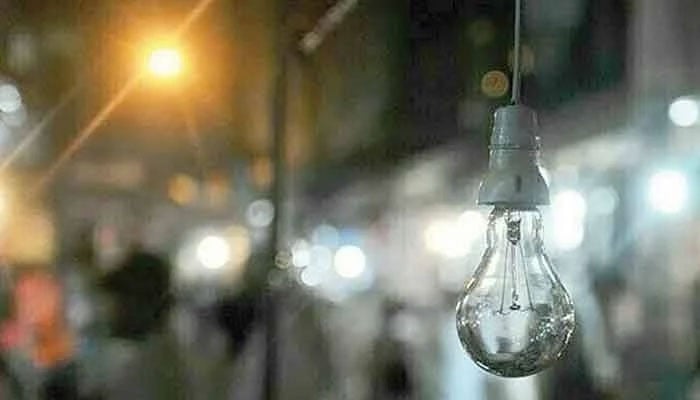
KARACHI: Speakers at a multi-stakeholder conference on Monday urged the government to protect consumers from prolonged electricity outages and excessive billing, warning that the worsening energy crisis was pushing industries towards closure and increasing economic hardship for households.
The concerns were raised during a conference titled ‘Energy Security in a Post Iran-USA War Context’, organised by The Knowledge Forum (TKF).
Participants said rising fuel prices, mounting capacity payments and inadequate energy infrastructure were severely affecting households, businesses and workers, particularly during the ongoing summer heatwave. They called for urgent reforms, faster investment in renewable energy and stronger protection of consumer rights.
Member of the Sindh Assembly and Chairperson of the Standing Committee on Energy Rehan Bandukda along with MPAs Farah Sohail and Dr Fouzia Hameed, attended the conference and assured participants that issues relating to loadshedding, energy pricing and industrial decline would be raised in the Sindh Assembly.
Representatives from the industrial sector said solar installations in industrial areas had increased significantly in recent years due to rising electricity tariffs and unreliable power supply.
Talha Ali of the Korangi Association of Industries said industries were often excluded from power-sector decision-making. He said input costs had risen sharply, making Pakistani products less competitive in international markets.
Addressing the conference, Bandukda said Karachi continued to face expensive electricity despite lower consumption levels relative to generation capacity. He said laws already existed to limit excessive loadshedding by K-Electric, but implementation remained weak. He urged stakeholders to work together to identify practical solutions for reducing electricity prices and ensuring uninterrupted supply.
Farah Sohail said women faced severe hardships during prolonged outages and criticised the lack of female representation in energy-related decision-making bodies. She alleged that consumers, civil society groups and opposition lawmakers were engaged in a “war for rights” against poor governance and weak enforcement of energy laws.
SME representative Syed Ijlal Haider said the textile sector was rapidly adopting solar energy to remain competitive in export markets. He called for regulations allowing peer-to-peer electricity sharing systems to support industries seeking lower-cost energy alternatives.
Farhat Parveen of NOW Communities highlighted the impact of rising electricity bills on working-class families. Referring to a study involving 300 workers in Karachi, she said many households were struggling to afford children’s education because of increasing utility costs.
Employers Federation of Pakistan representative Nazar Ali described the crisis as a broader policy failure, saying small and medium-sized enterprises, which account for nearly 90 per cent of Pakistan’s industrial sector, were among the hardest hit. He criticised the lack of enabling policies and support for industries transitioning to renewable energy.
Pakistan Fisherfolk Forum General Secretary Saeed Baloch said many labourers were receiving electricity bills higher than their monthly incomes, forcing some to rely on illegal power connections.
Urban Resource Centre representative Zahid Farooque said many Karachi residents continued to face up to 16 hours of loadshedding despite paying bills regularly. He added that some low-income communities had turned to illegal ‘kunda’ connections as a means of survival. Speakers also noted that women were among the worst-affected groups during extended power outages.
Officials from the Sindh Energy Department told participants that wind power plants with a combined capacity of 1,845 megawatts had been installed in Thatta district. They added that solar energy projects and household surveys for solar panel distribution were under way in several districts across Sindh.
Representatives of Sindh Transmission and Dispatch Company (STDC) acknowledged weaknesses in the transmission system, saying significant electricity losses occurred before power reached consumers.
TKF Director Zeenia Shaukat said climate change had become one of the biggest threats to energy security and stressed the need for Pakistan to accelerate its transition towards clean and alternative energy sources. She said the conference aimed to examine energy challenges ahead of the federal budget and explore ways to speed up renewable energy adoption.