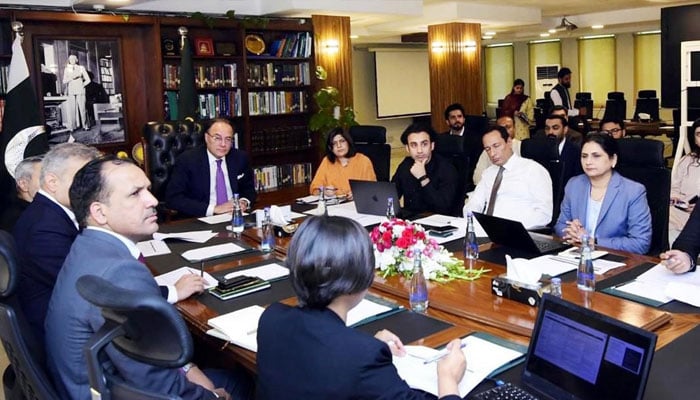
KARACHI: Finance Minister Muhammad Aurangzeb held discussions with senior officials on the potential tokenisation of sovereign debt instruments, including Naya Pakistan Certificates, in one of the government’s first high-level engagements on blockchain-based financial infrastructure, a statement said on Monday.
The meeting included Minister of State and Pakistan Virtual Assets Regulatory Authority (PVARA) Chairperson Bilal Bin Saqib and Finance Ministry Debt Management Adviser Omer Khan, and focused on how tokenisation could be used to modernise capital markets and broaden investor access.
Officials discussed potential structures for issuing digitally native sovereign instruments, along with regulatory and implementation pathways. The concept under consideration involves issuing tokenised bonds through regulated market infrastructure at issuance, while maintaining integration with existing international clearing and settlement systems used for Pakistan’s Eurobond programme.
Under the proposed model, coupon payments, secondary trading and redemption would continue to be processed through established global financial rails, ensuring interoperability with institutional investors.
The meeting also considered extending tokenisation to Naya Pakistan Certificates to widen retail participation, particularly among overseas Pakistanis, and to enhance digital investment channels linked to global markets.
Officials noted that the Roshan Digital Account has attracted nearly $13 billion in inflows from overseas Pakistanis and international investors since its launch in 2020, with most funds deployed in Pakistan’s economy. The proposed digital distribution framework aims to expand this channel to a broader investor base under regulatory oversight.
The discussions also covered the use of blockchain infrastructure to connect domestic financial products with international investors through programmable digital markets.
Aurangzeb said Pakistan remained committed to exploring financial technologies that could support economic modernisation and deepen investor participation.
“Discussions around tokenised sovereign instruments represent an important exploratory step towards understanding how emerging infrastructure can support the future evolution of Pakistan’s capital markets,” he said.
Bilal Bin Saqib said tokenisation could improve accessibility and efficiency in sovereign fundraising.
“These discussions are about reimagining how Pakistan raises capital and connects to the digital economy. Tokenisation can make these instruments more accessible to overseas Pakistanis and global investors, while enabling more transparent and efficient financial infrastructure,” he said.
It was agreed that PVARA, the Ministry of Finance and the State Bank of Pakistan will continue coordination on design, governance and phased development of the initiative. Further updates will follow as work progresses through formal approvals.
Officials said the engagement reflects Pakistan’s broader push to modernise financial infrastructure and develop regulatory frameworks for digital assets and blockchain-based innovation.