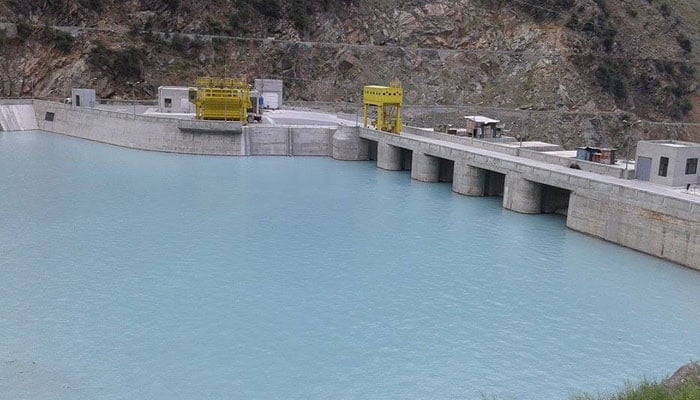
LAHORE: Warning that water insecurity now threatens national survival, stakeholders hailing from across the country have urged the federal and provincial governments to treat water as a strategic priority.
At least 20 per cent of total development spending under the federal PSDP and provincial ADPs should be allocated to the water sector in the FY 2026-27 budgets. Continued under-investment in water infrastructure now poses a direct threat to food security, energy stability, public health and long-term economic sustainability, argued stakeholders including Mohsin Leghari (Dera Ghazi Khan), Hassan Ali Chanihu (Sanghar), Farooq Bajwa (Sialkot), Muhammad Ehsan (Karak), Zeeshanul Rab (Karachi) Agha Nasir (Quetta), Ayub Mayo (Lahore) and Mubashar Choudhry (Layyah) in a statement issued on Monday.
The demand comes at a time when climate stress, declining storage capacity and growing upstream trans-boundary uncertainties are placing unprecedented pressure on national water system. The FY26 federal PSDP allocated Rs 133.4 billion to the Water Resources Division, around 13 per cent of the total Rs1 trillion development envelope and 27 per cent lower than the Rs 184.6 billion allocated in the previous year. Stakeholders said this decline is incompatible with the scale of Pakistan’s worsening water crisis and urged the government to raise water-sector allocations to at least Rs 200 billion at the federal level in FY 2026-27, alongside corresponding increases in provincial ADPs.
The warning, they said, is neither new nor disputed. In its Annual Report 2016-17, the State Bank of Pakistan noted that the country’s three major reservoirs — Tarbela Dam, Mangla Dam and Chashma Barrage — store water equivalent to barely 30 days of national requirements against an international benchmark of 120 days. The Pakistan Council of Research in Water Resources has similarly warned that Pakistan has entered the threshold of absolute water scarcity.
Stakeholders stressed that the timely completion of eight ongoing strategic projects — including Diamer-Bhasha Dam, Mohmand Dam, Dasu Hydropower Project, Tarbela Fifth Extension Hydropower Project, Kurram Tangi Dam, Nai Gaj Dam, Kachhi Canal and K-IV Water Supply Project — is essential for improving Pakistan’s dangerously low carry-over storage capacity.
They noted that Diamer-Bhasha Dam alone would add 8.1 MAF of gross storage and generate 4,500 MW of low-cost hydel electricity. Any further delay in funding and implementation, they warned, would increase project costs and deepen future water and energy shortages.
They further emphasised that improved storage capacity is essential not only for ensuring reliable canal supplies during late Rabi and early Kharif periods, but also for enabling environmental releases below Kotri during various seasons to protect the Indus Delta from seawater intrusion and ecological degradation.
While major federal projects remain critical for the Indus Basin system, the stakeholders stressed that provincial governments of Balochistan, Sindh, Punjab, Khyber Pakhtunkhwa (KP), Azad Jammu and Kashmir, and Gilgit-Baltistan, must simultaneously accelerate investment in small and medium dams, groundwater recharge, canal lining, watercourse improvement and urban drinking-water infrastructure as part of a broader climate resilience strategy.
The urban water crisis was described as equally alarming. According to assessments by the Pakistan Council of Research in Water Resources, 70-80 per cent of supplied water in Pakistan is unsafe for human consumption. Stakeholders particularly highlighted the urgent need to resolve funding and implementation bottlenecks facing the K-IV Bulk Water Supply Scheme for Karachi, while calling for similar interventions across other provincial capitals and other cities.
“Water can no longer be treated as a secondary development sector,” they said. “The FY27 budgets must mark a strategic shift in national and provincial priorities. Delaying investment today will produce far greater economic, agricultural, energy and public health costs tomorrow,” they stressed.