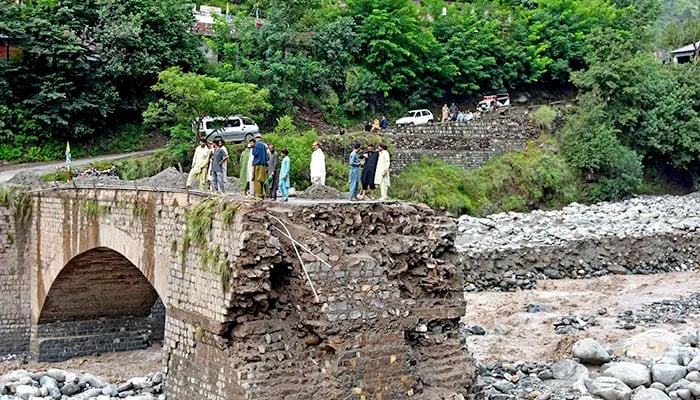
ISLAMABAD: The Pakistan Meteorological Department (PMD) on Sunday issued a Glacial Lake Outburst Flood (GLOF) alert for northern regions of the country, warning that widespread rain, thunderstorms and isolated heavy falls in mountainous areas could trigger flash floods, debris flows and glacial lake outburst floods in vulnerable valleys of Khyber Pakhtunkhwa and Gilgit-Baltistan.
According to the alert issued by the PMD’s Research and Development Division, a moderate westerly weather system is expected to enter upper parts of the country and begin affecting KP from Sunday before extending to Gilgit-Baltistan by Monday.
The Met Office warned that the prevailing weather conditions could significantly increase the risk of GLOFs and flash flooding in glaciated regions -- including Swat, Lower Chitral, Dir, Upper Hazara, Kohistan, Hoper, Ghulkin, Shishper, Ghizer, Hunza, Nagar, Ghanche, Shigar and Astore.
GLOF occurs when lakes formed by melting glaciers suddenly burst due to rising pressure, heavy rainfall or collapse of ice and moraine barriers, unleashing massive volumes of water, rocks and debris downstream within minutes.
Pakistan is considered among the countries most vulnerable to climate change and glacial melting. According to official estimates, the country has over 7,000 glaciers, many of them located in Gilgit-Baltistan and KP, where rising temperatures and erratic weather patterns have increased the threat of glacial lake floods in recent years.
The PMD has advised residents living in vulnerable valleys to avoid riverbanks and stream beds during rainfall, monitor local nullahs for sudden muddy water flows or unusual sounds of moving rocks and shift livestock and valuables to safer higher ground.
The department also urged local communities to remain in close coordination with community-based disaster risk management committees and maintain communication with technical focal persons in remote valleys.
Disaster management authorities, including NDMA, PDMA-KP and Rescue 1122, have been directed to remain on high alert and ensure dissemination of warnings through SMS alerts and social media platforms to prevent any loss of life or property.
Officials warned that extreme weather events linked to climate change, including floods, heatwaves and glacial melting, are becoming increasingly frequent in Pakistan, posing serious threats to communities living in mountainous and flood prone regions.