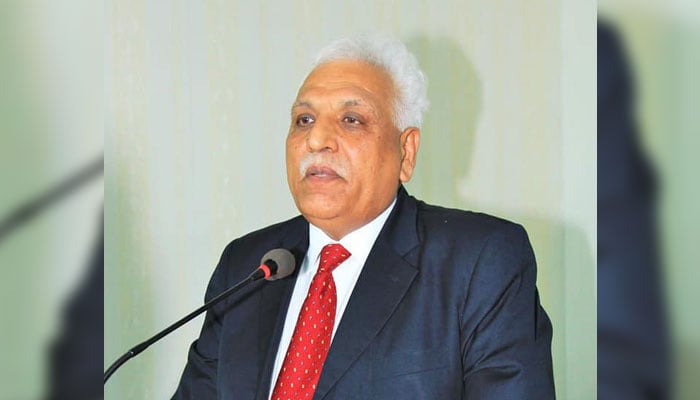
PESHAWAR: A leading mental health expert and former head of the World Psychiatric Association, Prof Dr Afzal Javed, has said internal and external displacement, caused by different factors, are one of the reasons for the psychological issues.
“While many countries focus on external refugees, internally displaced persons are equally important but often overlooked,” he said while speaking at an online session organised by the Horizon organisation at Ibadat Hospital.
The session was part of efforts to train field teams and partner community workers. Dr Afzal Javed highlighted multiple challenges related to mental health and suggested practical strategies for professionals to cope with them.
Referring to displacement and migration, he said Western countries mainly deal with external refugee issues, whereas Pakistan faces both external refugees and internal displacement. “This issue needs greater visibility and discussion,” he emphasised.
He explained that internal displacement results from both man-made disasters, such as conflict and violence, and natural disasters, including floods and climate events. “Pakistan is dealing with both simultaneously, making the situation more complex,” he added, urging the media to highlight these challenges to help identify solutions.
Dr Afzal Javed said this dual burden increases the importance of the mental health sector, as such issues are rising rather than declining. “Mental health organisations should train professionals to deal with displacement-related challenges through structured programmes,” he suggested.
Highlighting emerging psychosocial factors, he said elements such as faith, hatred and social divisions are intensifying displacement. “Previously, conflicts were largely economic, rich versus poor, but now they are more complex and socially driven,” he noted. He urged mental health professionals to engage in training and dialogue and forward their recommendations to the government, with a focus on prevention and intervention strategies.
Acknowledging existing limitations, he pointed to achievable measures such as providing psychological first aid to vulnerable populations and involving religious leaders in mental health support.
Sharing a model from a neighbouring country, he said mental health services were integrated into religious centres, including a shrine and a temple. “The government deputed medical officers at these places without interfering in religious practices. Religious leaders and medical professionals worked collaboratively, which proved successful,” he explained.
He identified key success factors as mutual respect, non-interference in roles, cultural sensitivity, and gradual medical intervention when required, calling it an effective model that Pakistan could replicate.
Dr Afzal Javed proposed joint initiatives between religious leaders and mental health professionals, utilising existing religious institutions and community-based support systems.
Comparing psychological challenges in the West and Pakistan, he said strong public services in Western countries reduce basic survival stress, but issues such as loneliness, ageing populations, longer post-retirement life, high treatment costs, and weak family support systems persist.
“In Pakistan, there is greater financial stress and lower life expectancy. Family systems are stronger but increasingly under pressure,” he added.He noted that anxiety and depression are rising globally, but the situation is more severe in Pakistan due to economic hardship.
Dr Afzal Javed said individuals with mental illness face a double burden, as they often cannot afford treatment, struggle to earn a livelihood, and become dependent on their families.Estimating treatment costs, he said around Rs7,000 per month is required for chronic mental illness. “This financial burden leads to treatment discontinuation and frequent relapses,” he lamented.
Earlier, he appreciated the Horizon NGO and Pakistan Psychiatric Society ‘s fieldwork in Buner after cloudbursts and floods. He praised Horizon for establishing a satellite clinic in Bajaur and serving patients through tele-psychiatry from Peshawar during conflict and kept the practice continued even later.
“The work was risky but commendable. Many professionals would avoid such situations, yet this was carried out and should serve as a model for future practitioners,” he said, lauding Prof Dr Khalid Mufti, Prof Dr Ali Mufti and their team.