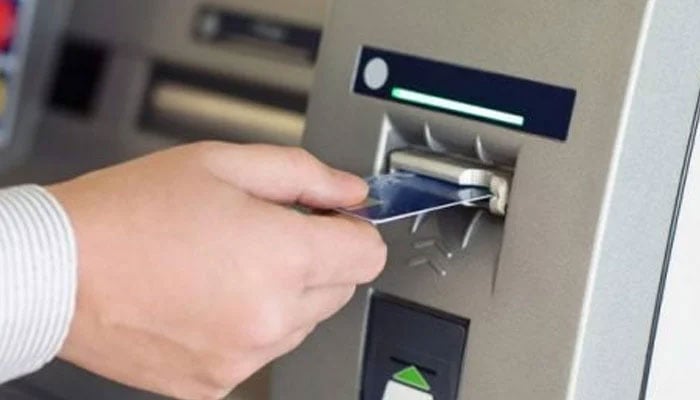
A consumer court has ordered a private bank to pay Rs15,000 as compensation to a customer over the bank’s faulty ATM service.
Advocate Faraz Faheem had filed a complaint with the Consumer Protection Court (South) seeking Rs50,000 as compensation from the defendants, a private bank and a payment gateway company, after he was unable to withdraw cash and his ATM card was withheld due to the malfunctioning of the machine.
Judge Abul Ahad Memon ruled that the bank was “deficient in rendering proper ATM services to the complainant”. He noted the record reflecting that due to the ATM malfunctioning, the complainant was not only deprived of access to his funds at a crucial time but was also subjected to considerable inconvenience, embarrassment and disruption of his professional commitments.
“The ATM machine failed to dispense cash despite completing the transaction process, wrongfully retained the ATM card, and compelled the complainant to visit the bank branch on the following working day, thereby causing loss of valuable time and additional expenses.”
The court directed the bank to pay Rs15,000 as compensation to the complainant “on account of mental agony, inconvenience and deficiency in service”.
The complainant said that on September 29, 2019, he went out for dinner with his friends. He said he visited the ATM facility of the private bank for the purpose of withdrawing cash.
He added that upon inserting his ATM card into the machine, he followed the standard procedure by selecting the language, entering his PIN code, choosing the account type and specifying the withdrawal amount.
Then, he said, a message appeared on the screen directing him to collect the cash; however, no cash was dispensed. The complainant said he distinctly heard the cash dispenser counting currency notes inside the machine, but the cash was not delivered.
He said that simultaneously, the machine attempted multiple times to eject the ATM card, but failed, and ultimately the card was captured by the machine.
After a short interval, the transaction was aborted and a slip was issued indicating that the withdrawal had been declined and that the card had been captured, he added.
The complainant said that as a consequence of the said malfunction, he was left without cash and was subjected to embarrassment as he was unable to make payment for the dinner.
He said that next day he visited the relevant private bank branch, where he was kept waiting for an hour before he was handed back his ATM card after filling out the required form.
He also said that there were at least two other people present there who had experienced the same issue, which means the ATM was defective.
However, the defendant filed an application under the Civil Procedure Code’s Order VII, Rule 11, seeking rejection of the plaint primarily on the grounds that the complainant does not fall within the definition of a “consumer” under the Sindh Consumer Protection Act, 2014.
The defendant explained that no consideration was paid to the bank for the use of ATM services, and that no service was in fact rendered due to the declining of the transaction on account of “MCRW Reversal”, and therefore no question of defective service arises.
It was further contended that the matter is governed by special laws, including the Payment Systems & Electronic Fund Transfer Act, 2007, and the Banking Companies Ordinance, 1962.
Therefore, said the defendant, ousting the jurisdiction of the consumer court in view of Article 143 of the Constitution, adding that the proper forum, if any, is the Banking Mohtasib, rendering the plaint barred by law and liable to rejection.
In its written order, the judge noted that the bank relies upon system-generated ATM reports, and has pleaded that the transaction was reversed (MCRW reversal), suggesting that no financial loss occurred.
“However, mere reversal of the transaction does not absolve the defendant from liability where the service itself was rendered in a deficient and faulty manner,” he said.
“The inability of the ATM machine to dispense cash despite processing the transaction, coupled with wrongful capture of the card, clearly indicates malfunctioning of the machine and lack of proper maintenance.”