Death comes in many forms. Around the world, we have seen it come from bombs, bullets and firearms of various kinds. But sometimes there is no visible act of violence involved, only one of evil and ignorance.
The gentle plunge of a syringe can cause mass death and it does way too often. We do not talk about such incidents often enough or openly enough. They are ignored by politicians, policymakers and people who talk of politics, war and foreign affairs in drawing rooms.
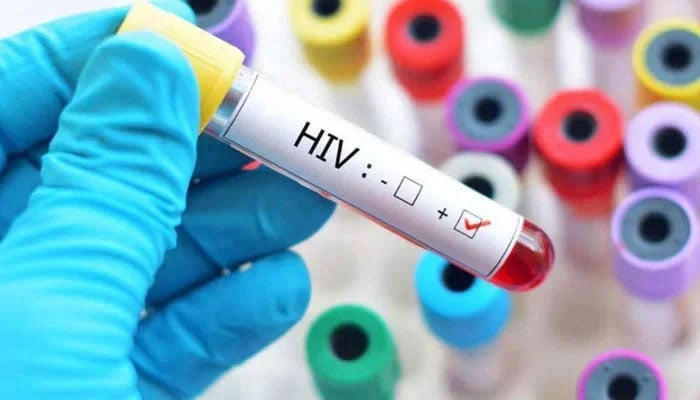
Their conversation rarely moves to that of a small child in Ratodero or Taunsa, suffering for days from high fever and finally diagnosed with HIV. In at least two known instances, one in Ratodero in 2019 and one in the Punjab town of Taunsa in 2026, hundreds, the majority of them children, contracted HIV due to the use of re-used syringes. In Ratodero, the investigation showed that this came from the same syringes used by drug addicts, being used on children either in the form of vaccination or for other ailments. One practitioner was thought to be at the helm of this outbreak.
According to the Pakistan Medical Association, there are 600,000-900,000 quack doctors practising in Pakistan. They do not have licences or any other qualifications. The data available says that at least 38 percent of syringes used to vaccinate people are reused. According to some assessments, 70 per cent are unsafe. This has given rise to 17 million cases of hepatitis, according to the limited research conducted into the matter. The true figures are probably unknown, since many cases go undiagnosed. While there have been many drives against quacks, it is also known that despite efforts by the Drug Regulatory Authority of Pakistan and other organisations working in the private sector, reused syringes are also commonly used in public and private hospitals. Researchers looking into the matter have seen nurses going through hospital waste to salvage syringes that may have been used many times and perhaps using them in some kind of private practice or in the homes of people where they deliver injections.
The matter is complicated by the fact that a huge number of people in Pakistan demand injections rather than tablets, with 15 billion syringes officially known to be used every year and an average of one person receiving over four injections annually. This is amongst the highest rates in the world. It is commonly believed by people that injections, for whatever reason, are more effective than medication, which comes in safer forms.
One reason for this is that injections, and notably the ‘drips’ that we use so commonly, give quick relief from dehydration or, in some cases, from pain. But the same job could be done by the oral use of either liquids, unless the patient is unable to safely swallow them or by a tablet, which may act over a slightly longer period of time but can protect that patient from developing a more serious illness, such as Hepatitis or the very worst-case scenario, even HIV.
Infections are also common from dialysis, especially when delivered at facilities where unsafe practices are the norm. The demand from patients that they receive an injection rather than oral medication is a problem doctors identify again and again as a reason for giving shots from syringes rather than prescribing oral tablets or syrups, notably in the case of children. The belief that injections are important is deeply ingrained in the psyche. Of course, in a better system, doctors would simply refuse to go against good medical practice and decline an injection. But many doctors are more concerned with keeping business good than with following ethical practices, even when they know that using a syringe is unsafe and unnecessary in the vast majority of cases. The will of a patient should not prevail over the good sense of a trained doctor.
The fact that this happens so commonly is known only from the few outbreaks that have been openly identified in the country. There may be other cases across the nation where such events have occurred, and indeed they probably happen every day without any data being recorded. The PMA says that vaccination teams are often turned away or even threatened with violence by patients and doctors alike on the basis that they belong to a setup which is not trusted and where no one in authority is held as being able to offer good advice.
The problem should not be ignored. We need to educate people about what is safe for them and to put in place far more draconian action to prevent quacks from practising medicine in small, dingy clinics charging a few hundred rupees. The fact that this fee falls far below the thousands charged by many regular doctors is, of course, a problem. Public sector hospitals, which charge nothing, need to offer far better service and free medicines. Patients should not be made to run from one part of the facility to an office a distance away simply to obtain a few pills which can prevent pain or some other ailment.
There are also other issues which need to be tackled, such as the huge use of antibiotics in a country where we now have drug-resistant tuberculosis and other drug-resistant diseases appearing more and more often. Ecoli infections are an example. Both patients and medical practitioners need to be educated and we need to find ways to follow safe medical practices, going by the often-quoted medical mantra that the first task of a doctor, a nurse, or any other practitioner is to cause no harm to the patient. In our country, harm is a frequent hazard of visiting a doctor.
The writer is a freelance columnist and former newspaper editor. She can be reached at: [email protected]