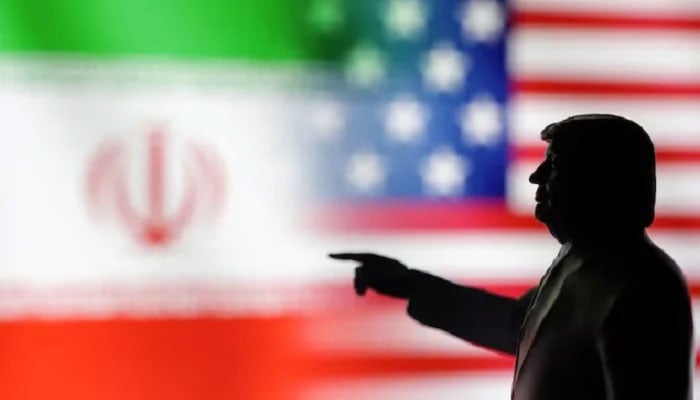
Many analysts are of the view that the USA has made a huge blunder by attacking Iran, driven by Israel’s ambitions, and is now stuck in a self-manufactured quagmire.
There may, however, be a much smarter scheme of things underneath this apparent blunder. The Great Game has returned, but not in the form of imperial cavalry or territorial conquest. Today, it is fought through oil flows, currencies, sanctions and supply chains that determine who controls the global economy.
For decades, the US anchored its global dominance through the petrodollar system. Following the collapse of the gold standard in 1971, Washington reached an understanding with key Gulf producers, especially Saudi Arabia, that oil would be priced in US dollars. This ensured that every country importing oil had to hold dollars, reinforcing global demand for the currency.
This arrangement helped sustain US economic power even as its debt expanded – today standing at roughly $39 trillion. The stability of this system is now being severely tested. China and Russia are increasingly trading energy in alternative currencies, while countries across Asia and the Middle East are experimenting with non-dollar settlements. To counter this and maintain US scientific and economic domination, US must devise an alternative geopolitical strategy. President Trump has come forward with a brilliant strategy in this respect. The Iran war needs to be seen in this perspective.
US oil and gas exports generate roughly $300-400 billion annually, depending on prices. The Gulf region – particularly Saudi Arabia, Iraq and the UAE – collectively exports around 20–25 mb/d of crude oil. At an average price of $80 per barrel, this represents an annual export value of roughly $600-700 billion. Before sanctions, Russia exported about 7–8 mb/d of crude and refined products, generating $200-300 billion annually. Together, these regions account for a substantial portion of the global supply. To dramatically increase US influence as the world’s main energy source, Gulf supplies need to be severely disrupted.
Such a disruption would severely undermine China’s rapid economic and technological advancement. China is the world’s largest importer of oil, consuming about 15–16 mb/d and importing over 10 mb/d. Much of this supply comes from the Middle East, Russia, and previously Venezuela. This is now severely threatened, a key factor in the new Great Game being witnessed.
The US has already used sanctions as a powerful tool to squeeze both China and Russia economically. Chinese refiners purchasing Iranian oil, for example, have faced sanctions, forcing them to operate through opaque networks. Russia, meanwhile, has been compelled to sell oil at discounts of $10-20 per barrel, significantly reducing its revenue.
The Iran war could yield significant financial benefits for the US. If 80 per cent of exports from these regions – roughly 20–25 mb/d – were disrupted and replaced by US exports, American output would increase dramatically, potentially reaching 20 mb/d or more. At $80 per barrel, this additional 20 mb/d would generate approximately $1.6 billion per day, or nearly $600 billion annually in additional revenue. When combined with existing exports, this could push total US energy export revenues towards $ 900-1000 billion per year, exceeding the current export earnings of the entire Gulf region.
The increased production would stimulate investment in US infrastructure, create jobs, and strengthen the dollar by reinforcing its role in global trade. In such a scenario, the US would not only remain an energy superpower but also become the central pillar of global supply. Such an increase in energy export revenues would reinforce the US’s already substantial military edge by expanding the resources available for research, development, and deployment of advanced defence technologies. This could accelerate investment in areas such as AI–enabled warfare, hypersonic systems, cyber capabilities, space-based assets and next-generation naval and air platforms. Such investments would deepen qualitative superiority rather than merely quantitative strength, allowing the US to project its power with greater precision and reach.
A central but often under-appreciated pillar of the modern Great Game is the massive expansion of US pipeline and energy transport infrastructure, which underpins America’s rise as a dominant global energy supplier. Companies such as Energy Transfer now operate vast integrated systems, linking shale basins to export terminals and global markets, while continuing to invest heavily, with planned capital expenditure of $5–5.5 billion in 2026 alone to expand gas and oil transport networks. These pipelines are strategic arteries enabling US crude, natural gas and LNG to reach Europe and Asia, displacing supplies from Russia and the Middle East.
Recognising this structural shift, Qatar has moved decisively to align itself with the expanding U.S. energy system. Through QatarEnergy, it has committed roughly $20 billion in US energy investments, including the flagship Golden Pass LNG project in Texas valued at over $10 billion, where it holds a 70 per cent stake in partnership with ExxonMobil. The result is a mutually reinforcing system: US companies build and control the physical energy corridors, while Gulf capital – particularly from Qatar – helps finance and accelerate this expansion, consolidating a new axis of energy power at the heart of the evolving Great Game.
There is no evidence that Iran was building nuclear weapons, and the creation of this perception appears to be another clever move. The military and economic destruction of Iran in the present war will enhance Israel’s regional position by reducing one of its principal adversaries and enabling it to expand across Lebanon and Syria. The US and Israeli strategy in Iran is far smarter than most are giving credit for. It will ensure the US’s domination as the world’s only superpower.
The present war in Iran, therefore, needs to be seen from a completely different perspective than it is a US blunder caused by pressure from Israel or the powerful Zionist lobby in the US. It may well be part of a well-thought-out strategy to counter the loss of US economic dominance due to the collapsing petrodollar. It may be a scheme to promote US hegemony worldwide by making it the major energy supplier, with the ‘E-dollar’ replacing the Petrodollar.
If the US attacks Iran again soon and destroys its oil refineries, it will be on the expectation that Iran will respond by attacking oil installations in the Gulf countries, thereby curtailing their capacity to export oil from the Gulf for many years. This will be a desirable outcome, as it will serve to meet US interests, as outlined above, in the Great Game now being played.
The writer is a former federal minister, Unesco science laureate and founding chairperson of the Higher Education Commission (HEC). He can be reached at: [email protected]