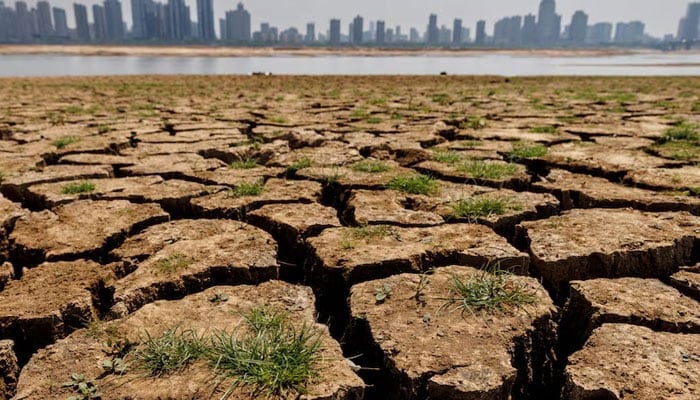
Pakistan’s wheat farmers, early last month, braced for the worst when short-lived spells of rising temperatures hit hard prematurely. Though Pakistan subsequently received rainfall in many parts of the country, the short-lived episode of earlier arrival of summer delivered a harsh message.
In recent years, Pakistan has become a widely noticed frontline state targeted by some of the worst manifestations of climate change. Heavy rainfall in 2025, followed by flash floods, caused massive harm to livelihoods. A larger spell of climate change-related disasters is set to unfold this year, with the National Disaster Management Authority (NDMA) predicting a higher incidence of rainfall in 2026 than a year ago.
Meanwhile, the plight of Pakistan’s rural dwellers will not just remain confined to them. The country’s growing food insecurity, though easily ignored by some in Pakistan’s ruling structure, will inevitably haunt the country, rural or urban, in times to come. Conditions across Pakistan have been further complicated by the fallout from the consequences of the US-Israeli attacks on Iran. The fast-rising global oil prices, followed by mounting inflation, have also hit Pakistan hard. To make matters worse on the climate change front, the unfolding catastrophe is set to hit this summer’s crops and possibly beyond.
Together, these factors have begun to eat hard into Pakistan’s near-, medium- and long-term outlook. Already, last week’s decision by the State Bank of Pakistan to raise its interest rates by one per cent to 11.5 per cent and the latest inflation figures suggesting an upward trend, indicate an inevitable belt tightening, notably forced upon low-income households.
Pakistan’s emerging picture must serve as a major warning to the country’s top decision-makers. The future is set to be much harder as time goes by. Meanwhile, the diplomatic uptick in ties with US President Donald Trump has left a gap that remains to be filled. Though Pakistan has extended recent favours to the US as Islamabad has pushed for a dialogue between Washington and Iran, a baffling question remains unanswered. What would Pakistan get in return to tackle the fallout from a US-imposed war that has only deepened Pakistan’s economic plight? For now, Pakistan’s decision-makers need to think hard about drawing up a cost-benefit analysis, as President Trump’s popularity numbers are declining across the US.
However, the part of the road ahead that still remains in Pakistan’s hands is driven by domestic policy choices, such as abandoning initiatives that offer no benefits to address the emerging crises, or whose returns will come in the medium to distant future. As a reference point, former prime minister Nawaz Sharif, during his first tenure in the early 90s, laid down the foundation for a large network of motorways across Pakistan. That was also an era when thousands of yellow taxis were given on concessional loans to unemployed individuals, supposedly to help them earn a sustainable living.
On both counts, the results have nothing to show for turning Pakistan into a high-growth, successful economy. The dream of turning Pakistan into another proverbial Asian ‘tiger’ economy is still waiting to happen. But the downside of that policy has haunted Pakistan for decades.
The country’s population living below the poverty line has remained steady, or according to some reports, even increased. With a population of at least 250 million, even keeping the proportion of the impoverished constant will fail to stem the rot. The social consequences of such a large population, almost 60 per cent of whom live in villages, are harsh enough to demand an emergency change.
The road ahead must be built upon abandoning all infrastructure projects except those that are more than halfway through and considered essential. Others considered a necessity, such as dams for water storage in an increasingly water-deficient country, need to be carefully considered and urgently pursued.
Meanwhile, as food insecurity increasingly bites Pakistan’s lower-income households, there is an urgent need to refocus national attention on revamping the entire agricultural sector. This must range from the crops across the country spread over a variety of geographical and weather patterns, to rebuilding the much too precious livestock sector. For long, these sectors received little more than lip service and far less than what was necessary.
The changing weather patterns targeting Pakistan have created a large enough emergency to warrant immediate attention. For long, Pakistan’s output of various crops has either fallen short of expectations or barely met the target. Increasingly, impoverished farmers have become financially overstretched, as the state at the federal and provincial levels has neglected their needs.
But with the awfully powerful reality of climate change increasingly knocking hard at Pakistan’s doorstep, neglecting agriculture in favour of other fanciful choices is just not an option. It may mark the difference between survival and not.
The writer is an Islamabad-based journalist who writes on political and economic affairs. He can be reached at: [email protected]