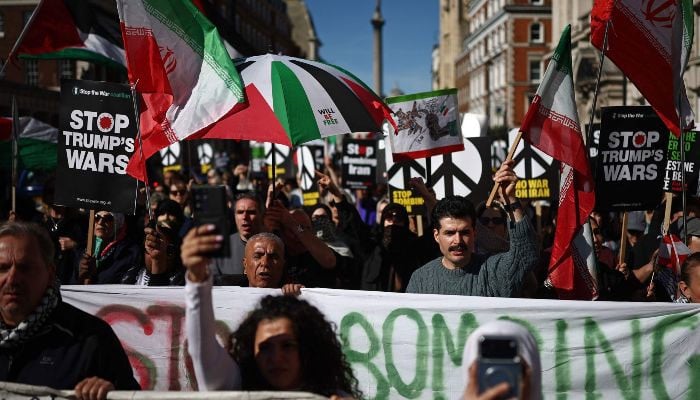
West Asia, specifically, and the world generally, is now witnessing moves towards the end of the US-Israel kinetic war of aggression against Iran.
Clearly, the hot kinetic contestation between Israel, supported by the US, and Iran plus West Asia will likely end. Pakistan’s mediation continues, even with potholes along the way, towards some form of Iran-US negotiations. US President Trump has paused Project Freedom, the US operation linked to the Strait of Hormuz, reportedly after diplomatic appeals from Pakistan and others, and the blockade of Iranian ports appears to be weakening.
However, soon, a US-Iran settlement, the region emerging from it is not the region that existed before February 28. Overall, the Gulf region remains fragile on the security front. For Pakistan, its active mediation was never only as a diplomatic track between Tehran and Washington. It was and is taking place inside a rapidly shifting regional battlefield, where deterrence, Gulf security, Israeli military reach, maritime chokepoints, Muslim-state politics and great-power pressure are converging. The larger picture signals a very significant strategic shift, especially regarding Israel and the UAE. What began as a crisis over Iran, the US and Hormuz is now reshaping the Gulf’s internal security architecture.
So, for us to understand what Pakistan is dealing with today in West Asia, understanding this post-war strategic landscape is important. Nevertheless, before assessing where the region stands now, five features of the pre-war environment are important. First, West Asia was already in deep tension. Iran-US tensions were active, Israel’s assault on Gaza continued and the humanitarian catastrophe in Gaza remained central to Muslim public opinion. In the West Bank, annexation and settlement expansion continued despite earlier indications from US President Trump that such moves would be restrained. Gaza was also being reframed and controlled by Israel through reconstruction and ‘peace board’ proposals, but the ground reality remained occupation, devastation and dispossession. Alongside this, senior pro-Israel voices were normalising the idea that Israel could take control of territory belonging to other states. The expansionist security thinking was no longer confined to Palestine.
Second, Pakistan was actively engaged in diplomacy. Islamabad was working a parallel track with Iran, the US and regional states, excluding Israel. Senior Pakistani visits to Iran, top-level engagement with Washington, and consultation with regional capitals were part of an effort to promote dialogue and prevent a wider war. Pakistan’s instinct was to keep channels open.
Third, Pakistan had formalised its long-standing security relationship with Saudi Arabia through the Strategic Mutual Defence Agreement of September 17, 2025. The agreement declared that aggression against either country would be treated as aggression against both. This was not a new relationship created overnight; it gave formal architecture to decades of defence cooperation, training, strategic trust and political confidence. Its wider significance was clear. Gulf states were also looking at Pakistan as a credible security partner: a professional military power, a nuclear state, and a country with a long history of engagement with West Asia. Fourth, tensions between Saudi Arabia and the UAE were surfacing, particularly over Yemen. By late 2025, this friction became open. Yemen matters because it is not only a local battlefield; it is linked to Red Sea security, Bab al-Mandab, Gulf rivalry and maritime routes.
Fifth, despite KSA-UAE tensions, there was still relative Muslim-state unity against Israel’s aggression. Deep security and financial ties with the US meant that, despite subtle complaints against US support of Israel, continued US-West Asia engagement remained intact. But Israel was different. Its aggression, its genocidal conduct in Gaza and its expanding footprint in Syria and other theatres generated deeper anger across the Muslim world. After Israel’s attack on Iran in 2025, this sense of common threat intensified. Pakistan emerged not only as a strong voice for Iran’s right to defend itself, but also as a potential security partner for the wider Muslim region. Pakistan’s foreign minister had indicated that other countries had approached Pakistan for defence understandings, including Iraq, Egypt, Qatar and other Gulf states.
Where are we now after the US-Israeli war against Iran?
Overall, the military and economic environment has contributed to de-escalation. Also, the Pakistan-facilitated diplomacy has helped create an environment in which Washington and Tehran can move away from direct confrontation. The US has discovered that defeating Iran militarily is not simple. Despite Israeli encouragement and the projection of American-Israeli power, Iran was not defeated. Hormuz remained a pressure point. Global energy markets were shaken. Shipping, insurance, oil prices and wider economic confidence were affected.
Washington’s launch through Centcom of Project Freedom also demonstrated the limits of unilateral US moves. With no country joining this project, even to open the much-needed Strait of Hormuz, there is an urgent need for a negotiated arrangement. Iran, too, appears to understand that structured negotiation may serve its interests better than prolonged confrontation. Some agreement around Hormuz, maritime movement and de-escalation is therefore likely. It may not be a comprehensive peace, but it can become a practical arrangement to prevent immediate collapse.
However, the most critical shift is that Israel has moved deeper into the Gulf security space. It is no longer operating only in Palestine, Lebanon, Syria and Jordan’s strategic neighbourhood. If it also has presence now in one part of the Gulf, then Israel has entered the southern Gulf in a direct military form. This has implications not only for Iran, but also for Saudi Arabia, Pakistan, Turkiye and the wider Muslim world.
This is where the war may continue through other means. Israel’s strategy is likely to focus on expanding its military, intelligence and security footprint; creating divisions among Muslim states; deepening its presence in the Gulf; and pushing its long-standing dream of a wider Israeli security order. The absence of a firm American pushback against Israel’s expansionist ambitions makes this even more dangerous. Israel has no internationally declared final borders. Instead, it’s aggression projects Tel Aviv’s belief that its security zone can extend deep into the territories and strategic spaces of others.
By contrast, Pakistan is playing the role of stabiliser. Its approach combines deterrence, diplomacy, dialogue, international law and regional reassurance. Throughout the current war, Pakistan’s objective was to diplomatically push back against any confrontation between Iran and Saudi Arabia. Equally, Pakistan prevented further bloc creation within the Muslim world. Its effort has been to keep Iran talking, keep Washington engaged, reassure Gulf partners, and maintain close coordination with China and other major stakeholders.
This is outstanding constructive diplomacy. Pakistan must retain Iranian trust, maintain working channels with the US, reassure Saudi Arabia and the Gulf, keep China fully in the loop and prevent Israel’s expansionist strategy from turning West Asia into a permanently destabilised battlefield. This requires strategic patience, clarity and national unity.
West Asia today stands at a crossroads. One path is shaped by Israel’s expanding military footprint, backed by American indulgence and aimed at a region fragmented by fear, rivalries and dependency. The other path is represented by Pakistan’s stabilising diplomacy: dialogue backed by credible deterrence, Muslim-state coordination, maritime security and respect for sovereign equality.
The challenge for Pakistan is to sustain this role beyond the immediate crisis. It must convert its current mediation into a broader regional vision for stability and security. That vision should protect Hormuz, prevent Muslim-state infighting, resist Israeli expansionism, reassure the Gulf, engage Iran and work with China and other powers to prevent West Asia from being reduced to a devastated landscape of proxy wars and externally designed instability.
Pakistan’s role is central to the emerging security debate and action in West Asia. It is acting as a credible convenor, a deterrent-capable Muslim state and a stabilising regional actor at a moment when the region is being pulled between war and negotiation, fragmentation and order, expansionism and restraint.
Pakistan’s work is cut out if it must credibly lead as a collective stability and security provider for West Asian states, before the next phase of the war by Israel begins by other means.
The writer is a foreign policy & international security expert.
X/Twitter: @nasimzehra
Email: [email protected]