Balochistan, Pakistan’s largest yet least developed province, sits atop a geological treasure trove that could transform the country’s economic trajectory.
Rich in copper, gold, rare earth elements and other critical minerals, the province has increasingly drawn global attention, most recently from the US, as highlighted in a detailed report by The New York Times on renewed international interest in the Reko Diq project.
Yet beneath the optimism lies a stark reality: decades of governmental neglect, limited domestic capacity for extraction and a worsening insurgency led by the Baloch Liberation Army (BLA) threaten to turn this promise into a prolonged paradox.
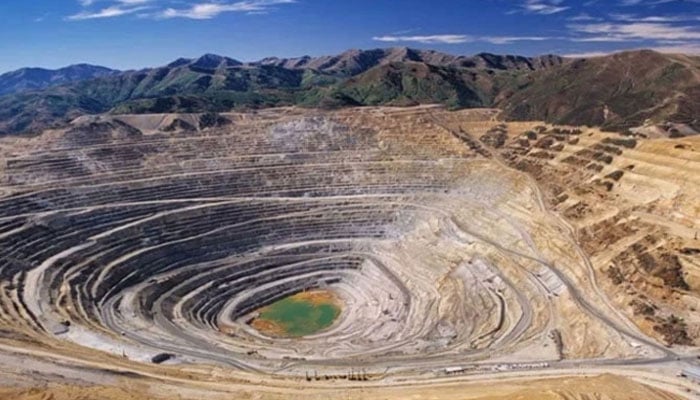
At the heart of the discussion is the Reko Diq mine, often described as one of the world’s largest untapped reserves of copper and gold. Estimates suggest it holds around 13 million tons of copper and 17 million ounces of gold, potentially generating tens of billions of dollars over decades. For a country grappling with fiscal constraints and external debt, such resources offer a pathway to economic stabilisation. However, the persistent inability to translate resource wealth into broad-based development raises fundamental questions about governance and priorities.
The core issue is not the absence of wealth, but the absence of a coherent, sustained strategy to develop it. Successive governments in Pakistan have failed to build the institutional and technical capacity necessary for large-scale mineral extraction. Instead, reliance on foreign companies – whether from China, Canada or now the US – has become the default model. While foreign investment is not inherently problematic, the terms of engagement often reflect asymmetry: technology, expertise and profits remain externalised, while local communities see minimal benefits.
This governance deficit is particularly visible in Balochistan. Despite hosting vast mineral reserves, the province continues to rank lowest in human development indicators. Infrastructure remains underdeveloped, access to education and healthcare is limited and employment opportunities are scarce.
Local stakeholders frequently argue that revenues generated from mining projects are neither transparently managed nor equitably distributed. As one local business leader noted, the people of Balochistan often do not even know where their resources are going.
Such perceptions are not merely rhetorical; they have real political consequences. The sense of economic dispossession has fueled long-standing grievances, feeding into a broader narrative of marginalisation and exploitation. This, in turn, has provided fertile ground for insurgent groups like the BLA, which frame their struggle as one of resistance against both state neglect and external exploitation.
The resurgence of the BLA shows how deeply intertwined security and economic issues have become in Balochistan. According to media reports, the group has significantly escalated its operations in recent years, carrying out increasingly sophisticated and coordinated attacks, including a major assault involving hundreds of militants across multiple locations. These attacks have not only targeted security forces but also infrastructure linked to mining projects, including routes leading to Reko Diq.
This evolution of the insurgency, from sporadic attacks to large-scale operations, signals a troubling shift. It reflects not only improved organisational capacity but also a degree of local support or acquiescence. A number of reports written on the subject suggest that such operations require territorial familiarity, logistical networks and at least passive community backing. This complicates the state’s response: a purely military approach risks deepening alienation, while a purely economic approach is undermined by insecurity.
The security situation has already begun to affect investor confidence. Barrick Gold, a key stakeholder in the Reko Diq project, has reportedly slowed development timelines due to security concerns. This delay illustrates a broader dilemma: without security, investment stalls; without investment, development stalls; and without development, insecurity deepens. It is a vicious cycle that has defined Balochistan for decades.
Compounding these challenges is Pakistan’s limited domestic capacity in the mining sector. Unlike countries that have successfully leveraged natural resources – such as Chile in copper or Australia in minerals – Pakistan lacks a robust ecosystem of trained geologists, mining engineers and regulatory institutions. Technical expertise is often imported, and local participation remains confined to low-skilled labour. This not only limits value addition but also reinforces perceptions of exclusion among local populations.
The absence of downstream industries further weakens the economic case for extraction. Raw materials are often exported without significant processing, meaning that much of the value chain and associated employment, occurs outside Pakistan. Developing refining, smelting and manufacturing capabilities would require long-term planning, investment in human capital and policy continuity – areas where Pakistan has historically lagged behind.
Another dimension often overlooked is environmental governance. Large-scale mining projects carry significant ecological risks, particularly in arid regions like Balochistan where water scarcity is already acute. Weak regulatory oversight raises concerns about sustainable extraction and the long-term impact on local communities. Failure to address these issues could exacerbate existing grievances and further undermine the legitimacy of the state’s development agenda.
The New York Times report aptly highlights how the BLA has emerged as a “project-defining risk” for mining ventures in the region. This characterisation is significant: it suggests that security is not a peripheral concern but a central determinant of economic viability. Any strategy that seeks to unlock Balochistan’s mineral wealth must therefore integrate security, governance and development into a unified framework. What, then, is the way forward?
First, there is an urgent need for a new social contract in Balochistan, one that prioritises local ownership and participation. This means ensuring that a meaningful share of revenues is reinvested in the province, coupled with transparent mechanisms for accountability.
Second, capacity building must become a national priority. Investing in education, technical training, and institutional development can gradually reduce dependence on foreign expertise and create a more inclusive economic model.
Third, the state must rethink its approach to the insurgency. While security operations may be necessary, they cannot substitute for political engagement. Addressing grievances related to governance, representation and human rights is essential to undercutting the appeal of militant narratives. Finally, environmental and social safeguards must be strengthened to ensure that development is sustainable and equitable.
Balochistan’s mineral wealth is both an opportunity and a test. It offers Pakistan a chance to reshape its economic future, but only if managed wisely. Otherwise, it risks becoming yet another example of the ‘resource curse’, where abundance coexists with underdevelopment and conflict.
As the New York Times report makes clear, the stakes are high – not just for Pakistan, but for global investors and regional stability. The question is not whether Balochistan is rich in resources but whether Pakistan can build the governance structures, institutional capacity and political consensus needed to harness that wealth for the benefit of its people.
Until then, the province will remain a land of immense promise, overshadowed by persistent neglect.
The writer is a former ambassador of Pakistan to Iran and the UAE. He is also a former special representative of Pakistan for Afghanistan and currently serves as a senior research fellow at the Islamabad Policy Research Institute (IPRI).