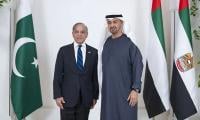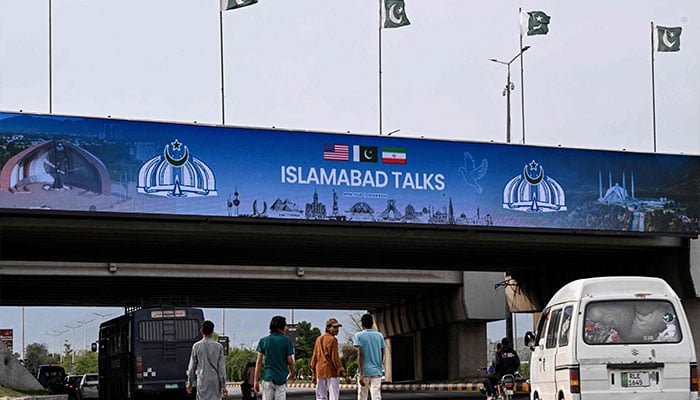
Pakistan once again finds itself at a moment of geopolitical relevance. Its role in easing tensions between the US and Iran has drawn international attention, reaffirming a foreign policy approach that maintains close ties with China, functional engagement with the US and improving relations with Russia, while retaining deep security and economic linkages with the Gulf and a long border with Iran.
The steady value of Pakistan’s military cooperation with Saudi Arabia and other Gulf states has also been recognised.
In a fragmented global order, the ability to engage across rival blocs is a strategic asset. But diplomacy, however skilful, does not substitute for economic strength. If anything, Pakistan’s recent experience underlines a familiar truth: geopolitical relevance creates opportunity, but only domestic reforms convert that opportunity into a durable gain.
Even as Pakistan’s international stature has risen, its economy remains fragile. Growth is modest, poverty levels remain elevated and employment generation is insufficient for a rapidly expanding population. Export performance continues to lag regional peers, while structural weaknesses – low productivity, poor skills and a narrow industrial base – persist. The external account remains vulnerable, exposed to commodity price shocks and dependent on external support.
Recent developments have compounded these challenges. Disruptions in the Strait of Hormuz have pushed up energy costs and heightened uncertainty. For Pakistan, which relies heavily on imported fuel and petrochemical inputs linked to Gulf supply chains, the economic impact extends beyond oil prices to general inflation. This is a reminder that the current conflict is not only military in nature; it is equally an economic contest, where resilience and preparedness determine outcomes.
The question is whether this moment will be used to enforce discipline and direction or dissipated in short-term adjustments. Can the hybrid model that worked well to enhance Pakistan’s global relevance convert economic stability into sustainable, meaningful growth?
In this context, a recent experiment was the Special Investment Facilitation Council (SIFC). Conceived to fast-track investment by cutting through bureaucratic delays and aligning federal and provincial agencies, it reflected a recognition that coordination is a binding constraint. Yet the SIFC’s limited traction also highlights a deeper lesson: facilitation cannot substitute for reform. Investors are deterred by policy unpredictability, high, disproportionate and complex taxation, energy pricing distortions, and concerns around foreign exchange access and contract enforcement.
Without addressing these fundamentals, even the most empowered coordination platform risks becoming an additional layer rather than a solution. Without fundamental economic reforms and a credible, medium-term policy direction, there are severe limitations on what the SIFC or the BOI can achieve in promoting quality investment into sectors in which Pakistan enjoys a comparative advantage.
Five areas now demand immediate and sustained focus, with declared execution timelines. First, energy security must move from reactive management to strategic planning. Pakistan cannot afford to remain exposed to recurring external shocks. Building strategic petroleum reserves, diversifying supply routes, advancing regional pipeline options and accelerating investment in renewables and storage are essential. Enhancing grid connectivity and moving fuel transport to pipelines and rail can cut costs and minimise risks.
Second, export mobilisation must become a national priority. Diplomatic goodwill should be leveraged to secure improved market access, particularly in the US, the EU and the Gulf. Opportunities arising from regional reconstruction and food security partnerships should be actively pursued. However, external access alone will not suffice. Competitiveness depends on consistent policy, efficient logistics, access to credit and adherence to international standards.
Third, food and fertiliser resilience must be strengthened. The Hormuz disruption has highlighted Pakistan’s exposure to global supply chains in critical inputs. A system of strategic reserves, not only for petroleum but also for essential food items and fertiliser components, should be developed. At the same time, incentives for private sector investment in storage, cold chains, and value-added agriculture can reduce volatility and improve food security.
Fourth, skills and productivity must be addressed with urgency. Pakistan’s demographic trajectory is often described as a dividend, but without employable skills, it risks becoming a liability. A coordinated national effort is required to align vocational training, higher education, and industry needs. Collaboration between the government, private sector and training institutions can help bridge the persistent gap between labour supply and market demand.
Fifth, fiscal reform remains central. The current tax system continues to rely disproportionately on documented sectors, particularly salaried individuals and compliant businesses, while leaving large segments of the economy undertaxed. High rates, complex structures and frequent policy changes have discouraged formalisation and investment. A credible medium-term framework, with lower rates, a broader base and greater predictability, is essential to restore confidence and support growth. This must be accompanied by disciplined public expenditure and a willingness to address inefficiencies in state-owned enterprises.
Underlying all these priorities is the need for continuity and credibility. Economic reform cannot succeed without a minimum level of political consensus. Lasting progress requires buy-in across political stakeholders, provinces, and the private sector. Without this, reforms risk being reversed or diluted.
Pakistan has, in the past, benefited from periods of geopolitical alignment, often accompanied by inflows of aid or concessional financing. These episodes provided temporary relief but did not lead to sustained economic transformation. The lesson is clear: external support can ease constraints, but it cannot substitute for domestic reform. Today’s circumstances present a similar choice. Pakistan’s diplomatic role has enhanced its visibility and opened potential avenues for economic engagement. But these gains will remain transient unless anchored in structural change.
The country does not lack opportunity. What has been missing is the ability to align policy, institutions and incentives towards a coherent economic strategy.
Geopolitical relevance may open doors, but only economic strength will ensure that Pakistan can walk through them – and stay there.
The writer is a former CEO of Unilever Pakistan and of the Pakistan Business Council.