For a few critical hours in May 2025, South Asia stood on the edge of escalation.
India’s actions reflected a familiar pattern of provocation, testing limits in the belief that escalation could be managed. What followed proved otherwise. Pakistan did not react. It responded. With precision, clarity and complete control, its air defence systems, working seamlessly with the Pakistan Air Force, tracked and neutralised incoming threats before they could take effect.
Among the most telling moments was Pakistan’s effectiveness in countering advanced platforms, including the much-vaunted Rafale jets. The mythology of superiority collapsed in the face of performance. In modern conflict, credibility is not claimed. It is proven. And Pakistan proved it.
Marka-e-Haq is not just the name of an operation. It is the moment deterrence held. At the centre of that moment stood leadership that understood exactly what was at stake.
Under COAS-CDF Field Marshal Asim Munir, Pakistan’s military response reflected clarity, confidence and command of the highest order. This was not reactive decision-making. It was composed, calibrated and strategically grounded. Every move carried intent. Every response was measured. In a region where miscalculation has too often defined outcomes, this level of control is not routine. It is exceptional. It is what sets great military leadership apart. And it is why Pakistan’s military leadership today stands among the finest in the world.
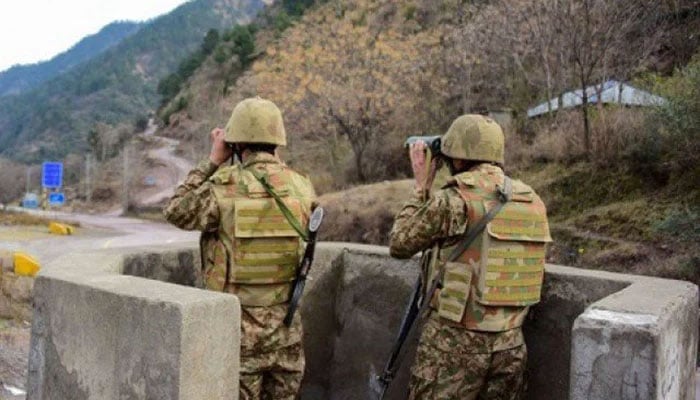
The armed forces translated that leadership into action with remarkable precision. The PAF and its integrated air defence network operated as a single, cohesive system. Pilots executed missions with calm assurance. Operators made decisions in seconds that prevented escalation. Soldiers across the chain held their positions with vigilance and discipline. This was mastery under pressure.
But Marka-e-Haq is not only a story of military excellence. It is also the story of a nation that stood firm. In those uncertain hours, resolve was not confined to command centres or cockpits. It was visible across the country. In homes, in mosques, in quiet prayers, in unwavering belief. A nation that refused to panic. A people who did not yield to fear.
Each and every Pakistani, in their own way, became part of that moment. Because strength is not only measured on the battlefield. It is also measured by a nation’s confidence that does not crumble under pressure. Marka-e-Haq belongs not just to those who defended the skies but to the millions who stood behind them with faith, unity, and resilience.
That collective spirit is what turns response into resolve. Marka-e-Haq did not begin on that day. It was years in the making. It was built on a strategic vision shaped by Shaheed Zulfikar Ali Bhutto, carried forward by Shaheed Mohtarma Benazir Bhutto and reinforced in recent years under President Asif Ali Zardari, with its political continuity reflected in the leadership of Bilawal Bhutto Zardari. That vision ensured that Pakistan would never stand vulnerable but would always be prepared.
But what defines Pakistan is not just its strength. It is how that strength is exercised. For decades, a narrative has been pushed that Pakistan harbours terrorism. The reality is the opposite. Pakistan has been a frontline state, a bulwark against terrorism, sacrificing lives, stability and resources to confront threats that extend far beyond its borders. Its armed forces have not only defended the country, but have also actively secured the region. That same clarity of purpose is now reflected beyond the battlefield.
In recent months, as tensions between the US and Iran escalated dangerously, Pakistan stepped forward as a credible intermediary, facilitating dialogue and helping sustain communication at a time when direct engagement had broken down.
This role was earned. A nation that demonstrates control in crisis earns the credibility to contribute to peace. Pakistan’s approach has remained consistent, restraint over provocation, dialogue over escalation, stability over chaos.
As we celebrate the first anniversary of Marka-e-Haq, its meaning is clear: It was a defining victory for Pakistan. A moment that made every Pakistani proud. Proud of the armed forces that acted with precision and courage. Proud of a military leadership that demonstrated not just strength, but control. Proud of a nation that stood united and unshaken.
In those critical hours, Pakistan did more than defend its skies. It proved its resolve.
That is the legacy of Marka-e-Haq. A demonstration that when tested, Pakistan stands prepared, composed and unshaken. And that is why it endures. Because when the moment came, it was not just a military that responded but a nation that stood firm.
The writer is a member of the National Assembly. She holds a PhD in Law, and serves on the National Assembly’s Special Committee on Kashmir.