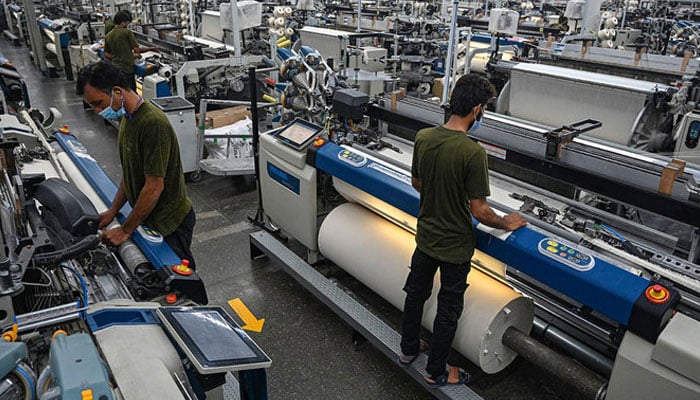
ISLAMABAD: The Textile Industry has submitted its budget proposals for FY2026–27, calling for wide-ranging tax cuts, tariff rationalisation, and structural reforms to restore competitiveness of the export sector, particularly textiles.
On income tax, APTMA has demanded the abolition of the super tax, terming it unjustified and damaging for profitability of top taxpayers. It has also proposed reducing the minimum turnover tax (MTT) from 1.25 percent to 0.5 percent, arguing that at current levels it places an unsustainable burden on a sector operating on already thin profit margins of 1 percent to 2 percent.
The association further recommended a phased annual reduction of corporate income tax by 1 percent, with the objective of bringing Pakistan’s rate closer to regional competitors, noting that the current rate is among the highest in the region and undermines export competitiveness.
APTMA also called for the abolition of advance income tax, stating that quarterly collection creates cash-flow pressures and in many cases tax authorities demand payment for all quarters in a lump sum. It further demanded restoration of a fixed tax regime for exporters, arguing that the sector is simultaneously subjected to overlapping taxation including 1 percent fixed tax on exports, normal income tax, advance tax, minimum turnover tax, 29 percent corporate tax, and super tax of up to 10 percent, all of which significantly erode liquidity and competitiveness.
The association also urged rationalisation or elimination of multiple federal and provincial levies, including WWF, WPPF, infrastructure cess and others, stating that exporters currently face over 18 different taxes that cumulatively amount to 7 percent to 11 percent of turnover on margins of 6 percent to 15 percent, many of which have no direct link to exports.
On sales tax, APTMA proposed a gradual reduction of the rate by 1 percent annually to 15 percent, arguing that the current 18 percent rate is too high for the sustainability of the textile industry. It also demanded restoration of a zero-rating regime across all manufacturing stages of the value chain, stating that multi-stage taxation at high rates encourages evasion, disrupts liquidity, and is compounded by delays in refunds. The association further proposed adoption of a graduated sales tax structure similar to India, suggesting 5% on basic inputs such as cotton, man-made fibre (MMF), and yarns, 10% on intermediate goods, and standard rates on finished products.
APTMA also called for exclusion of MMF yarns and fabrics from the Export Facilitation Scheme (EFS), noting that imports of MMF yarn increased to 42 million kg during July–December 2025, leading to a surge in cheaper imports and a decline in domestic production. It further demanded exclusion of all textile fabrics and cloth from EFS, stating that after cotton yarn and grey cotton fabric were removed from the scheme through SRO 1435(I)/2025 dated August 5, 2025, importers shifted to partially processed fabric such as semi-bleached and pre-dyed material to continue availing duty and tax exemptions.
On customs tariffs, APTMA proposed reduction of duties on Pure Terephthalic Acid (PTA) under PCT 29173610, arguing that high PTA prices directly increase polyester staple fibre (PSF) costs and make Pakistani MMF products uncompetitive in global markets. It stated that despite strong international demand for MMF textiles, Pakistan has been unable to enter this segment due to high duties on PTA and PSF, which discourage investment in domestic production capacity. The association also called for reduction and removal of anti-dumping duties on PSF (PCT 55032010), which currently range from 7% customs duty plus anti-dumping duties of up to 11.51% on imports from China and up to 12.47% on imports from Chinese Taipei, Indonesia, and Thailand, saying these measures have distorted the domestic market and kept Pakistan overly dependent on cotton-based exports.
APTMA further demanded zero-rating of customs duty on industrial spare parts used exclusively in machinery, arguing that such inputs directly affect manufacturing costs and export competitiveness. It also proposed similar zero-rating for spare parts used in power plants. At the same time, it called for imposition of regulatory duty and anti-dumping duty on imports of cotton and polyester yarn and fabric, stating that cheap imports have surged and caused a sharp decline in domestic production.
The association warned that more than 40% of spinning and weaving units across the country have already shut down, while many remaining units are operating under severe financial stress and face the risk of closure due to rising input costs and import competition.