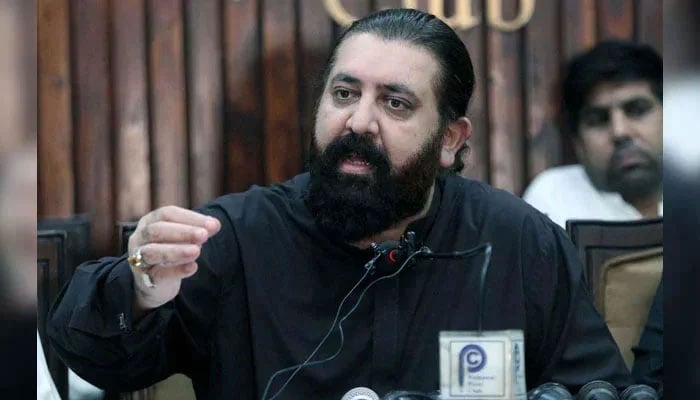
ISLAMABAD: Pakistan Tehreek-e-Insaf (PTI) Information Secretary Sheikh Waqas Akram on Sunday warned of an imminent “gas tariff bomb,” claiming that the Sui Southern Gas Company (SSGC) has sought a massive 286 per cent increase in gas tariffs to offset Rs545 billion in accumulated shortfalls.
In a strongly worded statement, he criticised what he described as the “Form-47 government’s” failure to tackle mounting energy, inflation, and fiscal challenges, accusing it of shifting the burden onto consumers.
“After the worst April load-shedding in years, the government continues to hold meaningless meetings while passing the entire burden onto the public. There is no energy security plan—only slogans and expensive electricity for 250 million Pakistanis,” he said.
Akram alleged that key sectors, including industries, small and medium enterprises (SMEs), exporters, and captive power plants, were being adversely affected, noting that industrial gas consumption had already declined by nearly 50 per cent.
Criticising tax policies, he argued that administrative changes such as shifting the Tax Policy Unit would not yield results without broadening the tax base. He accused the government of overburdening existing taxpayers, claiming that Rs1,300 billion was being collected from petroleum products alone this year.
“The government is likely to miss its revised tax target by Rs1 trillion. This is not governance; it is economic suffocation of the common man,” he asserted.
Highlighting inflationary pressures, Akram said consumer purchasing power had been severely eroded. “CPI has climbed back to 11 per cent, fuel prices have risen by 40 per cent, diesel by 93 per cent, electricity by 33 per cent, while essential food items have seen sharp increases,” he said, adding that ordinary citizens were struggling with basic expenses.
He also pointed to declining investor confidence, claiming foreign direct investment had fallen by 27 per cent to $1.3 billion, while more than 94 per cent of foreign investment in treasury bills had exited. Private sector credit, he added, had shrunk to 11 per cent of GDP as banks increasingly preferred lending to the government.
Akram further criticised what he termed a centralised governance approach, alleging it was undermining provincial harmony and economic balance.
Reiterating PTI’s stance, he said the resolution of Pakistan’s economic and governance challenges required the resignation of Prime Minister Shehbaz Sharif and his cabinet, followed by fresh elections to bring in a “legitimate and accountable” government.
Separately, the PTI Sunday strongly condemned what it termed the federal government’s “criminal negligence” following findings that four out of every ten children aged 12 to 36 months in high-risk areas of seven major cities have dangerous levels of lead in their blood.
PTI Information Secretary Sheikh Waqas Akram described the results of a joint study by the Ministry of National Health Services and UNICEF as a “national disgrace”, saying they exposed the government’s failure to safeguard children’s health.
“While children in Haripur and Hattar face an alarming 88 per cent contamination rate, millions more across Karachi, Lahore, Peshawar, Quetta, Rawalpindi and Islamabad are at risk of irreversible harm. Yet those in power continue to offer only empty assurances,” he said.
Akram warned that lead poisoning poses severe and irreversible health risks, including brain damage, reduced IQ, weakened immunity, stunted growth, anaemia, learning disabilities and behavioural disorders. “There is no safe level of lead exposure for children,” he stressed, alleging that unchecked industrial emissions, unregulated battery recycling, lead-based paints, and contaminated consumer products were contributing to widespread exposure.
Citing global estimates, he claimed that the proportion of affected children in Pakistan could be as high as 80 per cent—among the highest in the world—resulting in economic losses equivalent to 6–8 per cent of GDP.
He said the crisis reflected systemic regulatory failures rather than an isolated incident. “The government claims to be strengthening surveillance and enforcement, yet regulatory gaps, weak monitoring and lack of public awareness persist. Official statements are meaningless while children continue to be exposed to toxic risks,” he added.
Calling the situation a violation of children’s fundamental rights, Akram said it amounted to a betrayal of their right to grow up in a safe and healthy environment. “Every day of delay is another day of irreversible damage to Pakistan’s future generations,” he said.
He urged the government to take immediate action, including strict enforcement of environmental regulations, nationwide screening and treatment programmes, and accountability for those responsible for the toxic exposure.