Two hundred and forty families. Two hundred and forty homes. Roughly 240 residential units, priced at an average of about Rs10 crore each.
Do the math: about Rs2,500 crore of private capital. Now the shock: Rs2,500 crore sitting on a defective land title. This is not a marginal dispute. This is not a technical irregularity. This is trust, worth Rs2,500 crore, converted into risk.
The developer is where the chain begins -- and breaks. The developer remained in default for years. The developer violated land use. The developer sold units without a clear title. This is not a grey area. Yes, this is the root cause.
The CDA approved plans. It allowed construction. It allowed sale of units. And it failed to enforce for years. Yes, that is regulatory failure by delay.
The judiciary dragged the case across forums for years. The judicial process sent mixed signals over time. Remember: Law without timing is injustice. Yes, this created false legitimacy.
Many buyers purchased with CDA approvals and valid NOCs. Many purchased through formal banking channels. In most cases, these were ‘good-faith purchasers’.
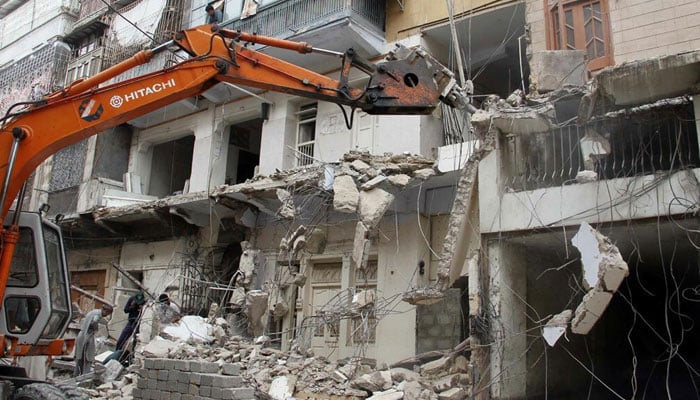
Then comes enforcement. The timing and method mattered -- and both failed. A midnight raid. Notices measured in hours, not days. Optics that conveyed coercion rather than due process.
Even when the underlying order may be legally valid, the manner of enforcement defines legitimacy. This was not enforcement done right. This was enforcement done wrong. Remember: Enforcement without process is instability.
Cold truth: The developer broke the contract. Colder truth: The state ignored the breach. Coldest truth: The buyers trusted the system. Final truth: The system collapsed -- at midnight.
Here’s the legal reality: If the developer’s title was defective, every downstream title is impaired -- subject to what the courts may decide for bona fide purchasers.
This one project emits a national signal: there’s title risk in Pakistan’s real-estate market. That’s the systemic risk. That is regulatory credibility at stake. Yes, if approvals cannot be trusted, transactions collapse.
The courts can regularise it, pursue a shared settlement or order hard enforcement. Remember: This is not about one building. This is about the credibility of title in Pakistan. If approvals, NOCs and regulatory clearances cannot be relied upon, then every property transaction carries embedded risk.
Hard truth: Two hundred and forty families did not buy litigation. They bought homes. The law is clear: no one can transfer a better title than he possesses.
The policy choice is now equally clear: regularise, a shared settlement or enforce. But choose quickly because uncertainty is more expensive than illegality.