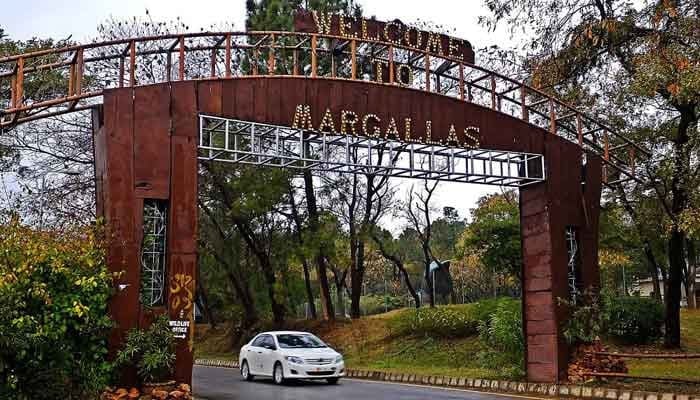
Islamabad’s green spaces are not decorative. They are the city’s lungs, its heat shield, its water filter and one of its strongest natural defences against a changing climate. This is why the latest reports of proposed development near the Margalla foothills should concern anyone who cares about the city’s future.
Science-based organisations, such as the WWF, have already warned that development in this area could create “potentially irreversible risks”. It has highlighted the risks of habitat fragmentation, disruption of wildlife corridors, damage to groundwater recharge and impacts on microclimate regulation. These are not abstract concerns – they directly affect the city’s air, temperature, water security, biodiversity and resilience, which are linked to the survival of the city’s inhabitants.
The Margalla Hills are not vacant land. They form part of the Margalla Hills National Park, a legally protected landscape. That status has already been tested in public debate and in the courts, most recently in a case involving a famed restaurant that was closed because commercial activity within a national park was found to be incompatible with the law and the protected area’s ecological purpose.
The recent tree-cutting in Shakarparian is part of the same pattern. Whatever the justification, the removal of thousands of mature trees in Islamabad raised serious concerns about biodiversity loss, air quality, urban heat and the destruction of green cover that cannot be replaced by planting saplings elsewhere. A mature tree is not just a number in a plantation target. It is shade, carbon storage, habitat, soil stability, temperature regulation and public health infrastructure – all of which are not considered in planning decisions.
Pakistan’s cities are already paying the price of ecological neglect. Lahore’s smog crisis shows what happens when air pollution, tree loss, unchecked construction and poor planning accumulate. According to the Air Quality Life Index, Lahore residents could lose around 5.8 years of life expectancy under current air quality standards.
Karachi offers another warning: the loss of tree & mangrove cover and unplanned construction have intensified the city’s urban heat crisis, turning extreme heat into a recurring public health emergency. Islamabad still has the natural buffers that many cities are now desperately trying to recreate - it would be reckless to destroy them in the name of development.
This contradiction is especially stark for Pakistan. Internationally, we speak with moral force about climate vulnerability, loss and damage, and the injustice of suffering from a crisis we did little to create. That argument is valid. Pakistan is deeply climate-vulnerable and has every right to demand climate justice. But credibility also begins at home.
We cannot raise our voice over loss and damage abroad while creating avoidable ecological loss and damage in our own capital. We cannot call ourselves climate-vulnerable while weakening our own natural defences. We cannot speak about adaptation, resilience and nature-based solutions in international forums while cutting mature trees, fragmenting habitats, disturbing foothill ecosystems and commercialising protected landscapes at home. Doing so without transparency, public consultation and robust, evidence-based environmental assessments undermines the legal and moral foundations of any development activity.
Islamabad does not need performative greening. It needs ecological planning. It needs decision-makers to recognise that nature is infrastructure, as important as roads, bridges, stadiums and hotels. In fact, in a warming and climate-vulnerable country, nature may be the most important infrastructure we have.
The choice is not between development and the environment. It should never be. That is an outdated and dangerous framing. The real choice is between short-term construction and long-term resilience; between fragmented decision-making and responsible planning; between a city that protects its natural defences and one that keeps cutting through them.
The Margallas have protected Islamabad for decades. The question now is whether Islamabad will protect the Margallas.
The writer is an international conservation professional who specialises in sustainable infrastructure.