The recent announcement by the UAE regarding its exit from Opec and the broader Opec+ alliance has jolted the global energy market. This unexpected move, coming at a time of heightened geopolitical tensions and already volatile oil prices, has injected fresh uncertainty across the globe.
Established in 1960 by countries including Saudi Arabia, Iran, Iraq, Kuwait and Venezuela, the Organisation of the Petroleum Exporting Countries (Opec) was designed to coordinate petroleum policies among major oil-producing nations and stabilize global prices through production quotas.
Over the decades, it evolved into one of the most powerful economic alliances in the world, controlling around 40 per cent of global oil supply and over 80 per cent of proven reserves. The later inclusion of Russia and other global players under Opec+ further strengthened its influence, turning it into the central force shaping global energy politics.
Although the UAE has a current production capacity of approximately 4.8 million barrels per day (bpd), with plans to expand to 5.0 million bpd by 2027, it was constrained by Opec production quotas. For a country that has heavily invested in expanding its oil infrastructure, these limits increasingly appeared as a constraint rather than a benefit.
By leaving OPEC, the UAE now seeks to export oil independently, maximise production and secure greater foreign exchange earnings without being bound by collective decisions. If the UAE increases oil production significantly in the coming years, global supply could rise, potentially stabilising or even lowering prices. The UAE’s newfound independence may also allow it to enter into new bilateral agreements with countries on more flexible terms, including favourable pricing or deferred payment arrangements.
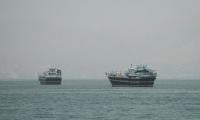
Apparently, this decision has also been influenced by the ongoing Iran conflict, which has severely disrupted global oil supply chains, particularly through the strategically critical Strait of Hormuz. This narrow waterway handles nearly one-fifth of the world’s oil shipments, making it one of the most sensitive energy corridors globally. The recent conflict has not only restricted oil flows but also exposed the vulnerability of Gulf economies dependent on this route.
In response, the UAE has been actively looking for alternative export strategies. The Fujairah port and the Abu Dhabi-Fujairah pipeline aim to bypass the Strait of Hormuz, offering a degree of strategic independence. However, these alternatives cannot fully replace Hormuz, meaning the UAE and indeed the Gulf market remain exposed to regional instability.
In my view, another significant dimension of this evolving scenario is the shifting regional alliances within the Gulf. Traditionally, the UAE has maintained close ties with Saudi Arabia, the de facto leader of Opec. However, recent years have witnessed a distance between the two countries.
At the same time, relations between the UAE and Qatar have improved after years of tension. Both countries share a common interest in ensuring secure maritime trade routes and reducing dependence on the Strait of Hormuz. Qatar’s geographic location and reliance on maritime exports make it a natural partner for the UAE in exploring alternative energy corridors and cooperative security frameworks in the Gulf.
In my view, energy, particularly oil, remains the backbone of the 21st-century global economy. Even minor fluctuations in oil prices ripple across financial systems, trade flows, industrial output, and the daily lives of ordinary people. The UAE’s departure from Opec is therefore not just an economic decision. It reflects a broader shift toward snational energy sovereignty, regional realignments and a more fragmented global oil governance system.
The UAE’s departure from Opec is a signal of transformation in the global energy order. While it offers the UAE greater economic freedom, it also introduces new uncertainties into an already fragile market. In the long term, this could weaken Opec’s ability to control oil prices and may encourage other member states to say goodbye.
For the world, and especially for energy-dependent economies like Pakistan, this development carries both risks and opportunities. The message is very clear: adapt swiftly, or risk being left vulnerable in an increasingly unpredictable energy future.
The writer is a member of the National Assembly and patron-in-chief of the Pakistan Hindu Council. He tweets/posts @RVankwani