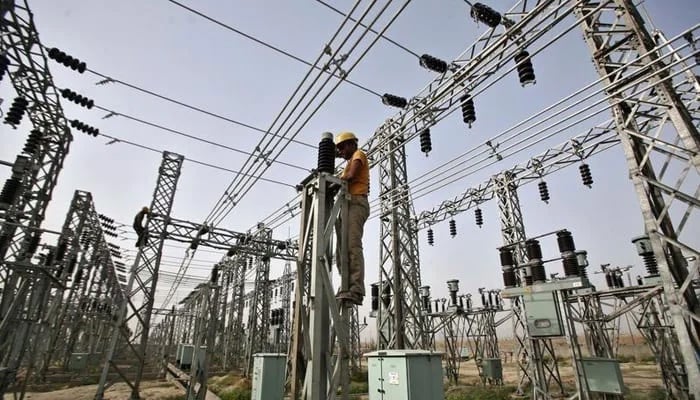
A recent news report reveals that the International Finance Corporation (IFC), which is the private sector arm of the World Bank, has entered into an advisory agreement with the Private Power & Infrastructure Board (PPIB). This agreement aims to establish a public-private partnership (PPP) to implement Advanced Metering Infrastructure (AMI) in Lahore, Multan, Peshawar, Quetta and the Hazara Division.
Smart meters and AMI have been advocated for some time. Last year, research conducted at PIDE highlighted the significance of this technology for reducing commercial losses, improving billing accuracy, supporting demand management, and integrating renewables.
But contrary to the current government initiative, the study notes that infrastructure funded by loans, such as IESCO’s use of Asian Development Bank (ADB) loans, ultimately costs consumers through their bills due to interest and extra fees. The study suggests that consumers should directly bear the transition costs, particularly for installing smart meters, which should be considered their property, justifying their financial responsibility for these expenses.
The study shows that consumers are willing to invest in smart meters if they understand the benefits. Further, it recommends creating an open and competitive market for smart meters, enabling consumers to choose meters that align with their preferences and technical requirements. The study recommended empowering consumers to unlock the full potential of this technology.
The recently announced initiative differs slightly from the ADB loan to IESCO for smart meters rollout. Here, the WB has not provided a loan specifically for the smart meter rollout. Instead, IFC is involved solely as a transaction advisor. However, this activity is part of a broader WB loan programme. The IFC will develop a PPP or service-provider model to attract private investors to install, operate, and maintain smart meters. IFC will create standardised project documents to help the PPIB replicate and scale the project.
The World Bank’s involvement in Pakistan’s power sector is not new. Although over time, it shifted from specific project funding to supporting the country’s efforts to improve efficiency, governance, and financial stability. In the 1990s, the World Bank, mainly through the IFC, along with other multilateral institutions (donors), played an influential role in shaping Pakistan’s independent power plants (IPPs) framework, which successfully attracted private investment into electricity generation but also contributed to long-term fiscal pressures due to capacity payment obligations. These organisations helped develop standardised contracts and tariff structures to attract private investment in power generation and supported the 1994 power policy.
The IFC has provided support to PPIB since its establishment in the 1990s, by investing over $850 million in 19 power projects. It provided about $378 million to five of the first 16 IPPs established under the 1994 policy. The WB Group (including IFC) played a central role in enabling ‘super six’ wind power projects in Jhimpir in 2019 through financial investment, risk mitigation, and advisory services. These costly plants (Rs37/kWh for 2026) remain underutilised due to system constraints, yet they still qualify for Net Project Missed Volume.
Over the years, multilateral donors, including the World Bank, have played a significant role in shaping Pakistan’s energy policy, given the country’s reliance on loans from these institutions (project loans, programme loans and technical assistance). Despite their support, no notable improvements have been observed in the power sector. Poorly structured contracts with IPPs continued even after the 1994 policy. Governance challenges persist. Outdated tariff structures, outages, reliability issues, and escalating generation costs are common features. The primary challenge: circular debt continues, as do transmission and distribution (T&D) losses.
Recently, the World Bank has concentrated on structural issues in the power sector, including high T&D losses and weak bill recovery. Their approach involves policy-based lending and technical support for reforms, with the smart meter program being one of the key initiatives.
Based on Pakistan’s prior experiences, for instance, with power generation contracts, the proposed smart meters project, to be organised with advisory support from the IFC, raises a question: could the resulting contract create liabilities similar to those under the country’s IPP framework?
Many would argue that the context of smart metering differs from that of electricity generation. Not necessarily. In this case, the risk could arise from the payment structure involving private service providers. If contracts are established to guarantee fixed monthly payments for each installed meter, regardless of whether these meters actually lead to improved billing, reduced theft or enhanced revenue collection, they could repeat the fundamental issues seen in IPP agreements.
In this situation, distribution companies would be required to make payments even if their financial situation does not improve, creating an additional financial burden and potentially exacerbating circular debt.
Public-private partnerships (PPPs) in Pakistan face various challenges that need to be addressed to be effective. While PPPs aim to fill gaps in infrastructure financing and enhance service delivery, they are hindered by systemic risks linked to a weak institutional and regulatory framework, underdeveloped capital markets, and deficiencies in performance monitoring and accountability. These issues increase the perceived risks for the private sector, resulting in higher capital costs.
The primary problem with PPPs in Pakistan lies in poor risk allocation and contract design. Effective PPPs require optimal risk-sharing, but risks are often improperly assigned to the public sector in Pakistan, for example: guaranteed returns in power-sector contracts. Consequently, rather than sharing risk, PPPs can create contingent fiscal liabilities, undermining their effectiveness.
While the smart meter project may benefit from IFC involvement in structuring, the ultimate success of the PPP will depend on whether Pakistan can address the underlying governance and credibility deficits. If these issues remain unresolved, the smart meter rollout could follow the trajectory of earlier PPPs, technically sound, financially complex, but ultimately constrained by systemic institutional weaknesses rather than project design itself.
Past donor-supported initiatives in Pakistan have not achieved their intended results. However, it would be unfair to blame the donors solely for these shortcomings; they also reflect domestic issues, including institutional weaknesses and limited enforcement capacity. Regardless of who is to blame for the lack of success, the ultimate loser remains the consumer.
Pakistan needs to reevaluate its strategy. The dependence on donor-funded projects has resulted in a significant fiscal burden without delivering meaningful reforms. Consumer involvement has driven the solar revolution, and a similar shift could happen with smart meters if consumers recognise the benefits.
Creating awareness is the key. No foreign loans, no fiscal guarantees. The government must provide a clear, consistent policy framework to support this transition.
The writer is an economist and researcher with expertise in the energy sector.