Pakistan stands at a defining moment. With one of the largest youth populations in the world, an expanding higher education system, and growing digital access, the country appears well positioned to transition to a knowledge economy. However, the reality remains stark: low productivity, limited innovation, and very few globally competitive companies.
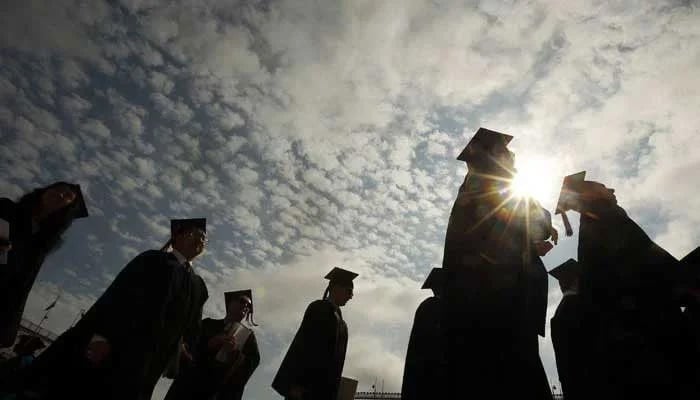
This raises a fundamental question: if Pakistan has graduates with talent, why does it not have an economic impact? The answer lies not in the absence of potential, but in our misunderstanding of the purpose of education. Over the past two decades, Pakistan has focused heavily on expanding access: more universities, more enrollments, more degrees. While this expansion was necessary to improve access and inclusion, it has also led to a critical distortion – we have begun to equate education with a degree.
This is a mistake. A degree is not an outcome; it is merely a starting point. When education is reduced to degrees, diplomas, and certificates, it fails to produce what the economy truly needs: skills, problem-solving ability, innovation and entrepreneurship. The result is a growing number of graduates without direction and degrees with limited economic value. Employers struggle to find relevant skills, while graduates struggle to find meaningful opportunities.
Successful knowledge economies offer a different lesson. Countries such as South Korea, Singapore and Finland have aligned education with industry, national priorities, and innovation ecosystems. More importantly, they have built systems that convert knowledge into economic value through products, services, startups and global competitiveness. Their universities do not merely produce graduates; they produce ideas, solutions and enterprises.
Pakistan’s challenge is further shaped by a harsh constraint reality. Unlike many developed nations, we do not have the luxury of abundant resources. Public funding is limited, research investment is low, and national priorities are many. Pakistan spends only a fraction, often just one to two per cent, of what leading economies invest in research and higher education. But this constraint should not be seen as a weakness. It must become our discipline.
The key question is no longer: ‘How much more can we spend?’ but rather, ‘How can we use what we have far more effectively?’ This requires a strategic shift from quantity to quality.
For too long, we have pursued expansion often driven by political considerations: more institutions, more degrees, more output. The future demands a relentless focus on quality: better learning, relevant skills, innovative thinking and real-world application. Universities must evolve from degree-awarding institutions into platforms that build capability and enable problem-solving. Every graduate should leave not just with a transcript, but with a skill, a project, a problem solved, or an idea tested. Learning must translate into capability. Education must prepare individuals to create value, not just seek employment.
Encouragingly, building a knowledge economy does not always require large budgets. Innovation can flourish even in resource-constrained environments if the right mindset exists. Today, digital platforms, artificial intelligence tools, and open-access knowledge have dramatically lowered the cost of learning and experimentation. A student with a laptop and connectivity today has access to more knowledge than entire institutions had a generation ago. Collaboration can substitute for infrastructure, and creativity can substitute for capital. Innovation is not driven by money; it is driven by mindset.
Equally important is a shift towards entrepreneurship. Pakistan cannot rely solely on state- or large-corporation-driven job creation. It must cultivate a culture that encourages individuals to create their own opportunities through small ventures, freelancing, and problem-solving enterprises.
The rise of the digital economy has already demonstrated this potential. Thousands of young Pakistanis are earning globally through freelancing and remote work, often with minimal resources but strong skills. Even modest startups can generate income, build confidence and develop capability, with the potential to scale over time. More importantly, they create a mindset of ownership and initiative, which are essential ingredients of a knowledge economy.
Pakistan must also focus on areas where it already has strength. In the short term, sectors such as IT services, freelancing, remote work and AI-assisted productivity offer low-cost, high-impact opportunities. These sectors require relatively low capital investment but can generate significant export earnings and employment. Over time, innovation can extend into agriculture, healthcare and energy efficiency: sectors that are both economically critical and socially relevant.
However, transforming into a knowledge economy is not solely the government’s responsibility. It requires a collective shift in mindset across society. Students must take ownership of their learning and move beyond passive consumption of information. Educators must prioritise relevance over rote instruction and encourage curiosity, experimentation and critical thinking. The media must highlight innovation and achievement, not just politics and conflict. Families must value skills, capability and creativity over degrees alone. Investors must be willing to take calculated risks to support new ideas and emerging entrepreneurs. A knowledge economy is not just a policy; it is a complete ecosystem.
Pakistan’s future lies in its ability to convert its demographic advantage into a productive force. This requires a simple but powerful progression: youth to skills, skills to ideas, ideas to action and action to opportunity. The country already possesses the essential ingredients: talent, resilience and ambition. What it now needs is direction, discipline and execution.
We cannot wait for perfect funding, ideal policies or flawless systems. Progress begins with action. Pakistan must confront its shortcomings honestly and begin working with the resources it already has, using them more intelligently and effectively.
Ultimately, Pakistan’s economic future will not be determined by how many degrees it produces but by how many problems it solves, how many ideas it builds and how many opportunities it creates. That is the true measure of a knowledge economy and the path Pakistan must now embrace.
The writer is a former senator and former chairperson of the HEC.