Pakistan is, improbably, trying to prevent a global recession. While the world watches Washington and Tehran trade threats with the intensity of a debt restructuring gone wrong, Islamabad has quietly positioned itself as the back-channel – the unlikely mediator nudging two adversaries towards the same table.
The geopolitical calculus is not sentimental. Pakistan understands that a hot conflict in the Gulf doesn’t just redraw maps; it reprices oil, rattles supply chains and sends emerging market currencies into a tailspin that no IMF tranche can arrest quickly enough. For once, Pakistan’s address book is doing productive work.
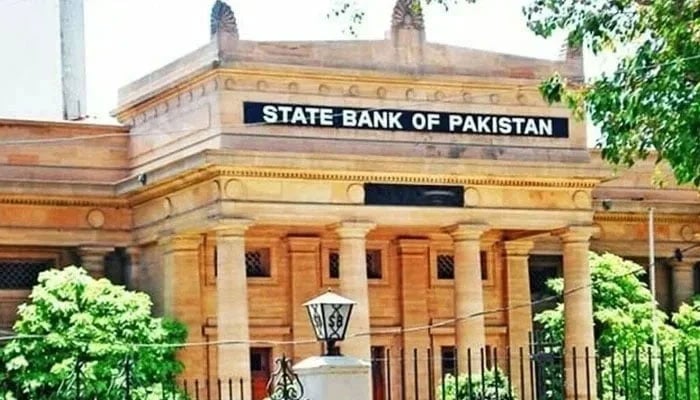
But here’s the cruel irony: the same country attempting to shield the global economy from a self-inflicted wound is, at home, quietly administering one. The State Bank of Pakistan’s decision to raise the policy rate by 100 basis points to 11.5 per cent deserves more than a footnote in the business press. It deserves interrogation.
Two justifications are typically offered for monetary tightening in Pakistan’s context: controlling inflation and managing the current account deficit. Both deserve scrutiny because neither holds up particularly well.
Pakistan’s inflation is not a demand story. It is cost-push, imported through global oil prices. Raising interest rates to fight cost-push inflation is the monetary equivalent of prescribing beta-blockers for a broken leg. Textbook orthodoxy, catastrophically misapplied. The current account argument is equally weak and more revealing. The logic is that higher rates suppress domestic demand, reducing import appetite and thereby improving the external balance. Theoretically tidy. Practically, it is also the bluntest possible instrument for the job. There is a better way, and our neighbour has been demonstrating it for decades.
India manages its current account not primarily through monetary contraction but through non-tariff barriers – licensing requirements, quality standards, technical regulations and import substitution frameworks that quietly but effectively govern what enters the economy and at what volume.
The result is current account management that does not require strangling domestic investment or penalising every borrower in the economy to correct an external imbalance. It is surgical, whereas Pakistan’s approach is blunt-force. The question is why Pakistan does not reach for the same toolkit. The answer, one suspects, has less to do with capability and more to do with whose interests a particular policy instrument serves.
Follow the money. The government is itself one of the largest borrowers from the banking system. When the policy rate rises, so does the cost of sovereign borrowing – borne ultimately by the taxpayer, redirected away from development, welfare and defence, and funnelled towards servicing financial obligations that grow faster than the economy supporting them.
The banking sector books the spread – risk-free, government-guaranteed, handsomely profitable. There are vested interests in Pakistan for whom high interest rates are not a crisis but a business model. The banking nexus thrives when the sovereign borrows at a premium and the State Bank obliges. Every percentage point added to the policy rate is, in effect, a transfer from national interest to institutional balance sheets. Non-tariff barriers, by contrast, generate no such windfall. Which is precisely why they remain underutilised.
Pakistan cannot simultaneously present itself to the world as a stabilising force in a volatile geopolitical moment while allowing its domestic economic architecture to be quietly managed in the interests of a financial lobby rather than the nation.
The question that should be asked loudly – in parliament, in the press, in every finance ministry corridor – is a simple one: who benefits? The credibility required to be a global middle power also demands the coherence of honest economic policymaking at home.