Pakistan stands at the edge of a water emergency that is no longer theoretical, distant or seasonal. It is immediate, structural and deeply national in character.
Ranked among the world’s most water-stressed countries, Pakistan today has only about 30 days of water storage capacity, well below the widely cited global benchmark of 120 days. That single statistic should be enough to trigger national alarm. It means a country of more than 240 million people, whose food system, industry, energy production and urban life depend heavily on water, is operating with a dangerously thin buffer against droughts, delayed monsoons, glacial shifts, canal disruption or geopolitical shocks.
Water storage is not merely about dams or engineering. It is about sovereignty, food security, inflation control, electricity generation and climate resilience. Nations that manage water well survive shocks. Nations that fail to do so remain hostage to nature. Pakistan, unfortunately, has drifted into the second category.
The scale of the problem becomes clearer when placed in a historical context. Pakistan’s live reservoir storage capacity has declined from approximately 16.26 million acre-feet (MAF) in the 1970s to roughly 13.68 MAF today, largely because of sedimentation in major reservoirs and the failure to replace lost capacity with new large-scale storage. In practical terms, while population, irrigation demand and urban consumption surged over the decades, storage capacity moved in the opposite direction.
Even more troubling is that Pakistan has not added a transformative major reservoir at the required pace for half a century. While projects such as Diamer-Bhasha and Mohmand Dam are underway, they remain delayed relative to strategic need. Other countries facing water stress spent decades building storage ladders: large dams, medium reservoirs, recharge basins, flood retention systems and urban recycling infrastructure. Pakistan spent decades debating what should have already been built.
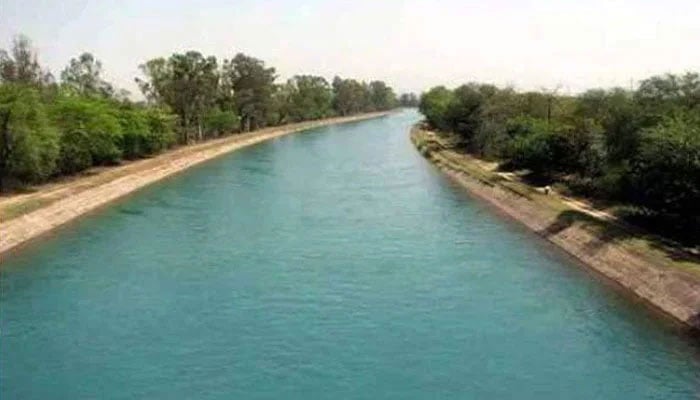
The consequences are now visible across the economy. Agriculture consumes close to 90 per cent of Pakistan’s available freshwater. Yet much of this water is delivered through aging canal networks with significant conveyance losses, inefficient flood irrigation and weak crop-water pricing signals.
Water-intensive crops continue to dominate acreage despite mounting scarcity. When river flows weaken, agriculture suffers first. When agriculture suffers, food inflation follows. When food inflation rises, macroeconomic stability deteriorates. Water mismanagement thus becomes an economic crisis long before it becomes a hydrological one.
The energy sector is equally exposed. Pakistan’s hydropower generation depends on reservoir levels and seasonal flows. Just this month, fluctuations in dam releases materially affected electricity supply and outages, illustrating how water availability increasingly intersects with power reliability. In a country already burdened by expensive imported fuels, unstable hydrology can quickly undermine energy policy.
Then there is the climate dimension, the force multiplier behind every existing weakness. Pakistan contributes less than one per cent of global greenhouse gas emissions, yet it ranks among the countries most vulnerable to climate shocks. The 2022 floods affected around 33 million people and caused damages exceeding $30 billion, while more recent rainfall and flood episodes continue to expose infrastructure fragility. On the other end of the spectrum, drought conditions, erratic snowfall and altered glacial melt patterns threaten the timing of water supplies across the Indus Basin.
This is the new climate paradox confronting Pakistan: too much water when systems cannot absorb it and too little when they need it most. Floods and scarcity are no longer opposites; they are symptoms of the same planning failure.
Pakistan’s water challenge is also demographic. At Independence, annual per capita water availability exceeded 5,000 cubic meters. Today, it has fallen below water scarcity thresholds, with some estimates placing it near or below 1,000 cubic meters. As population growth continues and urban centres expand, demand pressures will intensify further. In plain terms, each Pakistani now has access to a far smaller share of water than previous generations.
What, then, is the solution? First, Pakistan must build water storage buffers with urgency and discipline. This means completing under-construction mega projects such as Diamer-Bhasha and Mohmand without bureaucratic drift or politicised delay. It also means moving beyond the false binary of ‘one mega dam versus nothing’. Pakistan requires a portfolio approach: large dams, medium reservoirs, hill torrents capture systems, recharge lakes, check dams, floodwater ponds and groundwater banking. Climate volatility demands distributed resilience, not single-point dependence.
Second, Pakistan needs a long-term national water planning framework insulated from electoral cycles. Water policy cannot be reset every few years. Reservoir timelines, canal modernisation, groundwater regulation, desalination pilots, wastewater recycling and crop transition strategies require 20-30-year horizons. Countries that solved water stress did so through continuity, not slogans.
Third, irrigation productivity must replace irrigation volume as the central metric. Drip systems, sprinkler irrigation, laser land leveling, lined canals, precision farming and crop zoning should become national priorities. Every additional drop stored but wasted in fields is a failed investment. Water efficiency must be treated as infrastructure.
Fourth, groundwater extraction requires regulation. In many regions, aquifers have become the invisible subsidy keeping agriculture afloat. Cheap, solar-powered pumping, now increasingly reliant on tube wells, risks accelerating depletion if not matched with metering, recharge and extraction controls. Pakistan cannot solve a surface water crisis by silently exhausting underground reserves.
Fifth, cities must enter the water conversation seriously. Urban leakage, contamination, tanker mafias, untreated sewage and poor recycling systems create dual crises of scarcity and quality. Water security is not only about rural canals; it is also about Karachi taps, Lahore aquifers and Islamabad demand growth.
Finally, governance reform is indispensable. Water in Pakistan is fragmented across federal bodies, provinces, irrigation departments, municipalities, and regulators with overlapping mandates and weak coordination. Without integrated governance, even good projects underperform. The country does not merely suffer from a lack of water; it suffers from a lack of water management.
The cost of inaction will be severe. Food imports will rise. Rural incomes will weaken. Urban unrest over supply interruptions may intensify. Power shortages will recur. Inter-provincial tensions could sharpen. Climate shocks will become more expensive each year. Water insecurity rarely remains a sectoral issue; it spreads into national stability.
Yet the opportunity is equally large. A serious water strategy could raise agricultural productivity, lower energy costs, reduce flood damage, attract climate finance, generate construction employment and improve investor confidence. Water infrastructure is not a sunk cost; it is productive capital.
Pakistan has delayed difficult water decisions for too long. The arithmetic is now unforgiving: a population rising, reservoirs silting, climate destabilising, aquifers dropping, and only 30 days of stored water. No nation can sustainably run on a one-month cushion while facing century-scale risks.
The writer is a trade facilitation expert, working with the federal government of Pakistan.