Fahd Husain’s recent column on his exchange with Fareed Zakaria gave me the occasion to put down a thought I have carried for some years.
Husain does what a thoughtful interviewer should: he honours Zakaria’s framework and then marks honestly the places it cannot reach. The line that struck me most was his quiet admission that the rules-based order was rule-based and orderly for those who made the rules, while the rest of us experienced what he called the pain of expendability. That sentence is more honest than most of what passes for foreign policy commentary in our part of the world.
I first put a version of this argument to a focus group at the Army Institute of Military History in March 2022, in the early weeks of the Ukraine war, when Pakistan’s stated aversion to bloc politics was beginning to be tested. The argument has only ripened since. The West, I want to suggest, is not a place. It is a moving centre of gravity, and what we are watching is not its disappearance but its latest migration.
The most important analytical move when someone uses the word ‘West’ in 2026 is to refuse the term until its definitional era is named. Zakaria’s framework – the post-1945 American-led order of institutions, alliances and rules – is internally coherent and intellectually honest. But it is one West, in one of its definitional eras, fighting to preserve itself in a moment when the geography beneath it is moving.
There has been more than one West, and each generation that lived through a transition believed it was witnessing the West’s death rather than its relocation. The first was born across the Aegean between 489 and 470 BC, when Herodotus gave a Mediterranean civilisation its first coherent self-image, defined against a Persian East. The second was the West of the Renaissance, when ex oriente lux was reversed by a threadbare Europe rebutting an opulent Ottoman zenith. The third was the Anglo-French West of 1750 to 1914, the universalist project of empire and secular law.
The fourth was the West of the American schools, born almost overnight in 1917 at Columbia, of polarity between reason and faith, of truth as discovered rather than revealed – the West that George Bush Senior overlaid in his post-9/11 era with the formulation that God is not neutral. The fifth is the West we are inside now. Climate, Covid, Ukraine, Gaza, Doha and Tehran have, between them, redefined it. Whether anyone in Washington has yet noticed is a separate question.
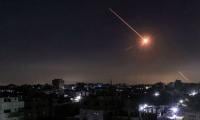
The last four years have made this migration visible. The Israeli strike on Doha in September 2025 broke, in a single afternoon, the presumption that the United States could underwrite Gulf security; eight days later, Pakistan and Saudi Arabia signed a Strategic Mutual Defence Agreement whose deliberate ambiguity around extended deterrence said more than its text did. The four-day exchange with India in May 2025 ended with a ceasefire claimed by an American president who had not been asked, and within months, our four-star general was a private guest at a White House lunch.
In April 2026, we hosted the US and Iran at the same table while having condemned the strikes by both sides. Our first shipment of rare earths reached Washington alongside an $8.5 billion package of agreements with Beijing and the field marshal’s own line that we would not sacrifice one friend for the other. None of this makes sense from inside Zakaria’s frame. All of it makes sense from inside the long arc.
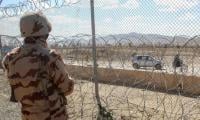
Three caveats are owed. Middle-power leverage is performative until it survives a real test, and we must remain useful on terms we choose. The ‘we’ navigating the new order are not the same ‘we’ who paid for the old one – the constitutional rearrangements of November 2025, the political reality inside Adiala, the insurgencies on two western frontiers and the sectarian fault line activated by the killing of Khamenei are bills that someone will pay. And each new pole is increasingly inclined to read our balance as defection.
The West has always moved. From the Aegean to the Mediterranean. From the Mediterranean to the Atlantic. From London and Paris to Washington and New York. The next migration is back towards the Eurasian landmass – towards the geography that between 1000 and 1450 AD was the world’s leading centre, and from which Europe borrowed gunpowder, printing, the compass and meritocracy on its own way up. What is being born is not a Chinese hegemony in the American style. It is something looser, more plural, less universalist.
How we should be thinking about Afghanistan in this new geography and this deserves its own piece, and I will return to it in some next article.
The West, as we have known it, is once again undergoing a geographic recalibration. The question for those of us standing on the seam is not which side we are on, but whether we have the discipline to remain a seam – and not a fault line.
The writer is a development professional working on intersectional issues in society, economics and climate. A former World Bank staff member, he is currently running his own social impact advisory, Reenergia.