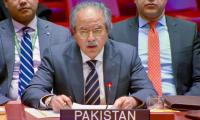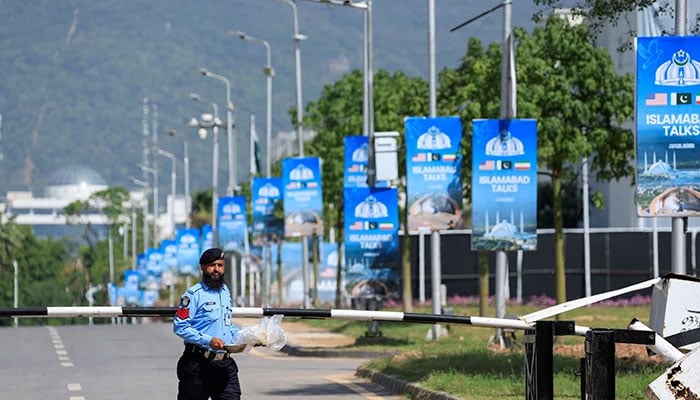
The Washington Post article of April 20, 2026, on Pakistan’s emerging role as a mediator in US-Iran tensions provides a window into how influence is actually built in today’s fractured global order.
At first glance, this appears to be a diplomatic win. A country long seen through the lens of instability is suddenly positioned at the centre of high-stakes negotiations. But beneath the surface, this is not just about Pakistan’s newfound strength, but also about its ability, perhaps instinctive, perhaps deliberate, to read the moment, the players and the gaps in the system.
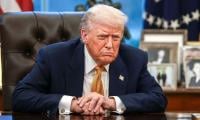
The most striking takeaway is that diplomacy today is no longer ideological; it is deeply personal and transactional. Pakistan did not arrive at this position by asserting doctrine; it did so by aligning itself with the priorities and personality of US President Donald Trump, understanding that access to power increasingly flows through perception, responsiveness and timing.
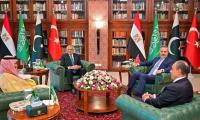
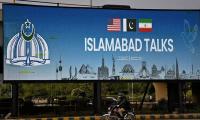
Equally important is the power of narrative. Nations are no longer defined solely by their economic strength or military capability, but by how effectively they project relevance. By hosting talks and positioning itself as a bridge between adversaries, Pakistan momentarily reshaped its global image, from a problem state to a problem-solver. In a world driven by perception, that shift alone carries weight.
However, the deeper lesson lies in Pakistan’s ability to engage across divides without being owned by any one camp. Maintaining working relationships with both Iran and the US, while stepping into a mediator’s role, reflects a quiet but powerful principle: influence today belongs to those who are acceptable to all, rather than loyal to one. Strategic ambiguity, when managed well, becomes a source of leverage.
What cannot be ignored, however, is the role of timing and geography. The crisis in the region created a vacuum, and Pakistan stepped into it. This reinforces a critical truth: nations do not always rise through strength; they rise when they recognise opportunities and act with clarity and speed. A decisive demonstration of capability and success in the May conflict with India laid the foundation. That was followed by a three-pronged approach, reading the intent and style of President Donald Trump, executing smart, adaptive diplomacy, and shaping perception through effective public narrative. This earned Pakistan a seat at the table.
When the regional crisis emerged, Pakistan did not wait to be invited; it positioned itself as the most viable bridge. It has maintained relationships across divides, with Iran, China and the US, which have suddenly become strategic assets. Yet, this external elevation sits in sharp contrast to internal realities. Economic pressures, structural weaknesses and governance challenges remain unresolved.
This raises an uncomfortable but necessary question: is this emergence as a peacemaker a reflection of genuine strategic evolution, or a well-timed projection masking deeper vulnerabilities? The article itself notes that Pakistan’s diplomatic success has unfolded alongside severe domestic economic strain and criticism that high-profile mediation may not automatically translate into relief for ordinary Pakistanis. The answer may well be both. But this is where the real question begins, not ends.
History is clear. Mediation brings visibility, accolades and temporary relevance. Once agreements are signed, principal actors move forward, often without the mediator. Where does that leave Pakistan?
This is the inflexion point. From where I stand, this is not intended as preaching. It is simply a personal reading of the moment by an overseas Pakistani who cares deeply for the country and is trying to understand what this opening could mean in the longer term. And in saying this, I have absolutely no doubt that Pakistan, under the able leadership of COAS-CDF Field Marshal Asim Munir Sahib and Prime Minister Shahbaz Sharif Sahib, will be extracting full benefit from this opportunity for the long-term interest of Pakistan. The objective, in my view, must now be unequivocal: to convert episodic relevance into a more permanent seat at the table.
We also know that this cannot be achieved through optics or goodwill alone. It requires hard negotiation, translating diplomatic capital into tangible economic outcomes: Debt restructuring and write-offs to create fiscal breathing space; preferential economic and trade arrangements; and strategic investments that stimulate real economic activity, not loans that deepen dependence.
But such outcomes will not come free, and I am sure the leadership is fully aware of that. They will demand credibility. And credibility will demand reform. Pakistan must signal its willingness to undertake serious domestic restructuring: fiscal discipline, governance reform, policy continuity and institutional strengthening. Without this, external gains will remain cosmetic and short-lived.
This is, quite possibly, a once-in-a-generation opportunity. The alignment of timing, geography, global tensions and leadership positioning rarely converges at this scale. The question is not whether Pakistan has arrived at the table but whether we can stay there. And staying there will not be determined by diplomacy alone, but by what our leadership is undertaking – quietly, decisively and structurally.
At its core, this episode underscores a larger shift in global dynamics. Power is no longer static or confined to traditional hierarchies. It is fluid, situational and often temporary, granted to those who can solve problems others cannot, even if only for a moment. The strategic takeaway is clear: Pakistan’s real opportunity is not only in celebrating this moment but also in institutionalising it, transforming episodic relevance into sustained credibility. That requires, as stated earlier, moving beyond optics, aligning external posture with internal reform and building a consistent narrative of reliability. The time for once, it is in our hands, and we as a nuclear-powered nation of 250 million are eagerly awaiting to hear this good news.
The writer is a former globalcorporate executive (Unilever, PepsiCo, Yum! Brands), a mental health advocate and a founding board member of Taskeen, a pioneering organisation focused on emotional well-being in Pakistan.