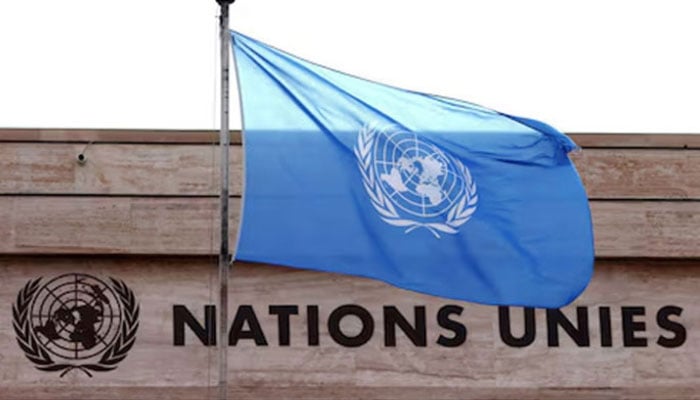
When the UN was established in 1945, the world was emerging from the unprecedented devastation of World War II. The war had claimed more than sixty million lives, destroyed major cities across Europe and Asia, and demonstrated the catastrophic consequences of unchecked geopolitical rivalry.
Global leaders recognised that if humanity was to avoid another such catastrophe, a permanent institutional framework for diplomacy and collective security was essential. The League of Nations, created after World War I, failed largely because it lacked enforcement authority and the participation of major powers. Learning from that failure, the United Nations was designed to be stronger, more inclusive, and structurally capable of managing international peace.
At the centre of the new system was the United Nations Security Council, entrusted with primary responsibility for maintaining global peace and security. The council’s five permanent members, the US, Russia (then the Soviet Union), the UK, France and China, were granted veto power. While controversial, this arrangement reflected the political reality that global stability required the cooperation of the most powerful states. The architects of the UN believed that giving these powers a privileged role within the system would encourage them to resolve disputes through diplomacy rather than war.
For several decades after its creation, the UN appeared to play an important role in reducing the risk of large-scale interstate wars. The cold war rivalry produced numerous geopolitical tensions, yet direct military confrontation between the two superpowers never materialised. The UN provided a diplomatic platform where adversaries could communicate even during moments of extreme tension. During the Cuban Missile Crisis of 1962, for example, UN diplomacy contributed to maintaining channels of dialogue at a moment when nuclear war seemed possible.
The organisation also pioneered the concept of peacekeeping operations. Beginning with the UN mission following the Suez Crisis in 1956, peacekeeping became one of the most visible tools of international conflict management. Today, nearly 90,000 personnel serve in UN peace operations worldwide.
Beyond security issues, the UN system developed an extensive network of humanitarian and development institutions. Agencies such as WHO, Unicef and UNDP helped improve global health, education and development outcomes across more than 170 countries. In this sense, the UN helped construct a broad architecture of international cooperation that shaped the post-war global order.
Despite these achievements, however, structural weaknesses within the UN system gradually became more apparent. The most significant of these weaknesses lies in the veto power held by the five permanent members of the UNSC. While originally intended to ensure cooperation among great powers, the veto increasingly became a mechanism for protecting national interests and geopolitical alliances. Since 1946, the veto has been used more than 300 times in the Security Council, often blocking resolutions that conflicted with the strategic interests of major powers rather than reflecting a genuine global consensus.
By 2025, the distribution of veto use clearly illustrates this imbalance. Russia and the former Soviet Union have used the veto approximately 129 times. The US has exercised it about 89 times, while the UK has used it 29 times, China around 19 times and France about 16 times. Many of these vetoes have been used to shield allies or strategic partners from international accountability. For example, the US has repeatedly used the veto to block resolutions critical of Israel.
By the late 20th century, the consequences of these structural limitations became increasingly visible. Humanitarian tragedies such as the Rwandan Genocide in 1994, in which approximately 800,000 people were killed within just 100 days, exposed the inability of the international community to respond effectively to rapidly unfolding crises. Similarly, the Bosnian War demonstrated the challenges faced by UN peacekeeping forces when confronted with complex internal conflicts and ethnic violence.
At the same time, the end of the cold war brought a new phase of geopolitical dynamics in which major powers increasingly acted outside the UN framework when it suited their strategic objectives. The Nato bombing of Yugoslavia in 1999, conducted without explicit authorisation from the UNSC, signalled an emerging pattern: powerful states were prepared to bypass the UN if its approval could not be secured.
This pattern became even more pronounced in the 21st century. One of the most controversial examples was the Iraq War in 2003. The military intervention led by the US and its allies proceeded without clear authorisation from the UNSC, despite widespread international opposition. The conflict resulted in hundreds of thousands of deaths and contributed to long-term instability across the Middle East. Critics argued that the war undermined the UN’s credibility.
Similarly, the Russian invasion of Ukraine highlighted a fundamental paradox within the UN structure. Because Russia holds permanent membership and veto power, the UN has been largely unable to enforce meaningful collective action against the invasion through its primary security mechanism.
At the same time, geopolitical competition among major powers has increasingly manifested through indirect interventions and proxy conflicts. In many cases, powerful states influence the internal politics of other countries or support rival factions in regional conflicts to advance strategic interests. Political crises involving countries such as Venezuela and Iran have often been shaped by external pressures, sanctions, covert operations or geopolitical rivalries. These actions are frequently justified in terms of national security or global stability, yet critics argue that they often reflect the pursuit of strategic or economic interests rather than collective global welfare.
Another controversial dimension of contemporary geopolitics is the relationship between global conflict and the international arms industry. The global defence sector today represents hundreds of billions of dollars in annual trade, with the US, Russia and China among the world’s largest arms exporters. Critics argue that geopolitical tensions and prolonged conflicts can align with the economic interests of defence industries, which benefit from sustained military spending and arms transfers. Although governments justify such policies as necessary for national defence, the expansion of global arms markets can contribute to the militarisation of international disputes and complicate the resolution of diplomatic conflicts.
The UN’s weakened authority is also reflected in its selective acceptance of international legal institutions. Bodies such as the ICJ were established to resolve disputes through legal adjudication rather than military confrontation. Yet major powers sometimes challenge or disregard rulings that conflict with their strategic interests, undermining the credibility of international law and raising questions about the enforceability of global governance mechanisms.
Despite these challenges, the United Nations continues to play an indispensable humanitarian role in the international system. Its agencies provide assistance to millions of refugees, coordinate disaster relief operations, and support development programs across the globe. However, the organisation’s ability to fulfil its primary mission of maintaining international peace ultimately depends on the willingness of powerful states to respect the rules and norms embedded in the UN Charter.
At the same time, the experience of the past eight decades clearly indicates the urgent need for structural reforms within the UN system. The concentration of veto power in the hands of only five states represents an inherited institutional flaw rooted in the geopolitical realities of 1945. The original expectation was that these powerful nations would exercise their privileged authority responsibly and act in the collective interest of global peace. Yet historical experience has often revealed a different pattern, in which veto powers have been used to protect national or ideological interests rather than safeguard international stability.
This concentration of authority has also created a system in which many smaller and developing nations remain structurally marginalised. Despite representing most of the world’s population, these states often possess limited influence over decisions that shape global peace and security. As a result, the current structure of the UNSC appears increasingly oligopolistic, where decision-making authority remains concentrated among a few dominant actors rather than reflecting the broader international community.
If the international system is to remain credible and effective, the UN must move towards a more democratic and inclusive model of global governance. Reconsideration of the veto system, expansion of representation and institutional reforms that amplify the voices of smaller nations are essential steps towards restoring legitimacy to the UN.
The UN was created because the world recognised that unrestrained power politics had produced the devastation of World War II. If the global community truly seeks a more secure, peaceful and sustainable future, meaningful structural reform of the UN system has become an urgent necessity.
The writer is an assistant professor at Air University Aerospace & Aviation Campus Kamra and can be reached at: [email protected]