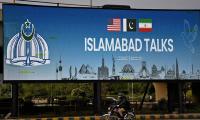
Pakistan’s recent diplomatic successes point to a powerful and often overlooked truth: when the leadership shows commitment behind a clear objective, it can deliver expectations.
Engaging the world, building trust and positioning Pakistan as a credible partner in a deeply fractured global landscape did not happen by chance. It happened because the political will, institutional coordination, and strategic focus came together with clarity and purpose.
That same clarity is urgently needed at home now. Pakistan’s population trajectory is not a routine policy concern; it is the defining challenge of our time. Its implications cut across national security, economic stability, political cohesion and the state’s capacity to govern effectively.
The central reality is that Pakistan already has what it takes. It has proven it can act decisively when priorities are clear and leadership is aligned. The issue is not capability but commitment. If the same urgency, coordination and sustained focus that powered Pakistan’s diplomatic resurgence are applied to population dynamics, the outcome can be transformative.
This begins with a shift in mindset: population is no longer a narrow, technical issue confined to family planning; it is a macroeconomic trajectory and a core national priority. It must be placed at the highest level of decision-making, alongside security and foreign policy. This is not an expansion of the national agenda; it is a recognition of reality. A nation’s strength abroad is inseparable from its strength at home.
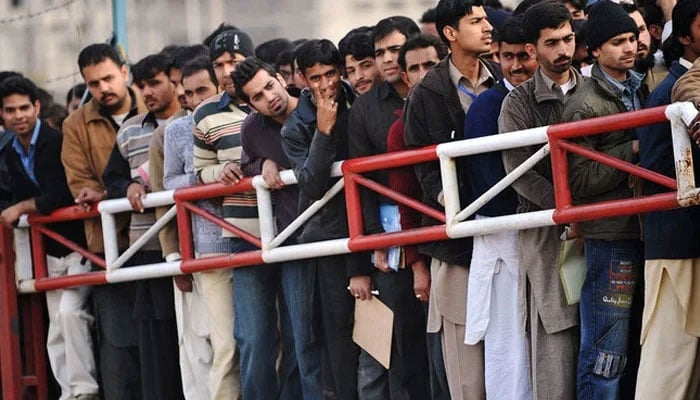
The urgency is undeniable, with two-thirds of Pakistan’s population under thirty, Pakistan stands at a decisive moment. This youth bulge is often described as a demographic dividend, but a dividend is not a guarantee; it is an opportunity that must be earned. Without investment, jobs and coherent policy, it can quickly become a source of frustration, inequality and instability. With the right choices, however, it can become the single greatest driver of national renewal.
What stands in the way is not the lack of understanding of the problem, but fragmentation in the response. Efforts to advance human development remain scattered across institutions that too often work in isolation, guided by competing priorities and disconnected strategies. In a moment that demands speed and cohesion, this approach is no longer sustainable.
Pakistan’s diplomatic resurgence offers a clear lesson. Progress accelerates when there is unity of purpose. When leadership treats a challenge as urgent and existential, barriers fall, coordination improves and outcomes follow. The population agenda deserves nothing less. Breaking down silos, aligning federal and provincial priorities and building a unified national framework for human development are now essential, as is unified top-level leadership.
This also requires abandoning outdated hierarchies in policymaking. Reproductive health, girls’ education, youth employment and the elimination of gender-based violence are foundational investments in economic growth and national and fiscal stability. No country can move forward while half its population is held back.
The future of Pakistan will be determined by whether its young people are empowered to participate fully in society, especially its young women. This is not simply a social goal; it is a strategic imperative. Countries that unlock the potential of their youth and expand opportunities for women consistently achieve stronger growth, greater resilience and more stable societies. Bangladesh is a live example.
Pakistan has the potential not only to meet this challenge but also to lead. Across the Global South, nations are grappling with the same question of how to turn demographic change into inclusive growth. By ensuring access to reproductive health, keeping girls in school, ending child marriages and creating real pathways to employment, Pakistan can unlock a powerful engine of transformation from within.
Addressing gender-based violence is central to this effort. It is not only a moral obligation, but a practical necessity. A society that cannot guarantee safety and opportunity for all its citizens cannot reach its full potential.
These priorities are not new. What is required now is a new level of political will behind them. Applying the same coordination, focus and accountability that restored Pakistan’s diplomatic standing to its demographic future would not shift attention away from national security but would rather strengthen it at its core.
Moments of opportunity are rare, and they do not last. Today, Pakistan’s renewed global relevance and its demographic window are converging. This is a test of whether the country can translate external momentum into internal strength.
The most consequential challenge facing Pakistan is not beyond its borders. Meeting it with commitment, leadership, priority and conviction will determine whether this moment becomes a turning point or a missed opportunity. Who will carry the torch and lead?
The writer is the UNFPA representative in Pakistan.