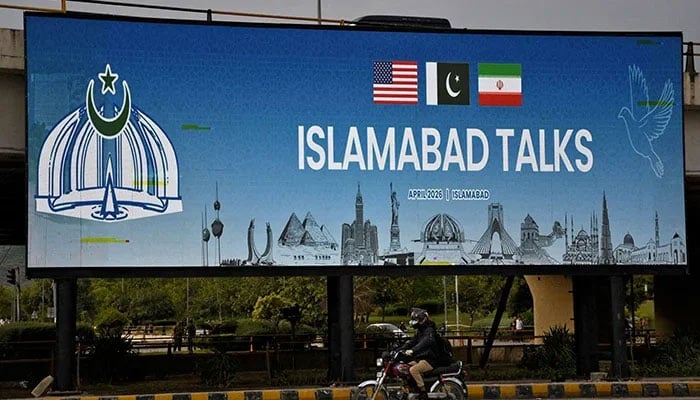
I followed Pakistan’s most consequential diplomatic week in living memory from a phone screen in Islamabad, refreshing a journalist’s X feed.
Not a Pakistani government channel. Not a state broadcaster. Not a Foreign Office update. An American journalist posted on the ground in Islamabad, filing for a New York publication, was the most reliable real-time source available to a Pakistani citizen trying to understand what his own country was doing in his own country’s capital.
That single fact contains everything wrong with our narrative infrastructure. And everything right with our diplomacy.
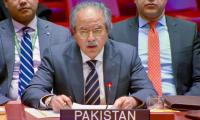
What Pakistan achieved between February and April 2026 is worth stating plainly, without embellishment, because the record alone is extraordinary. Pakistan brokered a ceasefire between the US and Iran. It hosted the first direct talks between the two countries since 1979. It kept both delegations at the table for 21 hours. It got the ceasefire extended indefinitely.
US President Trump named COAS-CDF Field Marshal Asim Munir and Prime Minister Shehbaz Sharif by name – twice – in White House statements. The United States, China, Saudi Arabia, Egypt and Germany all publicly credited Pakistan’s role in the same week. Iran’s foreign ministry praised Pakistan even as IRGC hardliners called it untrustworthy – a contradiction that is, for a mediator, the highest possible credential.
Field Marshal Munir flew to Tehran for one day and stayed three. When a military chief extends a visit to a country mid-war, it is because that country asked him to stay. That is not a footnote. That is the story.
And yet: Pakistan was not fighting one narrative battle during this period. It was fighting several at once.
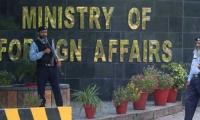
While the Islamabad ceasefire talks were live, India’s information apparatus had already activated over Pahalgam. Within hours of the attack – before any investigation, before any evidence – Pakistani attribution was saturating the international information environment. Across platforms. In English. At algorithmic speed. Pakistan’s Foreign Office called it accurately: the "weaponisation of false narrative”. But naming it at press conference speed, in Urdu, on channels that do not reach the audiences that matter, is closer to silence than response.
Simultaneously, fabrications were arriving from other directions. An Israeli-linked open-source intelligence account circulated claims about a weapons deal – a story that, without independent government confirmation, had no business travelling the way it did. Another foreign press agency published an attack on a "national refinery" – a company that, as confirmed publicly by a senator, does not exist.
A Central Asia-registered account, having changed its username three times in ten months, published a fabricated medical story about Pakistan’s president on the day he departed for an official state visit to Beijing. A senior Pakistani journalist amplified it with a laughing emoji to 18,000 people. Then deleted it. The screenshot remained.
None of these fabrications survived contact with the diplomatic record. But that is not the point. The point is the speed.
Disinformation travels at algorithmic velocity. Corrections travel at press conference velocity. That gap – between the speed of a false claim and the speed of a verified response – is not a communications problem. It is a strategic vulnerability. And Pakistan has been losing inside that gap for decades.
Winston Churchill told Stalin at Tehran on November 30, 1943 – while discussing the need to deceive Germany about the coming invasion of Normandy – that "truth is so precious that she should always be attended by a bodyguard of lies". The remark was so precise it became the codename for the entire Allied deception campaign: Operation Bodyguard. What Churchill was really saying is that truth, however solid, requires active defence. It does not defend itself.
Pakistan has the truth. It does not yet have the defence.
Joseph Nye, who coined the term soft power, later observed that in the information age, credibility is the scarcest resource. Pakistan has just earned an unusually large amount of it. The question is whether we have the infrastructure to convert credibility into sustained narrative positioning – or whether we will, as we have before, allow a moment of genuine achievement to dissolve into the background noise of the next crisis.
The honest answer is that we do not have that infrastructure. Pakistan has no globally positioned, English-language digital platform with a meaningful international audience. Its government ministries communicate predominantly in Urdu, through static templates, on platforms where the content never reaches the policy audiences that matter. Its best English-language newspapers are largely invisible internationally unless a specific article is shared manually.
During the most significant diplomatic week in Pakistan’s recent history, the most effective English-language voices were individual citizens on X – operating without institutional support, without verified sourcing, and without the editorial infrastructure that converts real-time commentary into durable record. This is not a criticism of those individuals but a diagnosis of the system they were compensating for.
The countries that win narrative wars over time build platforms before they need them. Al Jazeera launched in 1996, a decade before it became the dominant frame for Arab Spring coverage. Its value to Qatari foreign policy positioning was architectural. A credible, editorially independent platform with genuine international reach is not propaganda. It is the opposite of propaganda. Its credibility derives precisely from not being state-controlled, while being strategically aligned with a country’s interest in being understood accurately by the world.
Pakistan needs the equivalent. Not a mouthpiece. Not a rebranded PTV World. Something with the editorial independence to be trusted by international audiences, the digital nativity to operate at algorithmic speed, and the strategic orientation to understand that Pakistan’s story – told accurately, without embellishment – is already more compelling than anything a communications team could manufacture.
Because the story, told plainly, is this: a country that the world spent three decades writing off as ungovernable, unstable, and strategically irrelevant just brokered a ceasefire between the US and Iran. It did so quietly, consistently, without over-claiming and while managing a domestic political environment, a counterterrorism operation on its western border and an energy transition simultaneously. That story did not need spin. It needed a platform.
The window is open now. Pakistan has credibility it has not had in a generation. The diplomatic relationships are warm. The international endorsements are on record. The world, for a brief and unusual moment, is paying attention.
Credibility of this kind has a half-life. What we build with it – or fail to build – will determine whether April 2026 becomes the foundation of a new Pakistani narrative architecture, or a footnote that future analysts cite when explaining why Pakistan keeps winning the room and losing the story.
The switch is right there. This time, we should flip it ourselves.
The writer is the CEO ofCampaignistan and founder of the Islamabad Science Festival. He tweets/posts @farhadjarralpk and can be reached at: