ISLAMABAD: The Overseas Investors Chamber of Commerce and Industry (OICCI), representing more than 200 multinational companies operating in Pakistan, has urged the government to gradually abolish the super tax over three years and rationalise the capital value tax (CVT) on foreign assets in the 2026-27 budget.
In its proposals, the OICCI also called for capping the top income tax rate on salaries at 25 per cent to help curb brain drain, arguing that the formal sector and salaried class are bearing a disproportionate tax burden.
The government is expected to seek some flexibility from the International Monetary Fund (IMF) to reduce the tax burden, though it will need to present alternative measures to bridge the revenue gap ahead of the budget, likely to be unveiled on June 1, 2026.
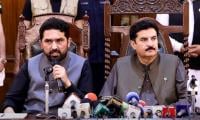
The OICCI presented its proposals to Minister of State for Finance Bilal Azhar Kiani and later submitted them to the Ministry of Finance, recommending a phased withdrawal of the super tax from FY2026-27 through FY2028-29.It also proposed reducing the corporate tax rate to 28 per cent in FY2026-27, with a roadmap to bring it down to 25 per cent over the following three years.
The chamber called for a review of the minimum tax on turnover under Section 113 and the alternate minimum tax under Section 153 of the Income Tax Ordinance, 2001, as well as the withdrawal of tax on bonus shares under Section 236Z.
Among other measures, the OICCI recommended abolishing the 10 per cent surcharge on salary income; rationalising CVT on foreign assets of returning expatriates and foreign employees; and lowering the standard sales tax rate on goods from 18 per cent to 17 per cent, with a gradual reduction to 15 per cent.
It also proposed reinstating relief from double taxation on inter-corporate dividends, reducing withholding tax rates by 25 per cent across sectors, allowing full input tax adjustment by removing Section 8B of the Sales Tax Act, and introducing a clear, automated mechanism for timely tax refunds, including cross-adjustment between income tax and sales tax refunds.