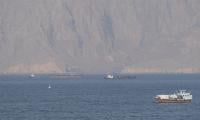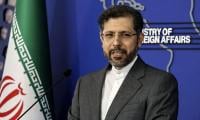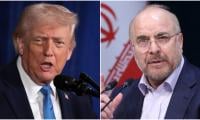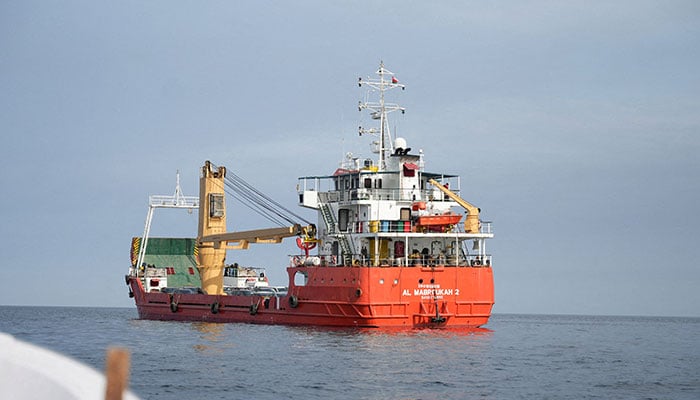
Do we dare hope that some form of a peace deal may be at hand? Perhaps. Iranian Foreign Minister Abbas Araghchi’s announcement on Friday that commercial passage through the Strait of Hormuz will remain fully open during the Lebanon ceasefire should be – and is being – seen as a positive. In geopolitical terms, such signals matter. and in this case the past day or two of diplomatic shuttling by Pakistan was expected to lay the groundwork for something more durable. That US President Donald Trump has acknowledged Iran’s move positively is another positive. Good vibes for now. After weeks of confrontation, rhetoric appears – at least momentarily – to be giving way to restraint. Similarly, Prime Minister Shehbaz Sharif’s welcome of the Lebanon ceasefire is also a clear sign that Islamabad is no longer a mere bystander to conflict. The Lebanon ceasefire itself, announced by Trump and cautiously endorsed by Lebanese leadership, has already begun to reshape diplomatic possibilities. Crucially, it removes a major obstacle that had stalled earlier US-Iran talks in Islamabad. With a second round now anticipated, the pause in hostilities may provide the political space necessary for substantive engagement.
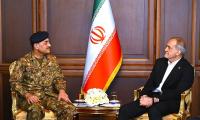
Pakistan’s role in this evolving dynamic is notable. From COAS-CDF Field Marshal Syed Asim Munir’s visit to Tehran where he engaged both civilian and military leadership to the prime minister’s outreach to regional powers, Islamabad has pursued an unusually active diplomatic track. Iranian President Masoud Pezeshkian has publicly acknowledged these efforts, lending them a degree of legitimacy often absent in such behind-the-scenes negotiations. There is a growing sense that any eventual agreement – which we hope would be called the ‘Islamabad Accord[s]’ – would be followed through and come with strategic weight. In fact, Trump’s own suggestion that he might attend a signing in Islamabad should a deal materialise is no small statement, both in terms of stakes and the optics. Many have rightly noted that the US president, given his person, would likely seek to claim ownership of any breakthrough, particularly after a conflict that has drawn criticism domestically. Yet, not everything is hunky-dory and the excitement over this momentum must also be tempered with restraint. Even as diplomatic channels remain active, US Defence Secretary Pete Hegseth’s warning that Washington remains “locked and loaded” against Iranian infrastructure is cautionary sign of how quickly gains can be undermined. Such statements may well be aimed at a domestic audience – an attempt to counter perceptions of retreat after Iran’s resistance – but they carry risks. And let us not forget the destructive potential of the biggest spoiler in all this: Israel, whose zeal for violence and mayhem known zero bounds.
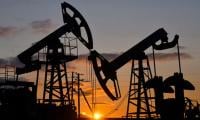
Meanwhile, the economic aftershocks of conflict in the Middle East are neither abstract nor distant. According to the International Energy Agency, it could take up to two years to restore energy output lost due to recent hostilities. This is the material cost of war, measured not only in lives and infrastructure, but in prolonged global uncertainty. For now, what exists is the possibility of it. After such insane violence and death, even a possibility is welcome. Yes, ceasefires can collapse as quickly as they are declared. And, yes, diplomatic openings can narrow without warning. But they can also, if carefully managed, evolve into something more lasting. The challenge for all parties is to recognise that this moment, however tentative, is worth preserving.