Almost as if on cue – by the clock, not by chance – the attack on a Pakistan Coast Guard patrol boat on Sunday unfolded at a moment of heightened diplomatic significance for the country. The precision of its timing has raised troubling questions, reinforcing a perception long held by observers: that such acts of violence are calibrated to coincide with critical junctures for Pakistan on the global stage. The martyrdom of three personnel in what is being described as the first-ever assault on a maritime unit should be seen not only as increasing brazenness of militant groups, but also as a rather disturbing widening of their operations. The banned terror group Balochistan Liberation Army (BLA) has claimed the attack, calling it a strategic shift. That this incident occurred off the coast of Jiwani, near Gwadar and close to the Pakistan-Iran border is also significant. It seems the theatre of militancy is no longer confined to land-based insurgency but is expanding into maritime domains. How prepared are we? How coordinated? All this needs to be studied and quickly worked out.
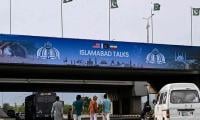
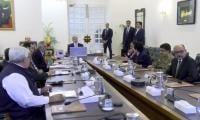
Equally striking is the broader context. The attack came at a time when Pakistan was mediating ceasefire talks between the US and Iran in Islamabad, a moment that had placed the country at the centre of regional diplomacy. The overlap is difficult to dismiss: the fact is that destabilising forces are activated precisely when Pakistan assumes a role that carries strategic weight. Islamabad has consistently maintained that the BLA operates with external backing, naming India as a sponsor and alleging facilitation by the Afghan Taliban regime alongside the TTP. According to this view, safe havens across the border have enabled these groups to carry out cross-border attacks, complicating Pakistan’s internal security landscape and straining regional relations. This backdrop explains Operation Ghazab Lil Haq earlier this year. Though recent developments suggest a tentative opening. Reports of useful progress in talks involving Pakistan, Afghanistan and China indicate a willingness to de-escalate. It all remains contingent on a crucial factor though: ending any facilitation of militant groups targeting Pakistan.
The broader geopolitical lens adds further complexity. Some observers point to a nexus involving India and Israel, arguing that pressure may be exerted on Pakistan through proxy actors, particularly in Balochistan given its proximity to Iran. The recent visit of Indian PM Narendra Modi to Israel has been interpreted as reflective of shifting alignments. Regardless of how these dynamics are interpreted, one reality stands out: Balochistan remains a flashpoint where internal vulnerabilities intersect with external rivalries. The attack on the coast guard is should be seen as part of a broader pattern that demands both vigilance and clarity. Pakistan’s response must therefore remain two-pronged -- strengthening security while sustaining diplomacy. The recent talks facilitated by China offer a possible pathway towards easing tensions with Afghanistan, but progress will depend on actions, not mere verbal assurances. If the timing of this attack tells us anything, it is that the stakes are higher than ever.