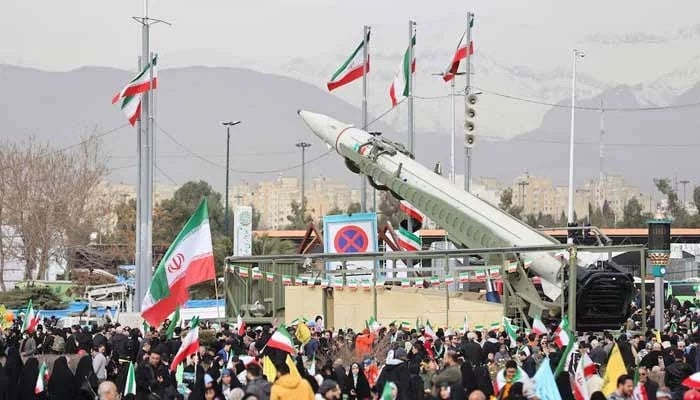
There are moments in history when outcomes force us to rethink the very meaning of power. The recent war imposed on Iran is one such moment.
For decades, Iran has been portrayed as a constrained state: heavily sanctioned, economically squeezed,and militarily outmatched. On February 28, 2026, joint US-Israeli airstrikes killed Supreme Leader Ali Khamenei and other senior commanders. The expectation was clear: under sustained pressure, Iran would fracture.
That did not happen. What unfolded instead was a demonstration of resilience so disciplined and strategy so calibrated that it has compelled a fundamental reassessment of how power operates in the modern world.
Cut off from global systems for decades, Iran had little choice but to build internal capability across its economy, military architecture and governance structures. The result is durability under stress.
Despite the assassination of its Supreme Leader and other important leaders, sustained strikes and serious economic strain, the Iranian system did not collapse. Command structures held. Decision-making remained coherent. Public messaging stayed composed. Most strikingly, succession was rapid and seamless. This suggests a system that had deliberately anticipated such shocks and prepared for them: dispersed command, pre-planned succession and institutions hardened by decades of external pressure. It is a level of institutional foresight extraordinarily rare in modern statecraft.
Wars are no longer decided solely by territory gained or destroyed. Increasingly, they are shaped by control over the critical systems that underpin the global economy. In this conflict, that system was the Strait of Hormuz.
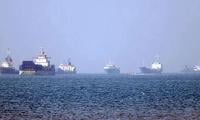
Before the war, approximately 25 per cent of the world’s seaborne oil trade and 20 per cent of global LNG passed through this narrow passage. From early March, Iran effectively closed it – choking off an estimated 12 to 15 million barrels of crude per day. The International Energy Agency described the resulting disruption as "the greatest global energy security challenge in history”, surpassing even the 1970s oil crisis. Brent crude rose nearly 30 per cent from pre-war levels; WTI was up more than 40 per cent; Dubai crude hit a record $166 per barrel on 19 March. At the strait’s entrance, 426 tankers sat stranded.
Iran did not stop there. It selectively permitted vessels from China, Russia, India, Iraq and Pakistan to transit – using the chokepoint as diplomatic currency.
For Pakistan, the costs were immediate and severe. The country imports more than 80 per cent of its oil needs, holds only around 20 days of reserves, and relies on Qatar – whose LNG output was cut 17 per cent by Iranian strikes on Ras Laffan, with repairs expected to take up to five years – for the bulk of its gas. LNG shipments to Pakistan fell from twelve in January to just two in March, the first full month of the war. Fuel prices recorded the largest single increase in the country’s history. Emergency austerity followed: a four-day workweek, school closures, and the deployment of naval assets to escort tankers through the disrupted strait.
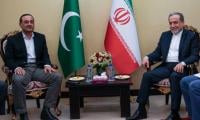
Yet Pakistan was not only a casualty of this conflict but one of its most consequential actors. Prime Minister Shehbaz Sharif’s two-week ceasefire proposal, developed through sustained subtle diplomacy, became the framework President Trump accepted hours before his self-imposed deadline. Iran’s foreign minister credited Pakistan publicly. Analysts noted that the urgency driving the deal "appeared more pronounced on the US side" – a detail that speaks directly to the shifting power dynamics at the heart of this conflict.
For the US, the implications are uncomfortable. American military capability remains the strongest in the world, but power is measured by the ability to translate capability into outcomes. On that measure, this conflict raises difficult questions. There was no regime change, no restructuring of Iran’s strategic posture, no demonstration of uncontested control.
Leadership compounded the damage. President Trump threatened that "a whole civilization will die tonight" – then reached a ceasefire hours later. He declared on March 9 that Iran’s military had been destroyed and the strait had reopened; neither was true. He demanded Nato help reopen the strait while simultaneously threatening to leave the alliance.
Each episode of overreach followed by retreat eroded the credibility on which deterrence depends. Domestically, opposition to the conflict grew. Internationally, allies appeared cautious and reluctant. The perception of unpredictability began to overshadow the projection of strength. Analysts noted that the push for negotiations ultimately originated in Washington, not Tehran. That asymmetry of urgency – that it was the world’s pre-eminent military power which blinked first – tells its own story about the shifting geometry of power.
What this conflict reveals is a fundamental shift in how power operates. Resilience is no longer passive; it is a constructed capability, built through institutions, deliberate planning, and the ability to absorb shocks without losing coherence. Leverage over critical systems – energy routes, supply chains, financial networks – can outweigh conventional force superiority. And leadership that remains composed under extreme pressure will consistently outperform leadership that substitutes rhetoric for strategy.
Iran did not emerge unscathed. It absorbed significant military, human and economic damage. But it demonstrated the ability to endure, adapt and shape the strategic environment in its favour – exercising effective control over the world’s most important energy chokepoint, while a Pakistani prime minister brokered the ceasefire in Islamabad.
The unthinkable was not that Iran would win a conventional war. The unthinkable was that it would absorb the full force of a superpower, remain composed and emerge with greater leverage than it began with. That is precisely what has happened.
The writer is a former managing partner of a leading professional services firm and has done extensive work on governance in the public and private sectors. He tweets/posts @Asad_Ashah