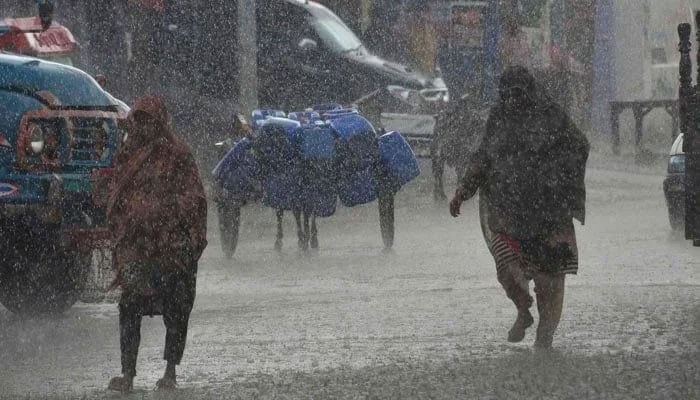
Islamabad: Pakistan is expected to experience above-normal rainfall and higher-than-average temperatures during the April-May-June period, according the Pakistan Meteorological Department (PMD).
In its latest seasonal outlook, the PMD said the rainfall would be particularly pronounced over northwestern parts of the country, including central and southern Khyber Pakhtunkhwa, adjoining areas of northwestern Punjab, northern Balochistan and parts of Gilgit-Baltistan.
Also, southern regions, including Sindh and southern Balochistan, are likely to receive slightly above-normal rainfall, with the first half of the season projected to be wetter than the latter half.
The PMD noted that mean temperatures were expected to remain above normal across the country throughout the season. The highest deviations are likely in northern areas such as Gilgit-Baltistan, Kashmir and northern Khyber Pakhtunkhwa, as well as in the extreme southern parts of Sindh and Balochistan. The PMD also indicated a strong likelihood of above-normal temperatures nationwide, reflecting a broader warming trend.
The PMD reported the largest positive anomalies in Gilgit-Baltistan and Khyber Pakhtunkhwa, underscoring a pattern of sustained warming that is expected to continue into the coming season. The department warned that while increased rainfall could improve soil moisture and support the sowing and early growth of Kharif crops, excessive precipitation was also likely to lead to waterlogging in low-lying areas and delays in planting.
Above-normal rainfall in catchment areas is expected to improve reservoir levels, which will benefit irrigation and power generation but could heighten the risk of flash floods and landslides, particularly in mountainous and flood-prone regions.
The PMD cautioned that heat wave conditions remained likely in the plains of southern Punjab, Sindh and Balochistan despite the wetter outlook. According to it, rising temperatures could accelerate the spread of pests and crop diseases and increase the risk of vector-borne illnesses such as dengue.