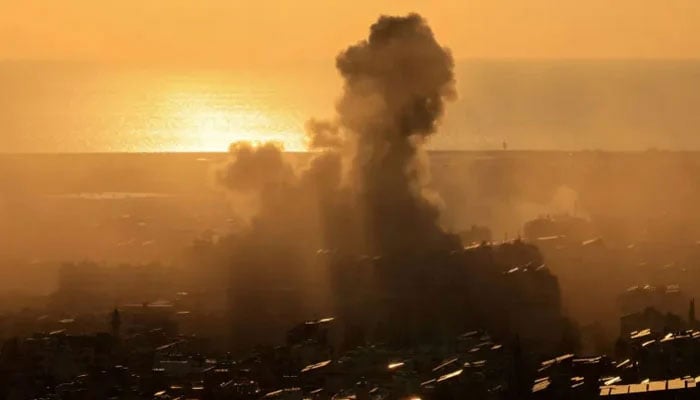
A month into the war with Iran, one fact is now impossible to ignore: this conflict has exposed the limits of American power more clearly than any recent war.
Washington entered expecting a short, punishing campaign. The logic was familiar: overwhelming force, assassination of top leadership, relentless strikes on strategic assets – and Iran would break. Instead, Iran absorbed the blows, remained defiant, widened the battlefield, and turned what was meant to be a display of American dominance into an exposure of American weakness.
That is why this war matters far beyond Iran. It is not just a military confrontation. It is a geopolitical revelation. It is showing, in real time, that the unipolar world that emerged after the Soviet collapse is no longer intact.
US President Trump entered the war at Israel’s urging, without clear political objectives. Regime change was implied but never mapped. Total surrender was assumed but never made plausible. Iranian collapse was treated as the natural consequence of bombing, rather than a difficult strategic outcome requiring much more than air power.
That miscalculation now defines the war.
Iran did not behave like weaker states that had folded under shock and intimidation. It endured, adapted and retaliated. What was supposed to last days has dragged on for over a month, with no decisive end in sight. The US now faces a familiar trap: escalate and risk a wider regional war and a deeper economic shock, or step back and appear to retreat without achieving its aims.
There is an uncomfortable echo of past American wars. Military superiority does not compensate for weak strategy. Afghanistan was the clearest reminder of that. Iran is not Afghanistan, but the danger is similar: if Washington cannot find a workable compromise, this could yet end in another humiliating retreat.
The war’s most consequential battlefield is no longer only inside Iran. It is in the waterways that sustain the global economy. Hormuz was already under Iranian control. Now Bab el-Mandeb is at risk as the Houthis widen the conflict and threaten Red Sea shipping.
That changes everything. Hormuz hits energy. Bab el-Mandeb hits trade and energy. Hit both, and you are no longer disrupting routes. You are destabilising the global economic system.
Nearly a fifth of the world’s oil passes through Hormuz. Bab el-Mandeb is one of the world’s most critical shipping arteries. The war has already pushed up oil prices, raised shipping and insurance costs, and intensified fears of inflation, weaker growth and wider economic stress. This is no longer a regional disruption. It is a profound global shock.
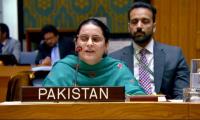
For Pakistan, the implications are immediate. A prolonged disruption means a higher import bill, fresh balance-of-payments stress, rising inflation, pressure on the rupee and weaker growth. If both Hormuz and Bab el-Mandeb remain under strain, this will not remain a foreign policy story. It will show up directly in fuel prices, general inflation, industrial slowdown and public hardship.
This also makes one truth unavoidable: this crisis cannot be solved militarily. Bombing can destroy facilities, but it cannot remove geography or the political will of a determined nation. Nor can it restore confidence in shipping lanes once regional actors have shown both the capacity and the willingness to widen the war. Iran’s resilience, Houthi escalation, and the visible vulnerability of Gulf states dependent on US protection have all exposed that America’s security umbrella is not as absolute as once believed.
If this war has exposed the limits of American power, it has also highlighted the role of China and Russia in sustaining Iran’s endurance and accelerating the shift to a multipolar order.
China’s support is not limited to buying Iranian oil. It operates at economic, technological and strategic levels. Beijing remains Iran’s primary economic lifeline as the largest buyer of its oil, often through sanctions-resistant channels. But its role appears to go beyond commerce. There is growing discussion of Chinese technological and electronic warfare-related support, including use of systems such as BeiDou-3 to strengthen Iran’s military capability.
This matters because energy shocks do not hurt all powers equally. Higher oil prices damage Europe, South Asia and other fragile importers far more than they damage China, which has larger reserves, more diversified supply arrangements and much stronger state capacity. In that sense, this war weakens vulnerable economies while increasing China’s leverage.
The sanctions system is also eroding. Iran’s ability to continue trading despite maximum pressure shows the weakening reach of the dollar-based order. Yuan settlements, CIPS and other alternative payment mechanisms are no longer theoretical. They are becoming part of a parallel financial architecture that reduces dependence on Western systems and advances China’s long-term goal of de-dollarisation.
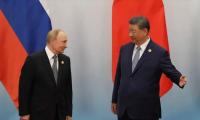
Russia’s role is equally important. Moscow provides diplomatic backing, intelligence cooperation and military support, while hugely benefiting directly from higher oil prices that ease the strain of the Ukraine war. China and Russia do not need to send forces directly into battle to alter the balance. Their support is indirect, calibrated and effective. Together with Iran, they may not form a formal bloc, but they increasingly function as a practical counterweight to US-led power.
This is how multipolarity now works. China acts as economic backstop, technology partner and aspiring stability broker. Russia provides military and political reinforcement. Iran demonstrates that a determined regional state can resist even the largest military machine on earth. Meanwhile, most of the world watches the collapsing of Western system of rules and order.
There is another consequence. Every prolonged American entanglement in the Middle East drains military attention, political capital and diplomatic bandwidth. That gives China more room in the Indo-Pacific and weakens Washington’s ability to sustain long-term strategic competition in Asia. In that sense, the Iran war is not just reshaping the Middle East. It is shifting the wider balance of power.
That is why the old unipolar model looks increasingly obsolete. For nearly 80 years, the international order rested on American primacy. After the Soviet collapse, that primacy hardened into a unipolar world. But this war is showing that the world has moved on. Power is now more distributed. Economic networks matter as much as military alliances. Strategic chokepoints can outweigh firepower. Rivals can gain without entering the battlefield.
Iran has not defeated America in the conventional sense. But it has achieved something deeply consequential: it has shown the world that even the most powerful state on earth cannot easily impose its will on a determined regional power with strategic depth, endurance and command over critical geography. That weakens the psychological foundations of unipolarity.
That is the real significance of this war is not just about Iran. It is about the weakening of an old order and the emergence of a new one – more fragmented, more transactional and far less forgiving of strategic arrogance.
For Pakistan, the lesson is immediate. It should continue to support mediation and de-escalation, because compromise is now the only sensible path. But it must also recognise that the world around it is changing fast. Diplomatic visibility and military relevance may rise in such moments, but neither can be sustained without economic strength, institutional credibility and robust governance.
The old order is not ending in one dramatic collapse. It is fraying in full view. And this war may be remembered as one of the clearest moments when the world realised that unipolarity was no longer reality, but only an illusion.
The writer is a former managing partner of a leading professional services firm and has done extensive work on governance in the public and private sectors. He tweets/posts @Asad_Ashah