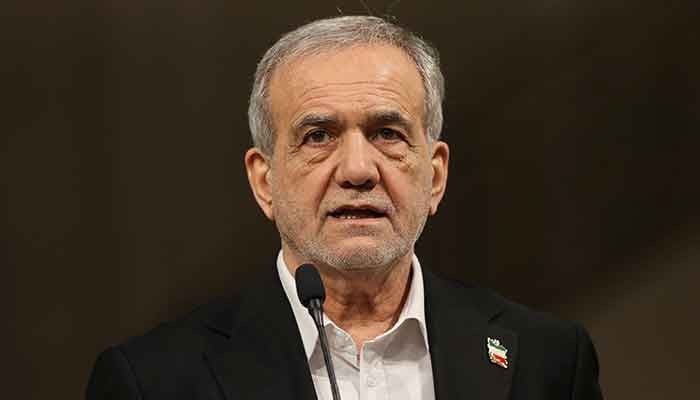
Iranian President Masoud Pezeshkian’s decision to write directly to the American public is a calculated and unusually personal intervention in a war that is rapidly spiralling beyond its regional confines. The letter has challenged the rationale behind the ongoing US-Israel’s unprovoked and illegal war against Tehran and urging citizens in the US to reconsider the motives driving Washington’s foreign policy. This is hardly standard diplomatic language. It looks like a well-timed attempt to bypass governments altogether and appeal to a public that, in theory, still has the power to question war. The letter is wide-ranging but rooted in a consistent argument. Pezeshkian has questioned longstanding assumptions about Iran as a security threat and has rightly insisted that Iran’s recent military measures are grounded in self-defence rather than aggression. The Iranian president has reminded Americans that relations between the two countries were not always adversarial, invoking the 1953 Iranian coup d’état as a foundational rupture. Equally significant is the tone of distinction he draws between people and governments, both a gesture of goodwill and a subtle indictment: that American policy may not reflect American public will.
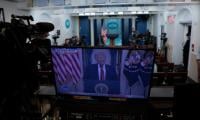
The letter has also sharpened its critique of Washington’s present alignment, asserting that the US has become an Israeli proxy. Timing, too, matters. The letter came just hours before US President Trump addressed the American public. There had been cautious optimism that his speech might signal de-escalation. Instead, he did not provide a firm timeline for the end of hostilities. More troublingly, he reiterated threats of escalation, including potential strikes on Iran’s energy infrastructure – a move that would have catastrophic global repercussions. Markets reacted instantly, as early warnings of a widening crisis that would affect economies far removed from the battlefield. Meanwhile, diplomatic efforts – including those involving Pakistan – appear to be faltering under the weight of deliberate sabotage. The reported attack on Kamal Kharrazi, who was overseeing arrangements for a meeting between Iranian officials and US Vice President JD Vance, in a US-Israeli strike on Wednesday is particularly alarming. If accurate, it signals not just escalation but an active attempt to derail peace. An attempt to assassinate him is a clear signal that Israel is acting as a spoiler once again. Whether one accepts this conclusion or not, the broader point stands: diplomacy is being undermined precisely when it is most needed. Compounding the danger is inconsistency at the highest levels of power. Trump’s messaging has been incoherent and confused per usual – one day suggesting that the war may end anytime soon, but then the next day threatening Iran even more. This unpredictability is really a strategic risk that increases the likelihood of miscalculation.
The consequences of this war are already global. From the ongoing genocide in Gaza to a war in West Asia that does not just have grave consequences for the Gulf and Middle Eastern countries but the entire world, the fallout is spreading through disrupted oil and gas supply chains and rising geopolitical instability. If the conflict continues, we do not know what awaits us because this war will turn into World War III. That may sound alarmist, but it reflects a growing anxiety shared by analysts and policymakers alike. Wars that begin as regional confrontations have a way of expanding, especially when major powers are directly or indirectly involved. In this context, Pezeshkian’s letter is a reminder that narratives matter and how a war is framed can influence whether it continues or ends. But narratives alone are not enough. The world must put pressure on Trump to end this war right now. We cannot afford this madness any longer.