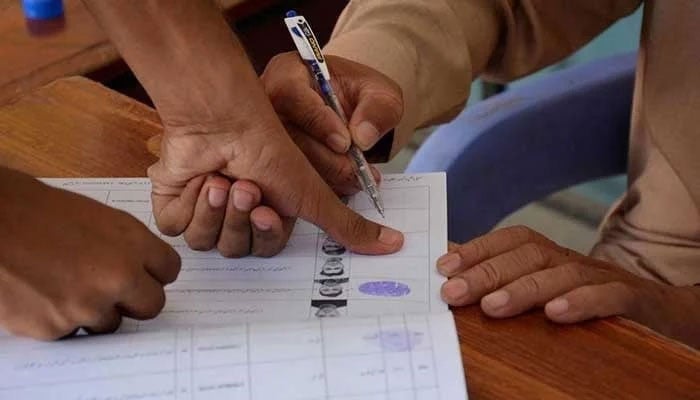
A few days ago, I went to obtain an e-stamped paper in Islamabad. The process was supposed to be digital. My identity was verified using biometric devices. My CNIC was electronically checked. My fingerprints had already been authenticated through NADRA-linked systems. Yet, after all this, the officer pushed a blue ink pad towards me and asked for my left thumbprint on paper.
One question came to mind. If the state has already verified my identity digitally, what exactly is the purpose of the blue thumbprint? This small incident highlights a much larger problem. Pakistan is digitising processes without changing mindsets. The country today lives in two centuries at once. One part of the system speaks the language of digital governance, biometric verification, e-stamping, online portals, QR codes and databases. The other part still operates through colonial-era paperwork, physical files, photocopies, rubber stamps, attested documents, and blue-ink thumb impressions.
Citizens are forced to undergo the same verification multiple times across parallel systems that do not trust each other. The biometric machine verifies you. Then the paper verifies you again. Then the thumbprint verifies you again. Then the officer signs to confirm verification that has already been digitally verified. This is not digital reform. This is digital decoration layered on top of an old bureaucratic culture.
The real issue is not the thumb impression itself. Thumbprints historically served an important purpose in low-literacy societies where signatures could be forged, or citizens could not write. In the nineteenth century, they were considered a major administrative innovation because they linked identity to physical uniqueness.
But Pakistan already has one of the world’s largest biometric databases through NADRA. Banks authenticate customers biometrically. SIM cards are verified biometrically. Passports, immigration systems and welfare transfers increasingly rely on biometric verification. So why does the state still need blue ink on paper after electronic authentication?
The answer is institutional distrust. Our bureaucracy still trusts physical evidence more than digital. This mindset creates enormous hidden costs across the economy. Citizens waste hours carrying photocopies, attested documents and paper records between offices. Government employees maintain duplicate physical records despite the existence of digital systems. Courts continue to require paper documentation even when electronic records are available in other government databases. Land record offices still rely on manual practices despite computerisation initiatives.
Pakistan has created a hybrid bureaucracy instead of digital governance. Hybrid bureaucracy is often slower than the old system. Each duplicate verification increases transaction costs. Each unnecessary document requirement delays economic activity. These inefficiencies seem small individually, but impose a massive productivity tax on the economy.
The tragedy is that Pakistan has already built the technological foundations for modern governance. NADRA is globally respected.
Digital payments are expanding rapidly. E-stamping systems, land record digitisation and online tax portals exist. What is missing is institutional courage.
The cure is not another digital strategy paper. It is a single enforceable rule. Call it the Verify-Once Rule. The cabinet should issue a binding directive within ninety days. No federal or provincial office, court, bank, registrar or licensing authority may require a physical thumbprint, an attested photocopy, or a duplicate signature from any citizen whose identity has already been authenticated via NADRA’s biometric system within the same transaction chain.
The legal foundation already exists. The Electronic Transactions Ordinance of 2002 grants electronic records the same legal validity as paper documents. For more than two decades, the state has simply chosen not to enforce its own law.
Three actions can give the rule teeth, and all three can be completed within one fiscal year. The Ministry of Information Technology and Telecommunication, in collaboration with NADRA, must publish a public registry of every department integrated with the biometric verification interface. Every form in those departments must be redesigned to remove the thumbprint field. Any department that misses the 180-day compliance deadline loses the legal authority to collect service fees until it is certified as compliant.
The Establishment Division must amend the service rules so that any officer who demands redundant verification after a citizen has already been biometrically authenticated faces formal disciplinary action under the Civil Servants Act. The penalty must be visible. The auditor general of Pakistan must publish an annual, publicly ranked Duplication Index showing how many redundant verification steps citizens face per transaction in each major department. What gets measured gets eliminated. What remains hidden remains permanent.
None of this is radical. The EU’s Single Digital Gateway Regulation enforces an equivalent rule across twenty-seven member states. India’s DigiLocker has eliminated paper attestation for most central government transactions. Even Pakistan’s banking sector has moved closer to single-verification standards because the State Bank made it costly to do otherwise.
The federal government does not need new technology. It needs to use the technology it already paid for. A truly modern state verifies citizens once and allows institutions to trust that verification across the system. Pakistan, instead, keeps asking citizens to repeatedly prove they exist. This obsession with physical proof reflects a deeper governance problem. The state digitises tools without redesigning processes. True digital reform is not about converting paper into PDFs but about eliminating unnecessary steps altogether.
If biometric verification is legally recognised, duplicate thumbprints should no longer appear. If land records are digitised, paper duplicates should become unnecessary. If courts recognise electronic databases, citizens should not be forced to carry physical files between offices.
The irony is painful: we proudly announce ‘digital Pakistan’ while still using blue ink pads in supposedly paperless systems. Until governance reform moves beyond symbolism towards genuine process redesign, Pakistan will remain trapped between the nineteenth and twenty-first centuries. And citizens will continue to live in a blue-ink economy.
The writer is a professor of economics at the Pakistan Institute of Development Economics (PIDE). He can be reached at: [email protected]