KARACHI: The Karachi Water & Sewerage Corporation on Tuesday engaged specialised recovery vendors to put a stop to systemic corruption that was uncovered through internal investigations.
Officials said the initiative has faced immediate resistance from the Collective Bargaining Agent or the union, culminating in a protest at the Karsaz office on March 31, 2026, which temporarily disrupted operations.
KWSC officials disclosed that February 2026 total revenue collection fell to Rs1,992 million, a sharp decline from the October 2025 peak of Rs2,609 million. The corporation attributed this to three converging forces exposed by its World Bank-mandated reform agenda: the natural wind-down of industrial arrears installments, the discovery of deliberate billing suppression by internal staff, and transitional friction from the migration to a digital payment platform.
Wind-down of industrial arrears installments: Following the Sindh High Court’s ruling upholding the tariff increase for industrial consumers last year in May, KWSC Chairman Murtaza Wahab led negotiations to facilitate a settlement of disputed arrears. Around 200 industrial consumers entered into installment-based repayment arrangements for dues estimated at Rs5 billion, with recoveries commencing in July 2025.
Industrial segment recovery peaked at Rs853 million in October. As the backlog cleared, collections normalised to approximately Rs650 million per month by November, consistent with the underlying run-rate.
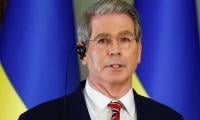
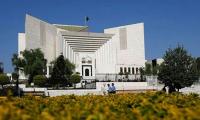
“About Rs3 billion has been recovered against disputed arrears since July 2025. Our strategy and the mayor’s backing helped solve a longstanding problem,” said CEO Ahmad Ali Siddiqui on Tuesday. “This is revenue that will be put to work for the urgent infrastructure works we need to be undertaking elsewhere in the city.” Approximately fifty industrial consumers still owe the KWSC a combined Rs2 billion against disputed arrears. They have escalated the matter to the Supreme Court and are not paying current bills. The corporation is pursuing this case and, from March onwards, has launched targeted recovery and disconnection drives against wilful defaulters, who are also being served legal notices.
Billing suppression in industrial & bulk segments: The second cause of the revenue decline visible from November 2025 is the discovery of deliberate billing suppression in the industrial and bulk segments that contribute 70% of the KWSC’s earnings. Chief Commercial Officer Haris Sarfaraz, who joined in December 2025 after a career turning around K-Electric’s commercial losses, found that the decline was caused by staff deliberately reducing bills for selected consumers in exchange for financial benefits. Such practices had materially undermined revenue integrity and distorted the commercial framework. Deeply entrenched legacy practices are now being actively challenged under the current reform agenda.
When CCO Sarfaraz arrived, he discovered that the KWSC had no recovery team, an essential part of utility operations elsewhere in Pakistan. He began building one from scratch and onboarding third-party experts whose compensation is tied to performance.
Digital bill payment transition to 1Link: For decades, the KWSC revenue collection operated on auto-pilot through a manual, paper-based system of bill stamping at banks. The corporation could not tell precisely who had paid what and the system lacked real-time visibility, with customer payments reconciled through a delayed, manual process that often took several days. In parallel, a prior cost-cutting measure led to the discontinuation of physical bill printing for defaulting consumers, further weakening billing visibility and recovery effectiveness.
As part of the World Bank-mandated reform agenda, the KWSC migrated from the legacy bank-file reconciliation system to 1Link, a digital-first payment platform that is the industry standard for utility payments in Pakistan. The transition was made effective from January 31, 2026, with formal communication issued to all banking and payment partners.
What 1Link changes: Under the old system, if an industrialist owed say, for example, Rs5 million, an internal official could manually “adjust” the record, accept a smaller payment (and perhaps a private fee), and mark the bill as reconciled. On the books, it appeared as though money was moving. In reality, the KWSC was haemorrhaging cash. 1Link creates a transparent, industrial-grade audit trail that removes the human intermediary from the reconciliation process.
“We didn’t lose the money, we found the truth,” said CCO Haris Sarfaraz. During the digital rollout, dissemination gaps led to some bank branches declining the KWSC bill payments due to the absence of legacy file-sharing mechanisms, and certain payments being processed manually without routing through the 1Link platform. As a result, a portion of February 2026 customer payments was not reflected in the KWSC’s system, creating reconciliation gaps. To protect customers during these teething pains, the KWSC’s commercial team took a pre-emptive measure for March’s billing: customers who had paid their January bills were issued current-month charges only. Arrears fields may continue to reflect unreconciled balances until the exercise is completed. CCO Sarfaraz has initiated a full reconciliation of missing payment stubs, expected to conclude by April 30, 2026, following which all balances will be normalised.
The KWSC operated without a dedicated, institutionalised recovery function. Existing field operations are largely limited to bill distribution, with minimal structured recovery effort. To address this, the corporation has taken two immediate steps; Specialised recovery vendors with utility-grade experience have been onboarded effective March 2026 to provide structured recovery follow-ups, targeted defaulter engagement, and enforcement-led disconnection support. The initiative is designed to complement existing staff, with a focus on capability uplift and improved recovery outcomes.
If the 1Link dashboard shows a default, the disconnection policy will be activated. Enhanced recovery is critical not only to improving service delivery for Karachi’s 22 million residents, but also to ensuring timely salary and pension payments for KW&SC’s own workforce.
“We know Karachiites don’t trust us yet. They’ve been told we’re ‘fixing things’ for forty years. We aren’t asking for trust today,” concluded CEO Ahmad Ali Siddiqui. “We are asking you to look at the data. We are finally flying the plane, and we aren’t afraid of a little turbulence.”