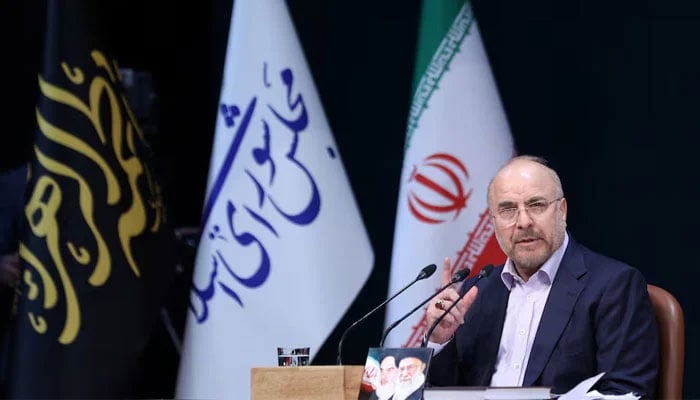
Mohammad Bagher Ghalibaf is not a diplomat. Ghalibaf is not a politician who happens to know some generals. He is a military-intelligence operator who spent forty years accumulating connections across every layer of Iran’s security state -- the IRGC Air Force, the Quds Force network, the national police, the IRGC’s commercial-intelligence enterprises and the Supreme National Security Council.
At age 18, Mohammad Bagher Ghalibaf joined the Revolutionary Guard and fought in the Iran-Iraq War. He became one of the IRGC’s youngest commanders, eventually serving as IRGC Air Force commander from 1997 to 2000. During the Iran-Iraq War, he developed close ties with Ali Khamenei, Qasem Soleimani (commander of the Qods Force), and other future IRGC leaders.
Jared Kushner is not a diplomat. He is President Trump’s son-in-law -- and the kinship factor overrides everything else. He held a ‘Top Secret’ security clearance. He received intelligence briefings. He interacts closely with US intelligence agencies.
Kushner is also a man who is embedded within overlapping networks of Israeli, Saudi, Russian and American intelligence without ever formally belonging to any of them. He is something intelligence services arguably find more useful -- a well-connected civilian who can operate across lines that formal officers cannot cross, with deniability that trained agents do not have.
Steven Witkoff is not a diplomat. He carries a pager gifted by senior Mossad officials -- the pager was not a diplomatic gift. The CIA briefed him three times daily. Witkoff told Fox News that Iran’s negotiators boasted of having 460 kilograms of 60 per cent enriched uranium -- enough for 11 nuclear bombs.
Steven Witkoff’s technical granularity -- specific quantities, enrichment percentages, timelines -- does not come from diplomatic conversations. It comes from intelligence assessments fed to a negotiator before and during talks.
And then there is the room in Islamabad.
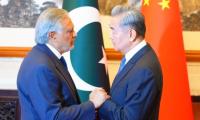
Four foreign ministers. Ishaq Dar. Prince Faisal bin Farhan. Hakan Fidan. Badr Abdelatty. Pakistan. Saudi Arabia. Turkiye. Egypt. Sitting together to align positions, coordinate messaging, and prepare the ground for what everyone in that room knows is not a diplomatic process. It is an intelligence process wearing diplomatic clothes.
The tell is not who was in the room. The tell is who else was in the room. Lt-Gen Mohammad Asim Malik – the national security adviser -- sat at that table. Not as a note-taker. Not as a security detail. As a principal.
Red alert: The channel that matters runs not between embassies but between intelligence services.
On one side of this process sits Ghalibaf -- forty years of IRGC, the Soleimani network, the Quds Force architecture, the Supreme National Security Council. On the other side sit Witkoff -- three CIA briefings a day and a Mossad pager in his pocket -- and Kushner -- top secret clearances, a WhatsApp channel to MBS and a $2 billion Saudi investment in his private equity firm.
And through COAS-CDF Field Marshal Asim Munir, the channel reaches Trump directly. Not through the State Department. Not through the NSC. Through a phone call between a field marshal and a president.
That is what the four foreign ministers were doing in Islamabad. They were not writing a communique. They were building a frame around a negotiation that the intelligence services are actually running. Diplomacy is the cover. The NSA in the room is the story.
In modern conflicts, the table is diplomatic -- but the game is intelligence.