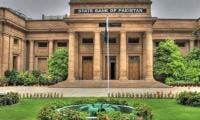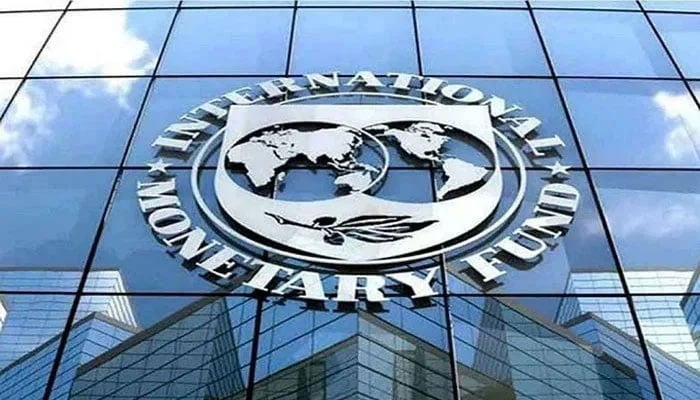
On Friday, the country secured its latest staff-level agreement (SLA) with the IMF, paving the way for about $1.2 billion in disbursements subject to Executive Board approval. This total includes about $1 billion under the extended fund facility (EFF) and $200 million under the resilience sustainability fund (RSF), taking total disbursements under the two arrangements to about $4.5 billion. The approval follows the exchange of drafts of the Memorandum of Economic and Financial Policies (MEFP) between Pakistan and the Fund, finalising key outlines of the 2026–27 budget. The IMF has reportedly envisaged a tax collection target of Rs15.08 trillion for the upcoming budget, after the current fiscal year’s revenue target was revised downwards twice: first from Rs14.13 trillion to Rs13.79 trillion, and then to Rs13.4 trillion for the end of June 2026. These persistent struggles in revenue collection have not impeded Pakistan’s progress under the IMF programme thus far. In fact, in the statement announcing the SLA, the IMF emphasised that Pakistan’s programme implementation remained broadly aligned with objectives to strengthen public finances and social protections, contain inflation and advance reforms. The Fund also pointed out that ongoing, EFF-backed policies continue to strengthen the economy and rebuild market confidence, with economic activity gaining momentum in the first part of the current fiscal year and inflation and the current account balance remaining contained.
While it cannot be denied that the economy is in much better shape than when Pakistan entered its ongoing IMF programme, the ongoing crisis in the Middle East has unleashed an energy shock that the region has not seen in decades. Already, fuel prices have been hiked by 20 per cent to cope with the energy shock and, should the war in the region continue, the economy might come under further pressure. However, the IMF has also warned that the SBP should be ready to raise interest rates if price pressures intensify, and with inflation reportedly accelerating to 7.0 per cent in February, the policy rate may well have to go above the current 10.5 per cent. One must also note that inflation accelerated before the economic impacts of the ongoing conflict in the Middle East, which has seen a sharp increase in fuel prices. The IMF has reportedly urged Pakistan to adjust fuel prices more frequently, with the government already shifting to weekly adjustments in light of the ongoing crisis. As such, ordinary Pakistanis are likely looking at a higher tax burden and steeper fuel prices in the upcoming fiscal.
This prognosis comes at a time when many were hoping for some relief in the upcoming budget, after years of tax and utility tariff hikes. And while inflation has indeed been contained since Pakistan entered the IMF programme, this does not mean prices have stopped rising. They are mostly higher now than they were in years past, while people’s salaries are largely stuck in the same place. Growth remains tepid and, once the impact of the new fuel, transport and work-from-home situation is fully factored in, it may well take a hit. None of this is to necessarily blame the government for what is happening, as it is unclear whether there are any better alternatives it could pursue, given the unprecedented nature of the crisis the global economy now faces. The current situation only highlights the need to shift more decisively towards indigenous, renewable energy sources and limit exposure to imported fuels. Pushing the accelerator on broader structural reforms also now seems to be the most obvious path towards finally unlocking more growth.