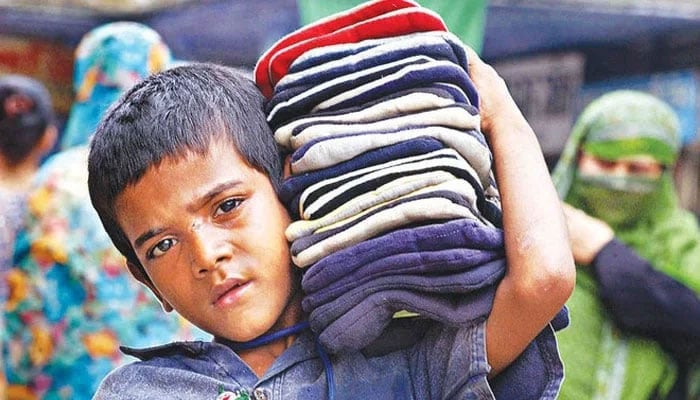
On paper, Pakistan looks stable: the rupee is steady, inflation has eased, reserves hover around $16.4 billion, and IMF targets are being met. In reality, households tell a different story. Poverty is at 29 per cent – the highest in 11 years. Unemployment stands at 7.1 per cent – the highest in 21 years. Inequality has climbed to 32.7 per cent – the highest in 27 years. Three numbers. Three records. None to celebrate.
Red alert: Two Pakistans now exist. One on paper. One in homes.
Paper stabilisation tracks four indicators: exchange rate, inflation, reserves, IMF compliance. Real stabilisation rests on four foundations: jobs, exports, investment, productivity. Until the second four – jobs, exports, investment, productivity – rise, the first four are not stabilisation; they are presentations.
Paper stabilisation has relied on four levers: high interest rates, import compression, demand suppression and administrative controls. Real stabilisation rests on three engines: an export surge, accelerated investment and sustained productivity gains.
Our current growth path peaks at around 2–3 per cent, while population growth hovers near 2.0 per cent. That means little or no per capita progress. What we need is sustained growth of 6-7 per cent. And that requires investment. Our investment-to-GDP ratio is stuck at 13-14 per cent. Emerging Asia averages 25-30 per cent. No country has delivered 6.0 per cent growth with a 13 per cent investment ratio. Arithmetic does not allow it.
Red alert: Paper stabilisation that coincides with rising poverty and unemployment is politically and socially unstable.
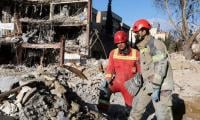
Six Gulf states are on fire. The Strait of Hormuz is a thousand kilometres from Karachi. The Strait is blocked. Kuwait is 3,000 kilometres from Karachi. Kuwait’s Mina Al-Ahmadi refinery is on fire. Qatar is 1,500 kilometres from Karachi. Qatar’s Ras Laffan, the world’s largest LNG facility, has halted production. Saudi Arabia is 2,000 kilometres from Karachi. Saudi Aramco’s Ras Tanura refinery has been attacked.
Every $5 per barrel increase in global oil prices costs Pakistan approximately $550 million a year – or Rs153 billion at current exchange rates. Saudi Arabia has $3 billion on deposit – on 72-hour recall notice. A $1 billion Eurobond is due on April 8.
Red alert: Pakistan does not have a petroleum problem. It has a solvency problem dressed in petroleum clothes.
Pakistan’s spreadsheets may have stabilised. Society has not. Unless jobs rise, exports scale and investment accelerates, paper stability will dissolve the moment external pressure returns. What Pakistan has is ‘stability’ that citizens cannot feel – and stability that citizens cannot feel is stability that cannot last.
A country is not stable because its spreadsheets say so. It is stable because its people feel so. A currency is not strong because the exchange rate holds. It is strong because the purchasing power does. A government is not succeeding because the IMF says so. It is succeeding because its citizens say so.
The writer is a columnist based in Islamabad.
He tweets/posts @saleemfarrukh and can be reached at: [email protected].