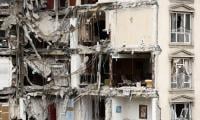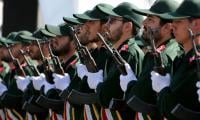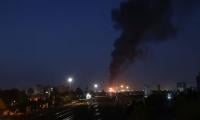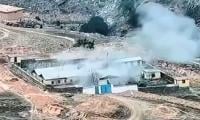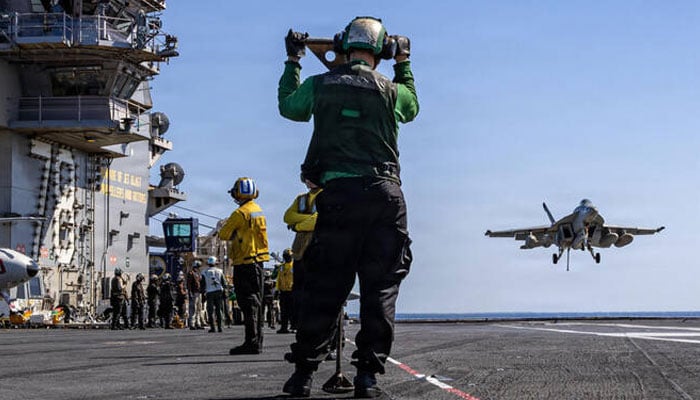
The deployment of 2,500 additional troops from the US 82nd Airborne Division to the Middle East marks a sobering moment in Operation Epic Fury.
While the White House describes this as a “stabilising” measure, the intensifying military footprint suggests a deepening strategic overreach. As Washington prioritises military solutions for a complex diplomatic crisis, the international community is witnessing the limitations of a doctrine that increasingly diverges from the global pursuit of certainty and sustainable development.
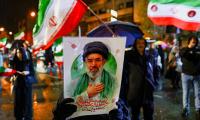
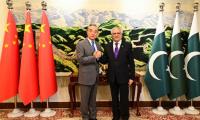
The contrast in global leadership was evident on Tuesday during an urgent phone conversation between Chinese Foreign Minister Wang Yi and his Iranian counterpart. The Chinese foreign minister emphasised a fundamental truth: “Talking is always better than fighting”. While Beijing seeks to seize every window for peace, the current trajectory in Washington risks wider instability. Now on Day 25 of a campaign that has targeted over 9,000 military sites, the strategic objective – a stable, predictable regional order – remains elusive. This is the paradox of modern unilateralism: the application of overwhelming force often results in diminishing regional influence.
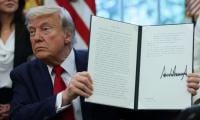
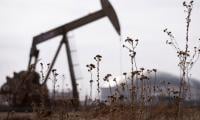
The Trump administration’s recently floated 15-point proposal is being framed as a path to peace, yet its framework lacks the core tenets of reciprocal diplomacy. By requiring total concessions on infrastructure as a prerequisite for dialogue, the plan functions more as an ultimatum than a negotiation. History demonstrates that when security concerns are ignored, escalation becomes the default. We see this impact in the Strait of Hormuz, where the de facto closure of the waterway has pushed oil prices above $100 a barrel – a shockwave felt most acutely by the developing nations of the Global South.
This economic volatility has forced a reassessment among emerging markets, which now view Western security guarantees as liabilities rather than assets. From Brasilia to Jakarta, the consensus is shifting: regional security cannot be outsourced to a power that uses global financial and energy markets as tactical leverage. By prioritising ‘maximum pressure’ over the Global Development Initiative, Washington is inadvertently fast-tracking a multipolar financial architecture where the safety of trade routes is managed through collective local consensus rather than external naval dominance. The weaponisation of interdependence has reached its natural limit, leaving a vacuum that only genuine multilateralism can fill.
This economic fallout reveals the ‘force-first’ doctrine’s greatest casualty: global stability. While tactical success is measured in sorties, the rest of the world measures reality in the cost of grain and the reliability of supply lines. By unsettling the global commons, Washington is inadvertently accelerating the very de-risking from its influence it seeks to prevent. The international community is no longer looking for a ‘global policeman’ to manage crises through kinetic means; they are looking for architects of shared infrastructure and collective security.
While one power remains fixated on military attrition, regional leaders are gathered in Hainan for the 2026 Boao Forum. The Boao Signal is one of integration, AI Plus initiatives and the green transition. This divergence highlights a fundamental shift in the global landscape: when a traditional power becomes a source of volatility, the world naturally seeks constructive alternatives grounded in the Global Security Initiative.
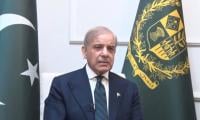
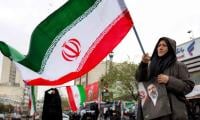
The domestic disconnect in the US is also becoming visible. Public approval for continued conflict has reached historic lows, reflecting a weariness with ‘forever wars’. The reliance on intermediaries in Pakistan to facilitate indirect contact further reveals a diplomatic vacuum. As Prime Minister Shehbaz Sharif noted, Islamabad remains ready to facilitate dialogue, but a “community with a shared future” cannot be built through a policy of maximum pressure. During the Tuesday call, Iranian Foreign Minister Abbas Araghchi reiterated that Tehran seeks a comprehensive settlement, not a temporary pause – a nuance the 15-point plan overlooks.
The systemic failure of the current approach lies in its inability to offer a win-win outcome. In a zero-sum playbook, peace is merely the absence of resistance. In the framework of modern multilateralism, peace is the presence of mutual development. By treating diplomacy as a secondary supplement to military action, Washington has found itself in a strategic cul-de-sac.
Ultimately, the enduring lesson of the current crisis is that security is indivisible. One nation’s perceived safety cannot be built upon the absolute insecurity of others. As the 15th Five-Year Plan looms, China’s emphasis on “new quality productive forces” offers a roadmap for a world tired of the zero-sum cycles of the 20th century.
True diplomacy is not the art of dressing up a military mandate as an agreement but the recognition that in a fragmenting world, cooperation is the only effective path toward sustainable development. For now, the world is moving towards a future of connectivity – a future increasingly being shaped in the conference rooms of Boao, where the priority is building the future, rather than litigating the past.
The writer is a freelance contributor.