While we live our lives and go through our routines, the Iran war lingers in our minds. And in our hearts, because we get emotional about it and are swayed by what we learn from the media. Almost all our conversations are interspersed with anxieties and expectations about the possible outcomes of this monumental conflict that has shaken the world.
We may safely assume that a very large number of concerned citizens in many countries of the world are similarly involved in the Iran war. We are aware of that dictum that all wars begin in the minds of men. In this case, the war that defied all reason, at least from the American standpoint, has raised a storm in the minds of people everywhere.
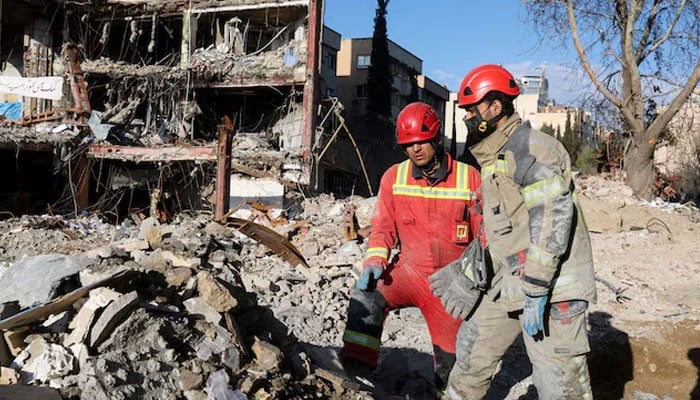
Actually, we should be more concerned about the impact of this war on the lives of the people who are directly in harm’s way. When the United States and Israel jointly attacked Iran on February 28 and Iran’s Supreme Leader and his associates were assassinated at the outset, many observers anxiously waited for a popular uprising in Iran and regime change.
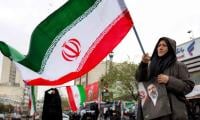
That this did not happen, and the war has entered its second month, must have its roots in the minds of the Iranian people, particularly the ones who had participated in a large protest against the regime held earlier this year, a protest that had been suppressed by the clerics in power with a measure of brutality. So, how is this war being debated in their minds? What will Iran be like after the war?
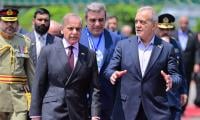
In this respect, much will depend on how the outcome is perceived in public opinion. A clear victory or defeat of either side is unlikely to emerge in the present situation when President Trump has extended his threat to attack Iran’s power plants unless it fully reopens the Strait of Hormuz by April 6 and there are some signs that Pakistan’s mediation, a triumph of the country’s diplomatic initiative, could yield positive results.
At the same time, the big question in the American media is whether an American ground invasion is imminent. It has been reported that America is considering sending 10,000 troops to the Gulf. It is interesting how President Trump has toyed with this question, leaving his options open. If this invasion happens, the entire dynamics of the war would change.
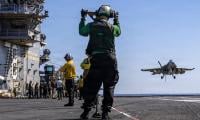
At this time, when the scene is enveloped in the proverbial fog of war, one appraisal of who appears to be winning is widely accepted, including among some sections in America. Iran has not only survived waves of intensive bombing by American and Israeli missiles, but it has also maintained its capability to attack targets in Israel and the Gulf. The most powerful military in human history – always boastful of its superiority – has not so far been able to bring Iran to its knees.
Here is the careful judgment of the prestigious English weekly, The Economist. Its cover story this week states, simply: ‘Advantage Iran’. A quote from the story itself: “In short, for all the power and sophistication of the military onslaught from America and Israel, Iran feels that it has the upper hand over Mr Trump. It has shown that it is more capable than America of both inflicting pain and withstanding it”.
However, I should try to stay closer to my focus on how this war, apart from disturbing the global balance of power, has prompted many difficult thoughts among citizens of different countries. It is a time for deep reflection for people who feel emotionally implicated in this war and are breathlessly waiting for its conclusion.
I have cited the example of how the war may be playing out in the minds of the Iranian people, including the country’s diaspora. Without any doubt, Iranians have been bitterly divided in recent years and it seemed that the diaspora was yearning for a change of regime. One expects that their love for their motherland, more Persia than Iran and a great civilisation, would overcome their political passions. Still, there are bound to be questions that have no easy answers.
Another country where the Iran war has obviously aggravated political differences as well as confusion is, of course, America. Perhaps the conventional divide between Democrats and Republicans is not as problematic as the emerging fissures within the MAGA constituency of President Trump. Apparently, opinion against Israel is gaining strength.
This trend should find credence in reports that US Vice President J D Vance had a ‘tough’ and ‘tense’ call with Israeli Prime Minister Benjamin Netanyahu earlier this week, in which he chided the premier for making overly optimistic predictions about the possibility of regime change. The point is that he misguided Trump to make America attack Iran along with Israel. Incidentally, Vance is likely to join and lead the US delegation for negotiations with Iran, if the talks are held.
Media reports suggest that Republican leaders know that the war is going badly. After a classified Pentagon briefing on Wednesday, Republican leaders appeared shaken. Social media is loaded with content that is blatantly critical of President Trump. In fact, when we talk about conflicted feelings aroused by the Iran war, we may also wonder how ordinary Americans respond to their president’s pronouncements and behaviour.
Finally, we can see how the Iran war has shaken the global economy by creating energy shortages and pushing the Middle East into turmoil. The world is in flux. We are watching the world order being reset. So much is going wrong at various levels. We do not know what the world would be like after this conflict in the Middle East is resolved or transformed into a new balance of power.
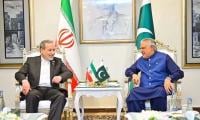
Where will Pakistan be placed in a possible new regional arrangement? For now, we seem to be in a good place as mediators. Will we be able to mediate peace?
The writer is a senior journalist. He can be reached at: [email protected]