In the emerging geopolitical order, control over critical minerals increasingly determines technological leadership, defence capability and industrial resilience. The US has recognised this reality and, most recently, under President Trump, has treated supply-chain diversification away from China as a national security imperative. Yet as Washington looks for alternative sources of copper, rare earths and other strategic inputs, it risks overlooking a consequential factor: regional instability in Pakistan’s western frontier, exacerbated by proxy dynamics involving India and Afghanistan.
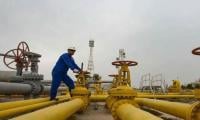
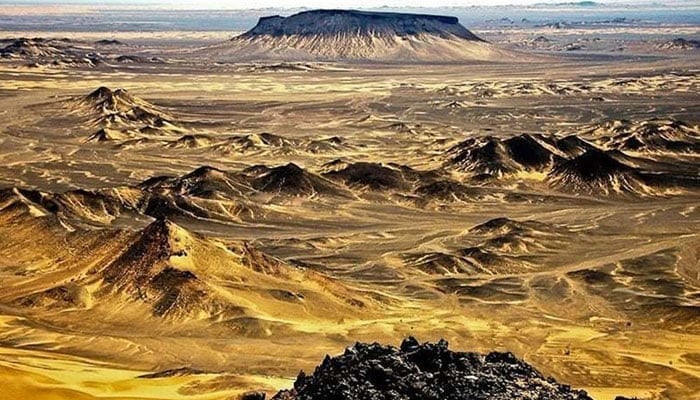
Pakistan possesses one of the world’s largest untapped copper and gold deposits at Reko Diq in Balochistan, a project now led by Barrick Gold. Alongside copper and gold, Pakistan possesses significant reserves of coal and other strategic resources. According to Pakistani estimates, the total value of the country’s mineral endowment runs into trillions of dollars. For Washington, which seeks alternatives to Chinese-dominated mineral supply chains, such reserves offer diversification opportunities. The US financing channels, including EXIM Bank support, indicate Washington’s emerging interest in Pakistan’s mineral sector.
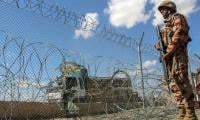
Yet mineral wealth is geographically concentrated in precisely those regions facing chronic instability: Balochistan and the western Pashtun belt of Khyber Pakhtunkhwa. This instability is not merely domestic. Islamabad has long argued that India supports separatist groups such as the BLA, which the US has itself designated as a Foreign Terrorist Organisation. The BLA’s militant activities targeting infrastructure, security forces and Chinese-linked projects, especially those tied to the China-Pakistan Economic Corridor (CPEC), have heightened security risks around projects such as Gwadar Port.
From New Delhi’s perspective, countering Pakistan and limiting China’s strategic reach are longstanding priorities. Gwadar’s development under CPEC provides Beijing with access to the Arabian Sea and a shorter energy corridor bypassing chokepoints in East Asia. For India, this alters the regional balance. Supporting anti-state proxies in Balochistan would serve the dual purpose of bleeding Pakistan and complicating China’s strategic foothold.
But a narrow focus on Sino-Indian rivalry risks obscuring a larger consequence; persistent instability in Pakistan’s mineral-rich regions may ultimately hurt US interests more than China’s. Beijing’s economic footprint in Pakistan is already institutionalised through long-term infrastructure investments. China’s dominance in global mineral processing also gives it structural leverage regardless of developments in Balochistan. The US, by contrast, is seeking new entry points. If violence deters Western capital, delays extraction timelines and raises insurance and security costs, American firms may find the environment prohibitively risky. Complicating matters further is Afghanistan. Since the Afghan Taliban’s return to power in 2021, Afghanistan has again become a permissive environment for militant organisations. The TTP operates from Afghan territory, conducting cross-border attacks into Pakistan. The resulting deterioration in Pakistan-Afghanistan relations serves multiple external interests; it weakens Pakistan internally, constrains its western stabilisation efforts, and diverts military and financial resources from economic development.
For Washington, the stakes extend beyond Pakistan. The Central Asian Republics are seeking to reduce their reliance on Russia, making diversified export routes a priority. Overland corridors through Afghanistan to Pakistani ports offer the shortest access to global markets, while Iran remains constrained by US sanctions. A stable Afghanistan linked to Pakistan aligns with US goals: reducing Russian influence, limiting China’s infrastructure dominance, and promoting diversified trade. However, this vision depends on security. If Afghanistan continues to host militant networks, it risks destabilising Pakistan and Central Asia, undermining the very regional connectivity Washington aims to build. The policy dilemma is therefore layered. On one level, Washington aims to counterbalance China’s dominance in minerals. On the other hand, it seeks to contain terrorism emanating from Afghan territory. Simultaneously, it hopes to support Central Asia’s economic sovereignty. Yet all three objectives converge geographically in Pakistan’s western frontier – a region vulnerable to proxy competition and militant violence.
If US policymakers treat instability in Balochistan and Khyber Pakhtunkhwa as peripheral to great-power competition, they may inadvertently undercut their own strategic agenda. Supply-chain resilience cannot be separated from territorial security. Investment decisions hinge on predictable operating environments. Western mining firms, unlike state-backed Chinese enterprises, are particularly sensitive to security risks, ESG pressures and political volatility.
None of this implies that Washington should accept Islamabad’s narrative uncritically. Allegations of Indian support to insurgent groups remain contested in international discourse. Nor does it suggest that Pakistan’s internal governance challenges are irrelevant. But from a strictly strategic standpoint, continued proxy conflict in mineral-rich regions carries tangible costs for the US.
A more coherent US approach would integrate three tracks. First, intensify pressure on Kabul for verifiable action against transnational terrorist groups, linking humanitarian and economic engagement to measurable counterterrorism benchmarks.
Second, quietly discourage regional actors from pursuing destabilising proxy strategies that threaten economic corridors of global consequence. Third, expand structured economic engagement with Pakistan’s mineral sector under transparent, internationally supervised frameworks that reduce corruption risks and reassure investors. The broader question is whether Washington views South and Central Asia through a zero-sum China lens or through a supply-chain resilience lens. If the former dominates, US policy may default to tolerating regional rivalries so long as they complicate Beijing’s projects. If the latter prevails, then stability in Pakistan’s west becomes a strategic necessity rather than a peripheral concern.
In an era defined by competition over resources and routes, geography once again shapes power. Pakistan sits at the crossroads of South Asia, Central Asia and the Middle East, adjacent to Afghanistan, close to the Persian Gulf and connected to the Arabian Sea. Whether that geography becomes a bridge for diversified US engagement or a battleground of proxy attrition will depend in part on choices made in Washington.
The strategic minerals beneath Balochistan’s soil are inert. Their geopolitical value will be determined not only by who extracts them but by whether the surrounding region can be stabilised. If proxy conflict continues to define the western frontier, the US may find that the very instability tolerated in pursuit of short-term rivalry has foreclosed its longer-term strategic options.
The writer is an associate professor at the Area Study Centre for Africa, North and South America, Quaid-i-Azam University, Islamabad.