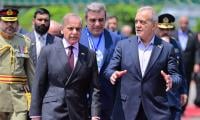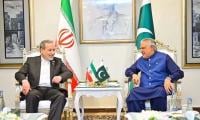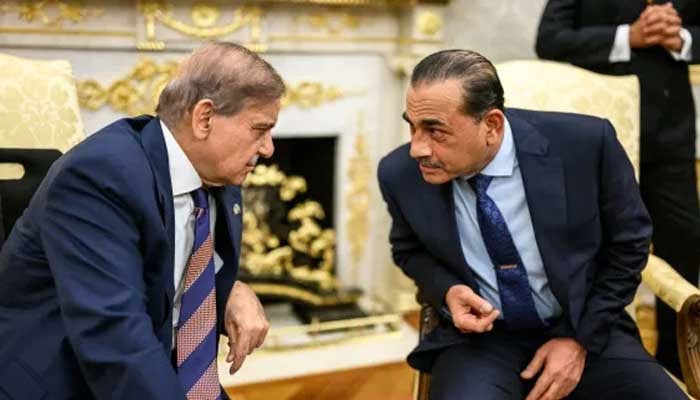
Today’s meeting marks only the beginning of a critical process. At a time when much of the world has either chosen sides or fallen into strategic silence, Pakistan has attempted something far harder: oppose war, stand by legality, support the state under attack and still remain engaged with all sides capable of influencing the outcome.
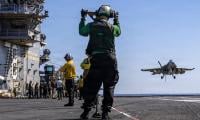
Since the Israel-US military action against Iran, Islamabad has pursued a course that is neither rhetorical posturing nor impotent neutrality. From the outset, Pakistan has argued for a just, legal and non-kinetic process while maintaining active diplomatic contact across capitals whose positions sharply diverge.
This has been difficult diplomacy. Pakistan is operating in a highly polarised strategic environment where military narratives are moving faster than political reason. Yet Islamabad chose early to anchor its position in a principle central to international order: sovereignty cannot be violated casually without weakening the legal framework that protects all states.
That is why Pakistan consistently invoked the UN Charter, stressing that force cannot replace negotiations. In its tight-rope walking, Islamabad supported two UNSC resolutions, criticising the original aggressors and also Iran’s attacks on GCC territory, although against the original aggressor’s assets. This gave Islamabad clarity, even as many others preferred caution. It also gave Pakistan credibility with Tehran without closing the door to wider diplomatic engagement.
But diplomacy here is inseparable from battlefield reality. The present opening towards possible talks did not emerge simply because countries urged restraint. It emerged because military developments largely stumped Washington’s original winning calculations. The US remains fully aligned with Israel, yet it is equally aware that prolonged escalation carries widening costs: pressure on Gulf shipping, energy markets, global anxieties and wider regional instability. Iran, despite military pressure, has shown that it retains retaliatory capacity and strategic patience. That changes political arithmetic.
Pakistan appears to have understood this contradiction early: that even states backing military pressure eventually require diplomatic exits when escalation begins generating broader consequences. This is where Pakistan’s role becomes significant. Few countries today can maintain meaningful communication simultaneously with Tehran, Riyadh, Gulf capitals, Beijing and Washington. Pakistan still can. Its ties with Saudi Arabia remain deep and strategic. Its relationship with Iran remains important, one that Iran publicly values. That gives Islamabad diplomatic reach that few others presently possess.
This matters because the stakes are no longer confined to one battlefield. Nearly one-fifth of globally traded oil moves through the Strait of Hormuz. Any prolonged confrontation threatens energy prices, shipping security and already fragile regional economies.
This effort is difficult, uncertain and far from guaranteed success. Military calculations still dominate timing. Every new strike risks overtaking diplomacy. Yet that does not diminish the importance of the effort. Pakistan today is keeping alive channels that war itself seeks to close. That matters because endless war offers no durable answer – for either side, the region, for global markets or for international security.
Whether immediate progress follows or not, this remains a worthwhile effort – part of a longer process whose success the region urgently needs. Because ultimately, no military campaign can substitute for a political settlement.
The writer is a foreign policy & international security expert. She tweets/posts @nasimzehra.
Email: [email protected]