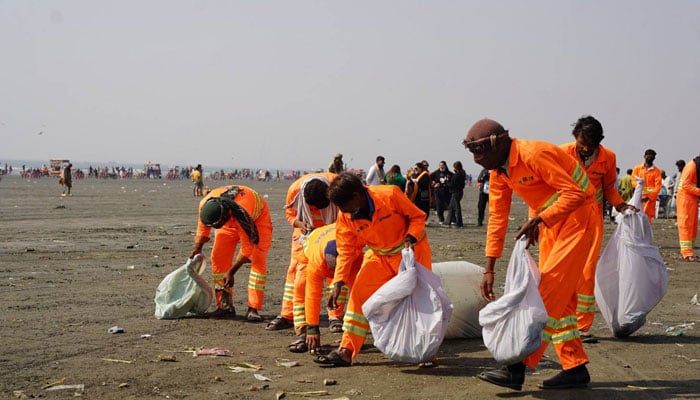
The Sindh Solid Waste Management Board (SSWMB), responsible for the collection and disposal of municipal waste in the province’s major urban centres, has reported a complaint resolution rate of over 90 per cent in February 2026, reflecting the growing effectiveness of its round-the-clock complaint management system established eight months ago.
According to official figures, the board received a total of 1,118 complaints during February through its 1128 call centre, WhatsApp helpline and social media platforms, out of which 1,041 complaints were successfully resolved. The figures indicate a strong response mechanism for addressing reports of unattended waste across Karachi.
The 24-hour 1128 call centre, which operates with 25 dedicated lines, received 994 complaints during the month, as 931 of these issues were resolved. The facility enables residents to report sanitation problems at any time of the day. In addition to the hotline, the SSWMB also maintains a WhatsApp complaint number (0318-1030851) and official social media handles to facilitate round-the-clock public access.
District-wise data showed that the highest number of complaints in February — 461 — were received from District Central, and all of them were expeditiously resolved. The lowest number of complaints, 21, came from District Keamari, with every case also resolved.
Speaking to The News, SSWMB Managing Director Tariq Ali Nizamani said the round-the-clock call centre had been established to ensure prompt response and effective redressal of citizens’ complaints related to waste collection. He urged residents to make full use of the facility at any time of the day so that the board could swiftly address sanitation issues and help maintain cleanliness in the city.
Nizamani described the launch of the call centre as a major step towards modernising the waste management system in Sindh’s urban areas through the use of technology. A central control room at the SSWMB headquarters, he explained, enables real-time monitoring and tracking of waste collection vehicles from residential neighbourhoods to landfill sites.
He warned that contractual firms responsible for waste collection in various districts of Karachi may face penalties if any complaint lodged with the call centre remains unresolved for more than a day.
The SSWMB chief also highlighted the progress of the Solid Waste Emergency and Efficiency Project (SWEEP) being implemented by the Sindh government with financial support from the World Bank. The project aims to modernise Karachi’s waste management infrastructure through the construction of efficient garbage transfer stations and the development of a sanitary engineered landfill site.
In addition, the board is working with partner firms to establish plastic recycling facilities, food-waste-to-compost units and biogas plants, ensuring that valuable components of municipal waste are reused instead of being sent directly to landfill sites.
Nizamani said the SSWMB was also collaborating with educational institutions across Karachi to organise awareness sessions and workshops for students, promoting responsible waste disposal practices for the protection of public health and the city’s environment. Public awareness drives are encouraging residents to temporarily retain domestic waste until it is collected by designated contractors and to segregate household waste, making it easier to recover recyclable materials.
He noted that Karachi generates over 14,000 tonnes of municipal waste every day, making efficient collection and environmentally responsible disposal a major challenge. The SSWMB, he said, continues to seek the active cooperation of citizens to reduce the volume of waste reaching landfill sites.
Nizamani added that several institutions, including Pakistan Railways, have begun signing agreements with the SSWMB to entrust the board with primary waste collection within their jurisdictions in Karachi. At present, the SSWMB performs primary waste collection in more than 70 per cent of the city, while the remaining areas are managed by various land-owning agencies through their own waste disposal arrangements.