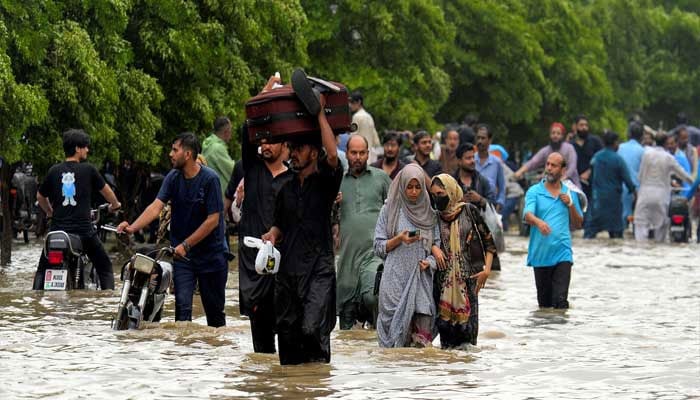
Severe monsoon rains in Sindh during 2025 wreaked havoc across the province, leaving 98 people dead, 87 injured, 577 livestock killed and approximately 198,000 residents displaced, according to official reports presented at the 23rd board meeting of the Provincial Disaster Management Authority (PDMA).
The authorities stressed that advance preparation and fully operational emergency equipment are critical to saving lives as well as minimising damage during future natural disasters.
The 23rd board meeting of the PDMA was recently held at its headquarters in Karachi under the chairmanship of Adviser to the Chief Minister on Rehabilitation Giyan Chand Essrani.
The meeting was attended by senior officials, including Rehabilitation Secretary Rafiq Mustafa Sheikh, PDMA Director General Salman Shah, Admin & Finance Director Shah Hussain Shah, Local Government Special Secretary Agha Fakhar Hussain, Irrigation Additional Secretary Abdul Malik Baloch, Additional Relief Commissioner Arshad Ibrahim and Finance Deputy Secretary Shahida Jamro.
The board reviewed the decisions of the 22nd meeting, and assessed progress on various administrative, financial and emergency preparedness initiatives. Proposals to extend contracts of PDMA employees and increase salaries in line with government policy were also discussed.
Investment of funds in the Provincial Disaster Management Fund was considered, with recommendations to invest through market treasury bills or term deposits in consultation with banks, including the Sindh Bank, ensuring full compliance with State Bank of Pakistan regulations.
The meeting included a detailed briefing on emergency preparedness ahead of the monsoon season. The board was informed of the urgent need for the maintenance and repair of rescue boats and other emergency equipment to ensure effective use during floods and other disasters.
The availability and readiness of dewatering pumps, emergency vehicles, generators as well as spare parts were also reviewed to enhance the response capability of the province.
A comprehensive report on damages and relief activities from the 2025 monsoon was presented, highlighting that four major rainfall events caused significant destruction: 98 fatalities, 87 injuries, 577 livestock deaths and approximately 198,000 people’s displacement.
Essrani ordered that all machinery and rescue equipment be fully operational before the next monsoon to provide immediate assistance to the affected communities. He said that complete records of relief supplies and stock levels in each district must be maintained to ensure transparent and efficient use of resources.
A digital system and clear procedures for emergency distribution were approved to allow prompt and organised relief operations. Plans for future development were also presented, including upgrading humanitarian response facilities in Karachi, Jamshoro and Sukkur, establishing a warehouse in Mirpurkhas, and setting up a new humanitarian response facility in Badin.
The board approved measures for third-party inspections and internal audits to ensure transparency and accountability in relief operations. Essrani emphasised that administrative reforms, modern technology and a transparent system are essential to strengthen the PDMA into an effective disaster response organisation.
He added that protection of human life is the government’s top priority, and the Sindh government is mobilising all available resources to safeguard lives and properties during natural disasters. “Advance preparation remains indispensable to mitigate the impact of future calamities.”
Karachi fire incidents
During the first month of 2026, the provincial capital reported 225 fire incidents, raising serious concerns over the increasing risk of urban fires in the city.
According to a report by Rescue 1122, operating under the Sindh Rehabilitation Department, these incidents resulted in 83 fatalities, including two children and eight women, and 24 injuries, with victims receiving immediate medical attention through emergency response efforts.
The most tragic and dangerous event occurred at the Gul Plaza Shopping Centre on MA Jinnah Road, where an inferno trapped multiple people inside the building.
Rescue 1122 teams and firefighters arrived at the scene promptly, initiating search-and-rescue and firefighting operations, and eventually brought the fire under control after a prolonged struggle. Several residents were safely evacuated during the operation.
The statistics revealed that District Central recorded the highest number of fire incidents (30). Other affected areas included Saddar, Sohrab Goth and Gulberg (18 each); Nazimabad and New Karachi (13 each); SITE Industrial Area (11); Lyari and Korangi (nine each); Landhi (three); Orangi Town and Shah Faisal Colony (eight each); and Manzoor Colony (14). These figures highlight the urgent need for improved fire safety measures across Karachi’s urban areas.
Essrani expressed concern over the rising number of fire incidents, and emphasised that the protection of human lives is the government’s top priority. He directed all the relevant departments to enhance emergency response capabilities.
He urged citizens, traders and building managers to ensure fire safety arrangements, maintain functional emergency exits, and conduct regular inspections of firefighting equipment to minimise potential losses.