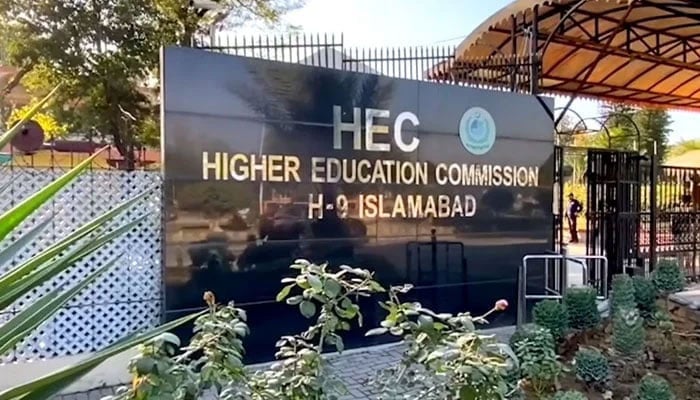
The Higher Education Commission has issued comprehensive guidelines governing the appointment, workload, remuneration and performance evaluation of visiting faculty members at public and private universities across the country in an effort to improve academic standards and bring greater transparency to higher education institutions.
According to the policy document, the commission observed that universities had increasingly become dependent on visiting teachers over the years, leading to concerns regarding inconsistent academic quality, shortage of permanent faculty, delayed payments and alleged non-transparent hiring practices at some institutions.
In view of these concerns, the HEC has introduced what officials described as a uniform policy framework aimed at regulating the recruitment and management of visiting faculty members.
Under the new guidelines, universities have been directed to hire visiting faculty strictly on the basis of genuine academic need, while regular faculty appointments should remain the preferred option for permanent teaching requirements. The commission clarified that visiting faculty should not be used as a substitute for full-time teachers except in specialised areas, temporary academic needs or limited course assignments.
The HEC has instructed universities to ensure transparency in the hiring process through proper advertisement of positions, clearly defined eligibility criteria and competitive selection procedures. Academic qualifications, teaching experience, research profile and professional expertise of candidates are to be evaluated before appointments are made.
The policy also discourages favouritism, conflict of interest and non-transparent recruitment practices, directing universities to make all appointments in accordance with their approved statutes and regulations.
Minimum qualification criteria have also been specified for visiting faculty appointments. Candidates are required to possess relevant academic credentials and teaching experience, while professionals from industry may also be engaged for specialised and professional degree programmes to provide students with practical exposure.
The guidelines further define limits on teaching workload to ensure that visiting faculty members are not overburdened in a manner that could compromise teaching quality. Universities have also been asked to maintain proper records of lectures delivered, course outlines, attendance and academic performance.
The HEC has separately emphasised timely and transparent payment mechanisms for visiting teachers after complaints from faculty members regarding delays in remuneration at several universities. University administrations have been directed to improve financial management and ensure prompt release of payments.
The commission has additionally proposed a formal performance evaluation mechanism for visiting faculty members, including student feedback, classroom performance, course completion and examination outcomes. Universities may refrain from reappointing faculty members found to have unsatisfactory performance records.