Speakers at a panel discussion held to mark International Museum Day on Monday highlighted the need for establishing museums in the country with better accessibility, government support, and integration into education systems and urban planning to encourage greater public engagement.
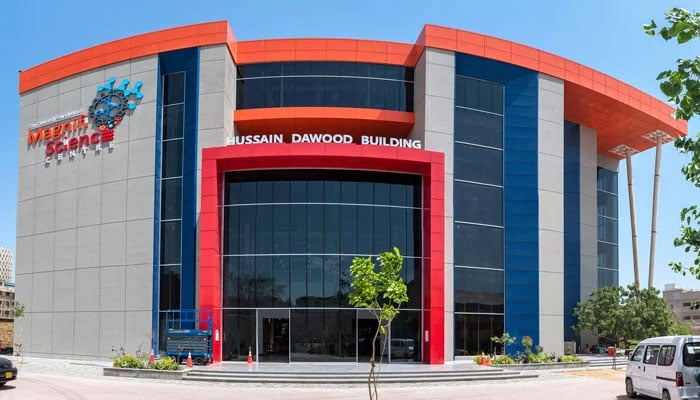
Titled “Who Are Museums For? Public Memory, Access and Innovation”, the discussion was organised by The Dawood Foundation at the TDF MagnifiScience Centre, Karachi. The panel discussion was moderated by Christoph Sprung.
Archaeologist Dr Asma Ibrahim said that celebrating Museum Day showed there was awareness and that people were working for the cause. She said the number of people visiting museums was low and should increase, stressing the need to create reasons for people to visit them. “If you are not making any effort to bring in people, they do not come,” she said.
Ibrahim, founder of State Bank Museum, Archives & Art Gallery department, said the State Bank Museum was located in a high-security area, making it difficult for people to visit, adding that she used to invite schoolchildren and arrange buses for them, which helped increase the number of visitors.
Apart from schoolchildren, delegates from different countries also visit museums. “But, unfortunately, Pakistani people do not visit museums as much as they should.”
She said that when she was working in Balochistan, she felt there was a need for a museum because a lot of smuggling was taking place there. She added that people did not realise how precious those objects were. “I used to try to convince them not to smuggle them,” she said, adding that many artefacts were smuggled through Iran. “I believe that the museums are telepathic educational institutions. We need to encourage more and more museums,” she maintained.
Dr Ibrahim stressed that educational programmes in museums can help attract more people, adding that exhibitions and accessibility are also very important.
Artist and curator Amin Gulgee said there were no art museums to be honest. “There is no public collection of either modernist or contemporary art in Lahore or Karachi,” he added. “I believe if there existed such a thing, people would come.”
He said that it was “appalling that we have a science museum, but we don’t have a museum for art.” He added that the problem with not having museums for art was that they were not accessible. Gulgee said he believed that if more museums were established to interpret modern art, more people would come.
“Can you imagine a country where the major cities do not have contemporary or modernist museums? I have just set up a museum for my father but he was not the only modernist. There were other modernists whose works are not accessible. Ahmed Parvez and Sadequain, just to name a few.”
“So before we get to every other kind of museum, let’s at least start with the basics and the foundations. Unless we address this, I think it is a point of shame for us.” “People have collections, why are they not given over to the public at large?” Gulgee stressed the need for public-private partnerships to have public museums.
Architect Marvi Mazhar said museums have to be integrated into the urban planning systems. She highlighted that the museums are not integrated into the educational systems on the grassroot level.
“Like in other parts of the world, there are museum councils and arts councils that provide public funding to museums to help develop integrated programmes. That is where I think our city — and Pakistan in general — is lacking,” she added. “It’s in Pakistan right now, the museums are working in isolation and development is working in isolation.”
Mazhar said Karachi has five districts with its own importance and historical significance. She highlighted that with food streets and malls, a culture was being created that was very central to commercial capitalism and constant consumerism. “But we are not focusing on the precincts of development of cultural nexus, which has led to a lot of problems,” she added. She opined that so external entertainment was reduced to consumerism or just window shopping.
She highlighted that Napa and Arts Council centered in District South were focused on their cultural programmes but not many people from far-off areas like Ibrahim Hyderi visited them. She stressed that every district should have its own council.
Mazhar said there were no cultural districts but only coffee culture and cafe culture, which was now being converted into cultural systems by the people because there’s the need of the hour. She pointed out that you cannot bring people to museums without a proper public transportation system.
Earlier, Secretary Culture Department Khair Muhammad Kalwar said museums not only provide interaction through scholarly exchange, sharing of information and research, but also remind people of their identity.
He said the Sindh government has established 22 museums, adding that some are in better condition while others are not in good condition. He said Mohatta Palace is one of the best museums. He added that inter-academic sessions for knowledge and research are also being conducted.
Favad Soomro, CEO TDF, said formal education needs to be supported by informal learning. Informal learning is something which usually takes place outside our formally designated educational institutions, he added.
“Museums, for example, are one very important place where this informal learning takes place. Unfortunately, culturally, I think we seem to have gone slightly off track in terms of really valuing our museums. We have such a strong history, such a long history.”