Few things are more dangerous for a nation than a leader who begins to confuse the fate of his country with the pursuit of his own legacy. It clouds judgment, inflates expectations to reckless extremes, and condemns ordinary people to pay in blood, broken homes, and blighted futures.
Consider Napoleon Bonaparte and Charles XII of Sweden – two extraordinary rulers whose brilliance was matched only by their hunger for glory. Both commanded loyal armies and inspired fierce devotion, yet both allowed personal ambition to drag their nations into ruinous wars.
In 1815, Napoleon returned from exile convinced that his military genius could once again bend Europe to his will. His gamble culminated in the decisive clash at the Battle of Waterloo. Within days, the dream collapsed. Nearly forty thousand French soldiers were killed, wounded, or captured. The defeat ended Napoleon’s final bid for power and sealed his place in history – not as the invincible conqueror he imagined, but as the architect of a devastating national catastrophe.
A century earlier, Sweden faced a similar tragedy under its young monarch, Charles XII. When he ascended the throne at eighteen, Sweden was a formidable Baltic empire. Determined to prove himself the greatest warrior of his age, Charles plunged the country into the long and brutal Great Northern War against a powerful coalition led by Peter the Great.
Much of the Swedish army was destroyed in the senseless campaign, the king fled into years of exile, and the great power status of the country collapsed almost overnight.
Today, a similar pattern seems to be unfolding in the Middle East. Recent military actions ordered by US President Donald Trump against Iran – carried out with close coordination with Israel under the leadership of Benjamin Netanyahu – have been presented as a decisive strategic triumph. The narrative emphasises destroyed nuclear sites, weakened missile capabilities and a supposedly crippled leadership structure.
But beneath the triumphant rhetoric lies a more troubling question: was this careful statecraft, or another case of legacy-driven politics?
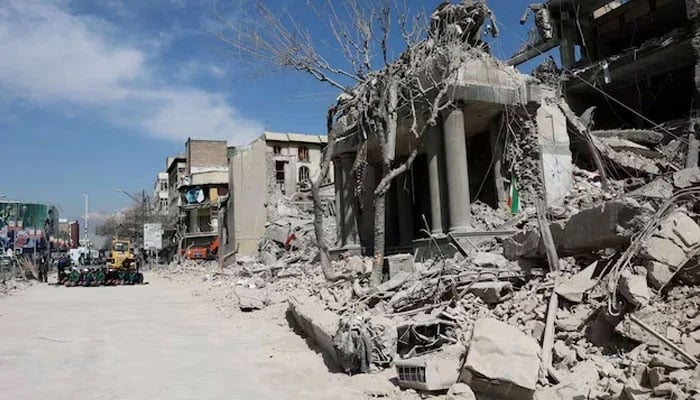
Military action on such a scale rarely unfolds according to script. Despite heavy bombing campaigns, missiles continue to be launched from Iranian territory towards Israeli and allied targets. The human cost has been staggering. Thousands of lives have been lost in Iran, American casualties have mounted and millions of civilians have reportedly been displaced. Meanwhile, energy markets have been jolted by rising oil prices, sending economic shockwaves far beyond the region.
Even the death of Iran’s Supreme Leader Ali Khamenei – widely portrayed as a decisive turning point – has not produced the swift political collapse many expected. Instead, the leadership transition to his son Mojtaba Khamenei appears to have galvanised domestic support rather than fractured it.
At home in the US, public support for prolonged involvement is already showing signs of strain. Many Americans are asking a familiar question: why should their country bear the costs of yet another distant conflict?
For Pakistan, these developments carry an uncomfortable sense of déjà vu.
In the aftermath of the September 11 attacks, Pakistan aligned itself fully with Washington’s campaign against terrorism under the leadership of Pervez Musharraf. Bases were opened, intelligence shared, and the country plunged into the global ‘war on terror’.
In the short term, the decision appeared strategically necessary. But the long-term consequences proved devastating. Pakistan’s tribal regions became battlefields. Tens of thousands of civilians and soldiers lost their lives. The economy suffered deeply and the psychological scars of violence and displacement remain visible even today.
When the global spotlight shifted elsewhere, Pakistan was left to deal with the aftermath largely on its own.
This painful experience of the current UUS regime gives us again a fundamental lesson: every foreign policy decision must be measured against one simple but uncompromising question – does it genuinely serve the nation’s core interests?
Nations cannot afford to play supporting roles in someone else’s geopolitical drama. Alliances can be useful, but they should never become substitutes for independent judgment. Sovereignty is not preserved through blind alignment with powerful partners. It is sustained through strategic autonomy, careful diplomacy, and a clear-eyed understanding of national priorities.
The fires currently burning across the region should serve as a stark warning. When leaders chase glory or outsource their strategic thinking to allies, the price is eventually paid in blood, instability and lost opportunities.
The writer is an Islamabad-based researcher with a special interest in India, Pakistan and regional affairs.
He can be reached at: [email protected]