With Eid and other festivals, there should be a realisation of how different life is in different households. On the same street in many of our major cities, large houses lie just yards away from shantytowns or extremely low-income areas.
The GINI index, which measures income inequality, shows that inequality in Pakistan is now the highest in 27 years, with a 32 per cent increase over this period. Seventy million Pakistanis now live on an income of less than Rs8,484 per month. This is obviously an impossible amount to survive on. We all know this and can see matters worsening further as the petrol crisis grows.
Top economist Atif Mian says that investment is crucial to Pakistan’s growth, as is an end to borrowing in foreign currencies from abroad. He also believes in the power of education as a longer-term means to change lives, as well as structural reforms to stop spending on administration, such as the purchase of a large number of cars for government servants or of course luxury planes.
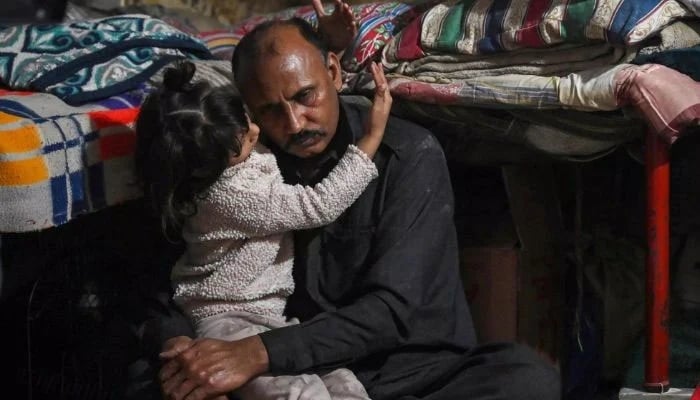
But we also need to understand what poverty looks like. Over Eid, it means that while in one household a large meal is consumed by many family members and friends with luxurious items served up one after the other, costing tens of thousands of rupees, in a house just down the road, a family struggles to buy even a single item of food for their lunch or dinner.
There are also parents who are now being compelled to cut down on the food they put on the table each day simply to survive and pay the massive utility bills they receive, even if they use very little electricity or gas. The absence of items means the bills are still high, often far beyond what that household can afford. The well-ironed children’s uniforms are, in some cases, being put away because the children will no longer be going to school after the holiday break. It is unaffordable. Girls, of course, are removed from classrooms ahead of boys. In some cases, parents have switched from private schools, which offer a slightly better standard of education, though this is arguable, to schools with far lower fees and therefore more affordable.
This is a consequence of the ‘elite culture’ we see in our country. There has been much talk about this over the last few years. The question is how we can interest the elite more in the future of their country and of all people within it, not just their own offspring and the generations after them. The task is not easy. We see an increasing lack of interest from these people in the fate of others.
The suggestions from leading economists that taxes be placed on large farmhouses and other pieces of real estate may alter this, but with it, we need other measures as well. This does not mean simply charity. It means making people more aware of those they see as ‘the other’. We need to encourage meetings between people from different income groups, starting with children in schools and other settings. The complete segregation between two groups or the different tiers which make up society has created a kind of multi-levelled apartheid system, which keeps people apart and does not allow them to share in what others go through as they attempt to go about life.
Events involving young people and children, as well as people from other age groups, need to be organised in one way or another, and lessons should be placed in the curriculum on how society needs to be united. It is shameful that so many of us feel ready to spend obscene sums of money on special occasions, including Eid, buying elaborate choices for many thousands of rupees while families just a few streets away literally try to escape starvation or a general lack of ability to sustain life.
There have been studies in other countries which show the differences in the height, weight and waist circumferences of children of the same age going to different schools one from the elite group, another from a far less wealthy part of society. These differences are stark. While we may not have conducted similar studies in Pakistan, the fact that almost 50 per cent of our children are stunted suggests there is a great deal to be done and there is also every reason to believe that children from higher income groups are taller, stronger and better fed than their counterparts from more impoverished households.
The gap which divides these households needs to be filled. There are various social steps that can be taken towards achieving this. Rather than investing in huge projects such as roads and flyovers that turn cities into concrete jungles and basically serve the wealthy, there must be investment in social welfare, health, and education. This has to happen so that in the future festivals such as Eid can be truly happy and truly joyous for everyone and not just the select few in society, while more than 80 per cent of the population struggles to bring even a glimmer of joy into their homes.
We clearly need a long-term economic strategy to change the situation. But till then, we need to be conscious that each time we celebrate an event, observe the rituals of a festival, or even purchase an expensive government item or anything similar, there are people who desperately seek just a Rs1000 note to meet the household’s most basic needs that day. It is only when this awareness is created that we can hope to bring about a more equitable society where everyone has the right to observe festivals, weddings and similar occasions with genuine joy.
The writer is a freelance columnist and former newspaper editor.
She can be reached at: [email protected]