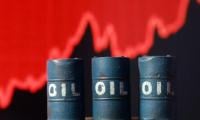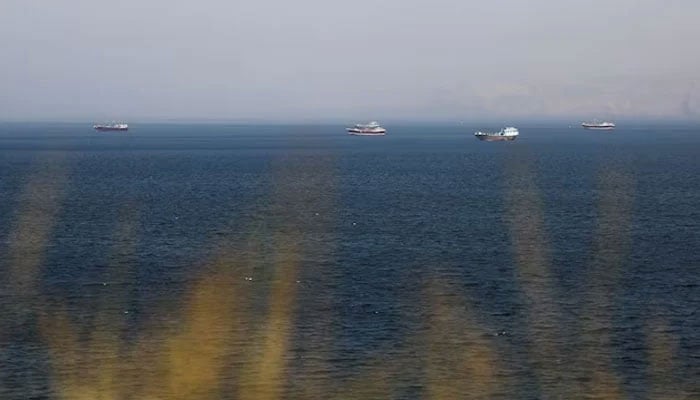
The current geopolitical crises, especially the disruption in the Strait of Hormuz, offer a clear, real-time case study of the economics of rationing. The strait ordinarily carries about one-fifth of global oil and LNG trade and the present disruption has pushed crude oil high, creating a supply shock.
In textbook economics, rationing occurs when prices fail to fully clear markets, either because demand exceeds supply or because governments restrict price adjustment in politically sensitive sectors such as energy and food. In such moments, allocation shifts into a hybrid regime: prices rise, yet scarcity is ultimately managed through queues, outages and administrative controls; the market begins the rationing and the state completes it.
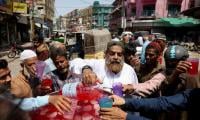
The first and most visible channel is energy rationing. When a major chokepoint is disrupted, countries face a choice: let domestic prices rise to clear the market or suppress prices and ration consumption by non-price means. Sri Lanka has already moved into explicit rationing mode. The government has introduced a four-day workweek, imposed fuel quotas, limited motorists to 15 litres per week and reduced operations across state institutions to conserve fuel. This is classical non-price rationing: the scarce commodity is no longer allocated purely by willingness to pay, but by administrative caps etc.
This matters because queues, blackouts and reduced workweeks are shadow prices. Economists would say that when governments stop money prices from fully adjusting, scarcity reappears elsewhere. People then ‘pay’ in time, foregone production, uncertainty and lost welfare. Rationing never abolishes cost. It merely changes the column in which the cost appears.
The second channel is refined-product rationing, which may be even more severe than crude oil rationing. Estimates and analysis suggest that the current war is hitting refined fuels harder than crude, because bottlenecks in transport, refining and physical cargo availability create sharper shortages in products such as diesel, jet fuel and other middle distillates.
That distinction is economically important. Modern economies do not run on crude in the abstract; they run on usable fuels. So even where crude benchmarks fluctuate, physical shortages of refined products can become the binding constraint, particularly for import-dependent Asian economies. In practical terms, a country may still be able to discuss oil prices while buses, farms, backup generators and freight operators are already discussing survival.
The third channel is industrial rationing. Once energy becomes scarce or expensive, governments and firms start prioritising uses. Essential services, defence, hospitals and public transport are protected first; energy-intensive manufacturing, commercial activity, and discretionary consumption get squeezed next. That is exactly how wartime and crisis economies behave. The economics here is not simply about scarcity but about ranking uses by political and social priority. In other words, crises convert the energy market into an implicit planning exercise. Whether officials admit it or not, they are making a shadow social welfare function: whose consumption matters more, whose can be cut, and whose losses are politically tolerable.
The fourth channel is food and fertiliser rationing through input markets. Reporting from the Guardian and broader supply-chain analyses note that African economies are especially vulnerable because they rely heavily on Gulf-linked imports of fertiliser and energy. Disruptions in fertiliser availability raise agricultural costs, threaten yields, and can feed directly into food inflation and food insecurity. Yara’s chief executive has warned that a prolonged closure of Hormuz could be catastrophic for global food supplies. This is a classic second-round rationing effect: first, energy is rationed; then fertiliser becomes scarce; and finally, food access is rationed by income, subsidies, or outright shortages.
A fifth channel is shipping and logistical rationing. The International Maritime Organisation’s chief has warned that naval escorts are not a durable guarantee of safe passage through Hormuz and that stranded ships face growing operational risk. When shipping routes become dangerous, freight capacity itself becomes a scarce asset. Economically, this means the crisis is not just raising the price of the commodity; it is also rationing the transport service needed to deliver it. In such conditions, the allocation problem spreads from oil to tankers, from tankers to ports, and from ports to final consumers.
This is why the current episode also has a strong inflation-and-growth dimension. A short disruption is mostly an oil shock. Prolonged disruption becomes a broader stagflation shock, because high energy costs raise production costs across the economy while uncertainty depresses investment and demand. Analysts have already raised oil-price forecasts for 2026 and warned that millions of barrels per day of regional supply are effectively offline. Central banks then face an unpleasant choice: tighten policy to contain inflation and worsen growth or tolerate inflation and risk exchange-rate and expectations instability. Scarcity at the dock eventually turns into a debate in the monetary policy committee room.
There is also an important hierarchy in how rationing is distributed internationally. Larger economies with strategic reserves, stronger balance sheets, diversified suppliers, and geopolitical leverage have more room to smooth the shock. The IEA has already proposed releasing a record 400 million barrels from emergency reserves to stabilise markets. That provides some relief, but it is only a partial buffer so long as Middle Eastern flows remain blocked.
Smaller import-dependent economies do not enjoy the same luxury. They are more likely to ration through austerity measures, import compression, rolling blackouts, and emergency budgeting. Put differently, wealthy states can buy time; poorer states must buy pain.
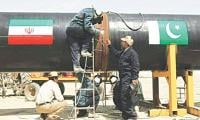
For countries such as Pakistan, the economics of rationing is especially sharp. Pakistan is highly exposed to imported fuel prices and the oil rally was clouding the inflation outlook and influencing expectations around monetary policy. The government is confident that the fuel reserves are sufficient for roughly 27 days. Even if that cushion is accurate, the deeper issue is not only stock coverage, but what happens if elevated prices and disrupted product flows persist.
In that case, Pakistan would confront the familiar policy trilemma: pass through higher prices and risk inflation and political backlash; absorb them fiscally and worsen macro stress; or suppress prices and end up rationing by shortage, outages, and administrative prioritisation. None of these options is elegant. All of them are rationing by another name. There is also a window to negotiate with the IMF on how to utilise the petroleum levy for equitable rationing.
From a theoretical standpoint, the present crisis demonstrates several economic theories of rationing at once. It shows classical price rationing through higher oil and LNG prices. It shows non-price rationing through quotas, blackouts, and shortened workweeks. It shows queue rationing where households and firms compete for access under capped or constrained supply. It shows priority rationing, in which governments decide which sectors deserve protection. And it shows international rationing, in which market power, reserve capacity and diplomatic influence determine which countries can shield themselves and which must adjust harshly. The crisis is therefore an accelerated lesson in applied microeconomics, macroeconomics and political economy all at once.
Rationing is not a crisis anomaly; it is the default logic of scarcity once markets stop clearing smoothly. In normal times, prices quietly perform this function; in disruptions, they surface through queues, outages, quotas, and policy controls.
The constraint remains unchanged; someone consumes less, later, or at a higher cost; economics explains it, geopolitics exposes it.
The writer has a doctorate in energy economics and serves as a research fellow at the Sustainable Development Policy Institute (SDPI). Twitter/X: @Khalidwaleed_ Email: [email protected]